Showing posts with label PUL. Show all posts

2018-09-29

The Missing Petrus Roll

The second of the Vatican's two magnificent timelines by Peter of Poitiers has just arrived online at last. This is a big deal for the history of diagrammatic chronicles, an academic field which looks at how history was taught in medieval and early modern times. I will not introduce this art category again, as one click will take you to my post two weeks on this blog.

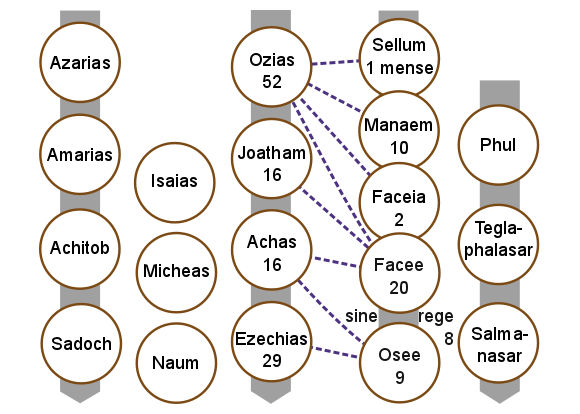
A much-delayed book on the topic, Geschichte und Weltordnung, by Andrea Worm is due out soon. She uses the term "synoptic" for the timeline layout: What happens at the same time is laid out side by side. In the abstract below by me, you see columns respectively for chief priests, prophets, kings of Judah, of Israel and of foreign powers:
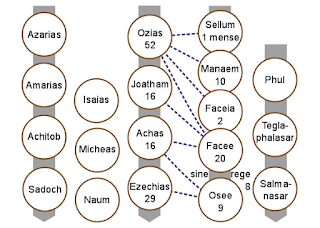

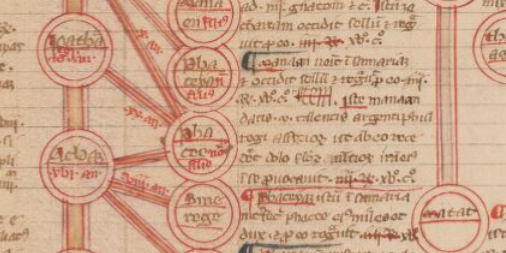
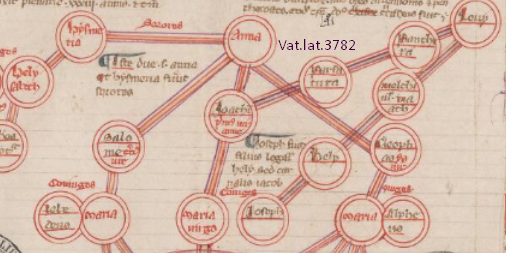
The two rolls offer a study in contrasts. Vat.lat.3782 of the late 13th century is tightly packed, more restrained in its colors, mainly black text and red figures, and has the sobriety of a 19th century architectural diagram. Here is the section matching the abstract above:
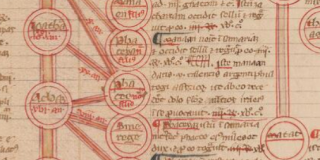
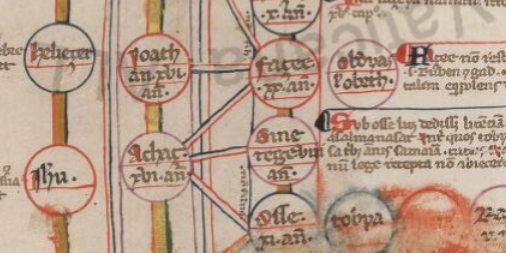
Vat.lat.3783 of the 14th century is jumpier. It generously uses blank space to order its sections, employs thinner lines, hurls more blues and golds into the diagram and presages a more 20th century style.
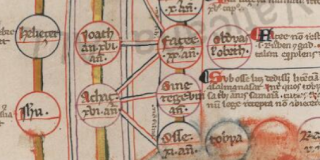
You'll find a long list of digitized versions of Petrus rolls (including these two) on my website, where the table can be rearranged in any order, including date, location, type and so on.

Here is the full list of  the week's 12 new releases:
  1. Ross.2,
  2. Vat.lat.2338,
  3. Vat.lat.3004,
  4. Vat.lat.3097 (Upgraded to HQ), 15th century manuscript of science, see eTK for all entries. For example, ff. 103ra-146rb contains a text beginning: Circa primum librum de generatione et corruptione notandum ...
  5. Vat.lat.3554 (Upgraded to HQ),
  6. Vat.lat.3725,
  7. Vat.lat.3735,
  8. Vat.lat.3783, Compendium of Petrus Pictaviensis (above)
  9. Vat.lat.3912 (Upgraded to HQ),
  10. Vat.lat.3935,
  11. Vat.lat.3939,
  12. Vat.lat.3946,
This is Piggin's Unofficial List number 179. Thanks to @gundormr for harvesting. If you have corrections or additions, please use the comments box below. Follow me on Twitter (@JBPiggin) for news of more additions to DigiVatLib.

2018-09-22

Hieroglyphics before Champollion

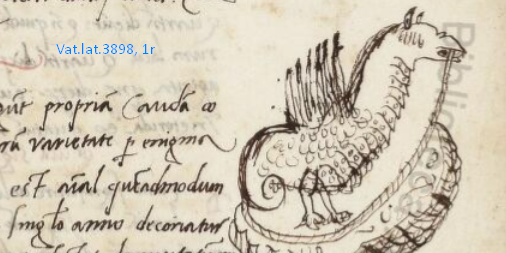
Before  Jean-François Champollion deciphered Egyptian hieroglyphics, a certain amount of very confused traditional knowledge about their meaning did exist. I only discovered this today when looking up a peculiar book, the Hieroglyphica of Horapollo, just digitized at the Vatican Libary. It is copied into the start of Vat.lat.3898 with the following fanciful creature:


Hieroglyphica professes to be a translation from an Egyptian original into Greek by a certain Philippus, and became immensely popular among humanists. Wikipedia states that modern Egyptology regards at least the first part as based on genuine late-antique knowledge of hieroglyphs, although confused, and with baroque symbolism and theological speculation.

This week, @DigiVatLib has been especially busy, posting two of the most beautiful manuscripts on Twitter before I could even get to this blog post. Here is the full list of 21 new items:
  1. Ross.13,
  2. Vat.lat.2344,
  3. Vat.lat.2363, a 15th century compendium of three specialist legal dictionaries, or repertoria in alphabetical order. Fols 65ra-107vb contain Baldus, Margarita [on the Commentaria of Innocent IV]
  4. Vat.lat.2364,
  5. Vat.lat.3054,
  6. Vat.lat.3073,
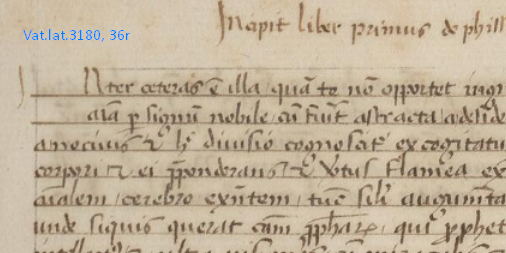
  7. Vat.lat.3180, appears to contain an Aristotle commentary listed by Lohr.  Also a three page tract on physiognomy for which eTK gives the incipit (Inter ceteras est illa quam te ...) but cannot identify the author:

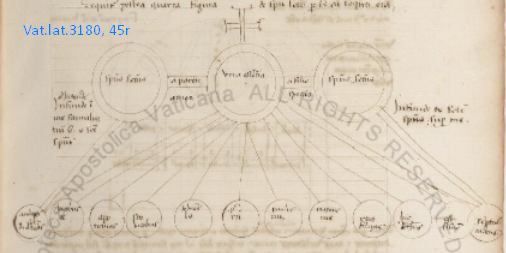
    Also with a fine stemma of Christ and the disciples:
  8. Vat.lat.3533,
  9. Vat.lat.3541,
  10. Vat.lat.3564,
  11. Vat.lat.3674,
  12. Vat.lat.3681,
  13. Vat.lat.3698 (Upgraded to HQ),
  14. Vat.lat.3720,
  15. Vat.lat.3722,
  16. Vat.lat.3734,
  17. Vat.lat.3787 (Upgraded to HQ),
  18. Vat.lat.3898 (Upgraded to HQ), a 15th-century manuscript thought to come from the library of Angelo Colocci. The first text is the Hieroglyphica of Horapollo, incipit: Quomodo seculum significant seculum significare volentes solem ... (above)
  19. Vat.lat.3901 (Upgraded to HQ),
  20. Vat.lat.3923 (Upgraded to HQ),
  21. Vat.lat.3952 (Upgraded to HQ),
This is Piggin's Unofficial List number 178. Thanks to @gundormr for harvesting. If you have corrections or additions, please use the comments box below. Follow me on Twitter (@JBPiggin) for news of more additions to DigiVatLib.

2018-09-16

By the Book

Long ago, the whole Vatican Library could be catalogued in one notebook.  Nowadays, with 82,000-plus manuscripts alone and huge numbers of printed books, it needs a database.

Among items digitized in the past week is Vat.lat.3955, an inventory of the library in 1518 by Zanobi Acciaiuoli.Though the books were sorted in those days by subject, there was no fancy numbering system. Here you can see how the inventory starts: "First bookcase on the left, in order ...."


The Rome Reborn catalog reminds us that all the books were chained to the banchi, or benches. Most of the users were supposedly virtuous Catholic clergy, but that was no guarantee of propriety.

Here is the full list of 23 items:
  1. Ross.10,
  2. Vat.gr.2064 (Upgraded to HQ), from Greek-speaking Calabria
  3. Vat.lat.3055,
  4. Vat.lat.3096, Latin translation of Ptolemy of Alexandria and other scientific authors. See the full contents listed on Jordanus. This also contains a work attributed to the mathematician Thābit ibn Qurra translated into Latin by Jordanus de Nemore
  5. Vat.lat.3106,
  6. Vat.lat.3131,
  7. Vat.lat.3174 (Upgraded to HQ),
  8. Vat.lat.3529, Decretum (Gratianum?)
  9. Vat.lat.3659,
  10. Vat.lat.3675,
  11. Vat.lat.3688,
  12. Vat.lat.3703,
  13. Vat.lat.3711,
  14. Vat.lat.3718,
  15. Vat.lat.3744,
  16. Vat.lat.3788 (Upgraded to HQ),
  17. Vat.lat.3813,
  18. Vat.lat.3832 (Upgraded to HQ), penitential canon law collection
  19. Vat.lat.3863,
  20. Vat.lat.3877,
  21. Vat.lat.3941,
  22. Vat.lat.3955 (Upgraded to HQ), Inventory of the Library (above)
  23. Vat.lat.3992,
This is Piggin's Unofficial List number 177. Thanks to @gundormr for harvesting. If you have corrections or additions, please use the comments box below. Follow me on Twitter (@JBPiggin) for news of more additions to DigiVatLib.

2018-09-08

Vatican Petrus Roll

The Vatican possesses at least two scrolls containing one of the most famous medieval timelines of biblical history, that drawn up in about 1180 by a Paris university professor, Peter of Poitiers, (Latin name Petrus Pictaviensis Cancellarius).

In the past week, the first of these, Vat.lat.3782 of the late 13th century, was digitized and arrived online in the past week. The other, Vat.lat.3783, cannot be far behind.

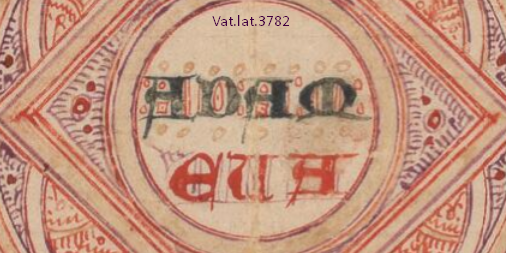
Peter's chart for the schoolroom, now commonly known as the Compendium, was drawn as a roll four or more metres in length so it could be scrolled between an upper and a lower roller like a movie reel. Fancy penmanship (see Adam - Eva above) was part of the good example it offered. It was also available sectioned up into ten or so book pages, which must be why Alberic of Trois-Fontaines sixty years later spoke of it in the plural, calling it arbores historiarum, diagrams of history.

Most books about the history of trees and timelines (for example Rosenberg and Grafton's Cartographies of Time) introduce the Compendium, although it had a little-known predecessor nearly 800 years earlier, the Great Stemma, which did much the same on a left-to-right scroll. Peter may not have known a late antique forerunner existed, as his work seems entirely original and not modelled on the Great Stemma.

Peter placed Adam at the top end of the roll and Jesus at the bottom, connecting them by the ancestry given in Genesis and the Gospel of Matthew. He omitted the entire line given in the Gospel of Luke, while introducing additional parallel lines including high priests, Assyrian oppressers, Seleucid emperors and other figures important to Palestine, endeavouring to gather in the secular political context surrounding the biblical story. Everybody is named in roundels like this:

As might be expected with a classroom classic, the Compendium can be found all over Europe in public and private collections. There's a comprehensive overview of these, Peter's Stemma, on my website, and I have posted on the topic in the past on this blog. The Vatican possesses copies in sectional form (as alluded to above by Alberic) as well, three of which are already online:
The full list of 45 digitizations in the past week follows.

  1. Ross.1,
  2. Ross.25,
  3. Vat.gr.505,
  4. Vat.lat.2119,
  5. Vat.lat.2336,
  6. Vat.lat.2340,
  7. Vat.lat.2436,
  8. Vat.lat.2670,
  9. Vat.lat.2686,
  10. Vat.lat.2705,
  11. Vat.lat.3087 (Upgraded to HQ),
  12. Vat.lat.3479,
  13. Vat.lat.3553,
  14. Vat.lat.3581,
  15. Vat.lat.3645,
  16. Vat.lat.3712,
  17. Vat.lat.3743,
  18. Vat.lat.3750 (Upgraded to HQ),
  19. Vat.lat.3751,
  20. Vat.lat.3752,
  21. Vat.lat.3762 (Upgraded to HQ),
  22. Vat.lat.3765,
  23. Vat.lat.3782, Compendium of Petrus Pictaviensis (above)
  24. Vat.lat.3796,
  25. Vat.lat.3804,
  26. Vat.lat.3809,
  27. Vat.lat.3815,
  28. Vat.lat.3820 (Upgraded to HQ),
  29. Vat.lat.3825 (Upgraded to HQ),
  30. Vat.lat.3826,
  31. Vat.lat.3830,
  32. Vat.lat.3843,
  33. Vat.lat.3845,
  34. Vat.lat.3851,
  35. Vat.lat.3862 (Upgraded to HQ),
  36. Vat.lat.3881.pt.1,
  37. Vat.lat.3881.pt.2,
  38. Vat.lat.3885,
  39. Vat.lat.3894,
  40. Vat.lat.3907,
  41. Vat.lat.3910,
  42. Vat.lat.3921,
  43. Vat.lat.3947 (Upgraded to HQ),
  44. Vat.lat.3949 (Upgraded to HQ),
  45. Vat.lat.3989,
This is Piggin's Unofficial List number 176. Thanks to @gundormr for harvesting. If you have corrections or additions, please use the comments box below. Follow me on Twitter (@JBPiggin) for news of more additions to DigiVatLib.

2018-09-01

Deed of Lombardy

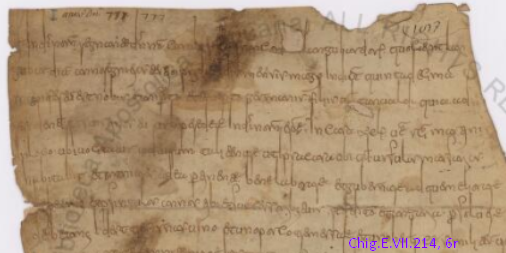
In 777 a Frankish king named Charles had just subdued most of the Lombards of Italy and was expanding his power base.

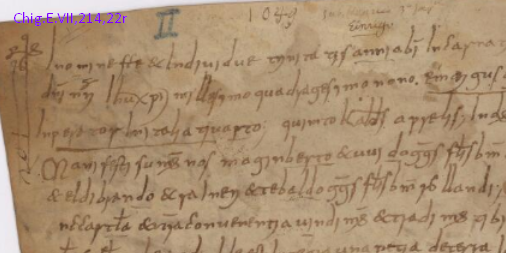
A land deed in Italy that year acknowledged the new ruler as Carulo regem Francorum et Langobardorum and was dated May 15 in anno regni euis tertio of his Lombard overlordship. This thrilling scrap of parchment, inscribed in a strange hand with exaggerated uprights, carries us back to the early days of Charlemagne before he became Holy Roman Emperor.

The record of the land deal by the brothers Tuniperto and Teutperto (see details by GeorgiaV below) has just been digitized at the Vatican Library. It is kept in an album, Chig.E.VII.214 which contains a miscellany of old deeds. Another dates back to 1049. Not quite a thousand years old:

The full list of 32 items follows.
  1. Chig.E.VII.214, old deeds including 777 document (above), listed TM 382978 = ChLA 22 723
  2. Ross.18,
  3. Ross.22,
  4. Ross.32,
  5. Ross.35,
  6. Vat.lat.568,
  7. Vat.lat.2287, 15th century, listed by Brendan McManus as: Bartolus, Lectura in primam partem Digesti Noui [39.1-44.7] (1ra-149ra); Bartolus, Lectura in secundam partem Digesti Noui [45.1-50.17] (151ra-383vb)
  8. Vat.lat.2308,
  9. Vat.lat.2313,
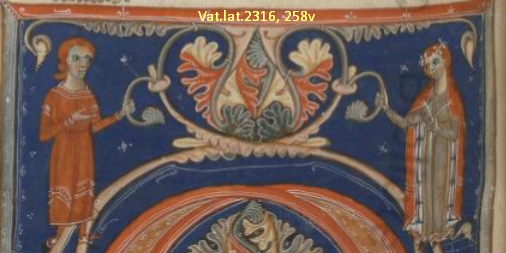
  10. Vat.lat.2316, the Summa Hostiensis, a legal compendium, with this late arbor affinitatis, empty of any script:
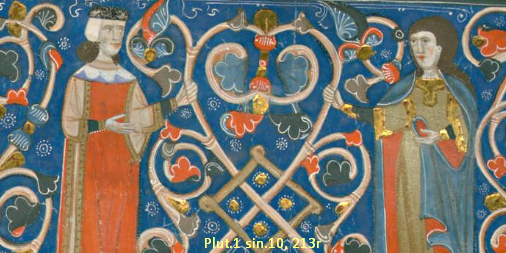
    Hermann Schadt (Die Darstellungen der Arbores, page 270) dates it to the 14th century. Notice how there are bands above, which seem to come from the people's knees. These are branches growing from the so-called arbor (Latin for tree). Compare how the branches are rounded into one another above, and drawn up into an X shape in a more ornate arbor of the same period in Florence, Plut.1 sin.10 (IT:FI0100_Plutei_01sin.10_0003):
  11. Vat.lat.2341,
  12. Vat.lat.2589,
  13. Vat.lat.2611,
  14. Vat.lat.2695,
  15. Vat.lat.2721,
  16. Vat.lat.3049,
  17. Vat.lat.3066,
  18. Vat.lat.3462,
  19. Vat.lat.3526,
  20. Vat.lat.3545,
  21. Vat.lat.3710,
  22. Vat.lat.3726,
  23. Vat.lat.3758,
  24. Vat.lat.3763,
  25. Vat.lat.3766,
  26. Vat.lat.3840 (Upgraded to HQ),
  27. Vat.lat.3842,
  28. Vat.lat.3847 (Upgraded to HQ),
  29. Vat.lat.3848 (Upgraded to HQ),
  30. Vat.lat.3859 (Upgraded to HQ),
  31. Vat.lat.3883 (Upgraded to HQ),
  32. Vat.lat.3884 (Upgraded to HQ),
This is Piggin's Unofficial List number 175. Thanks to @gundormr for harvesting. If you have corrections or additions, please use the comments box below. Follow me on Twitter (@JBPiggin) for news of more additions to DigiVatLib.

2018-08-25

Keys to the Classics

The books of classical literature as we know them are mostly reconstructions, pieced together from a variety of medieval manuscripts, none of which is perfect all by itself.

Two of the 62 manuscripts released online in the past week by DigiVatLib illustrate how several versions surviving can be woven together to make a whole book which is then published as the canonical text. Both of these two manuscripts are unique in the sense that they are the sole witnesses of certain words or sections of a larger work.

One of the codices you can newly examine for yourself, Vat.gr.1288, is essential to reconstructing Ῥωμαϊκὴ Ἱστορία, the Greek-language history of Rome by Cassius Dio.

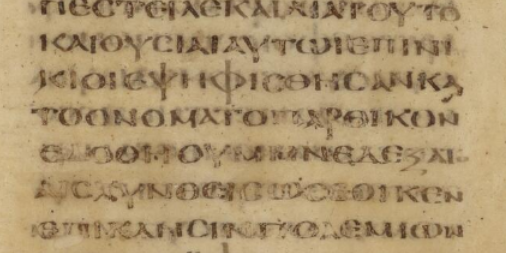
This fifth or sixth century manuscript, which I first mentioned in a post last year when many manuscripts arrived online in murky black and white, has been upgraded to high resolution in colour. Only 13 of its folios in an uncial without word-spacing survive. Roger Pearse points out its importance as the sole source of books 78-79 of the history.

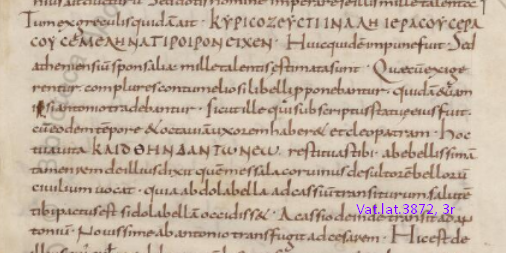
The other, Vat.lat.3872 of the ninth century, plays a major role in reconstructing the two extant works by Seneca the Elder, the Controversiae in 10 books and the Suasoriae in 2 books, both of which advise on how to persuade a Roman court. Roger Pearse explains that it resembles two other ninth-century witnesses containing verbatim text with large gaps, but is an independent recension which appears to have undergone late antique or medieval correction.

Here is the full list:
  1. Chig.E.VII.216, album of  mainly 14th and 15th century letters and bills
  2. Ross.26,
  3. Ross.39,
  4. Ross.4,
  5. Ross.6,
  6. Ross.8,
  7. Ross.42,
  8. Vat.gr.507.pt.1 (Upgraded to HQ),
  9. Vat.gr.507.pt.2,
  10. Vat.gr.1288 (Upgraded to HQ), Cassius Dio, history of Rome, with text of the otherwise missing books 78-79 (see above).
  11. Vat.ind.49,
  12. Vat.lat.2335,
  13. Vat.lat.2587,
  14. Vat.lat.2650,
  15. Vat.lat.2679,
  16. Vat.lat.2781 (Upgraded to HQ),
  17. Vat.lat.2793,
  18. Vat.lat.2976,
  19. Vat.lat.3018,
  20. Vat.lat.3029,
  21. Vat.lat.3071,
  22. Vat.lat.3090,
  23. Vat.lat.3170,
  24. Vat.lat.3192,
  25. Vat.lat.3463,
  26. Vat.lat.3476,
  27. Vat.lat.3481,
  28. Vat.lat.3501,
  29. Vat.lat.3510,
  30. Vat.lat.3518,
  31. Vat.lat.3543,
  32. Vat.lat.3558,
  33. Vat.lat.3576,
  34. Vat.lat.3580,
  35. Vat.lat.3597,
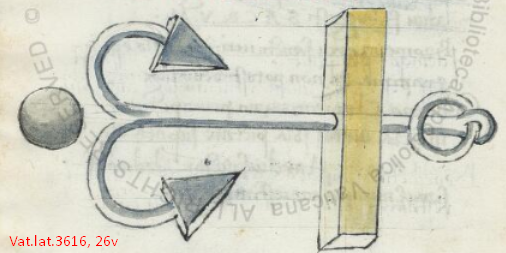
  36. Vat.lat.3616 (Upgraded to HQ), Epigrammata Romae reperta et alibi, a Renaissance notebook of inscriptions 
  37. Vat.lat.3648,
  38. Vat.lat.3658,
  39. Vat.lat.3677,
  40. Vat.lat.3682,
  41. Vat.lat.3687,
  42. Vat.lat.3694,
  43. Vat.lat.3697,
  44. Vat.lat.3713,
  45. Vat.lat.3721,
  46. Vat.lat.3727,
  47. Vat.lat.3733,
  48. Vat.lat.3736,
  49. Vat.lat.3746,
  50. Vat.lat.3753,
  51. Vat.lat.3757,
  52. Vat.lat.3759,
  53. Vat.lat.3760,
  54. Vat.lat.3761 (Upgraded to HQ), the Liber Pontificalis, or brief biographies of all the popes, scribed about 1000, probably at Farfa. Scholars term this the sole representative of type K of the "Lombard" recension.
  55. Vat.lat.3790,
  56. Vat.lat.3795,
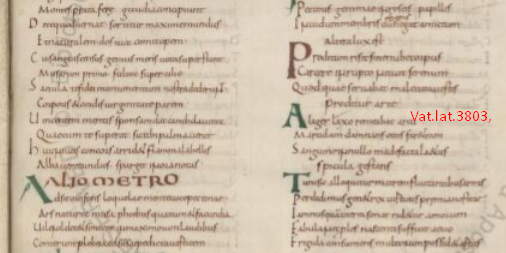
  57. Vat.lat.3803 (Upgraded to HQ), a ninth-century manuscript of the works of Ennodius of Pavia, a 6th-century bishop. Square format, two columns:
  58. Vat.lat.3814,
  59. Vat.lat.3823,
  60. Vat.lat.3858,
  61. Vat.lat.3872 (Upgraded to HQ), Seneca the Elder, copied at Corbie, 850–880 (above)
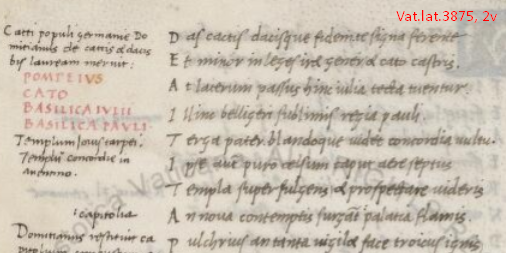
  62. Vat.lat.3875 (Upgraded to HQ), Silvae and Achilleis, the last of five de luxe manuscripts made for the super-rich Rome student Fabio Mazzatosta.
This is Piggin's Unofficial List number 174. Thanks to @gundormr for harvesting. If you have corrections or additions, please use the comments box below. Follow me on Twitter (@JBPiggin) for news of more additions to DigiVatLib.

2018-08-05

Moerbeke Archimedes is Now Online

My friend Pieter Beullens discovered and made known that the Archimedes Codex of William of Moerbeke at the Vatican Library is online at last. Although this Latin book is one of their most historic digital publications, the coders at Digita Vaticana somehow botched the release, lodging the manuscript in the wrong area of the portal, where no one would ever look for it.

Only three witnesses in the original Greek of the works of Archimedes -- A, B, and C -- are known to have survived the Byzantine period.

C is the privately owned Archimedes Palimpsest (images) which is the famous subject of the book The Archimedes Codex by Reviel Netz and William Noel (2007).

B, not recorded since 1311. 

A was last seen in 1564, but was copied several times, foremost by Poliziano, whose apograph, imitating the writing and mise en page of the antigraph, is in Florence and online (ms. Plut.28.4)

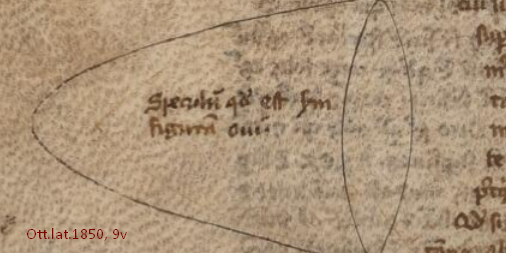
William of Moerbeke, who was a Dominican, generally taken to be Flemish, used A and B to compile a Latin version of Archimedes in or about 1269. William is a giant in the medieval transmission of the classics (see Pieter Beullens' tweets for a feeling). In 1881, it was realized that codex Ott.lat.1850 at the Vatican is the draft/original/autograph of the Archimedes part of his work.

You can now page through Ott.lat.1850. I at first thought this was a 2018 digitization, but @LatinAristotle tells me he first spotted it in 2016.

The Moerbeke pages are bound together with two extraneous parts, one of them printed Latin text.When this posting went up, the URL was https://digi.vatlib.it/view/Ott.lat.1850, which wrongly places it among the incunables and in fact should attach to Cardinal Ottoboni's own copy of the Anthologia Graeca Planudea (ia00765000). I'll message the library on Monday, and if we are right I expect they will fix it.

Why is the Moerbeke codex historic? Firstly, it was the only witness of the text of Floating Bodies until the beginning of the 20th century and the discovery of C above. Secondly it is our only means of accessing B. Thirdly, it can guide us to what copyists of A may have overlooked. And fourthly, with Moerbeke's own marginal notes, it is itself a major artefact in the history of science.

Clagett, M. (1982). William of Moerbeke: Translator of Archimedes. Proceedings of the American Philosophical Society, 126(5), 356-366. Retrieved from http://www.jstor.org/stable/986212

2018-08-04

Fake News in History

Is Roman history fake news? That idea is not new, it turns out. Back in the 16th century it was already being argued that the classical author Sallust was biased and prone to misreporting. Costanzo Felici (1525-1585), an Italian physician, naturalist and historian, took the charges so seriously that he revised Sallust's Historia de coniuratione Catilinae to "restore" the "neglected role" of Cicero.

Of course he overdid it. Anthony Grafton in the Rome Reborn catalog says "Cicero's role in suppressing Catiline, largely dismissed by Sallust himself, was magnified to superhuman proportions". There's presumably more of the story in a paywalled article, 'Constantius Felicius Durantinus and the Renaissance Origins of Anti-Sallustian Criticism' by Patricia Osmond (de Martino).

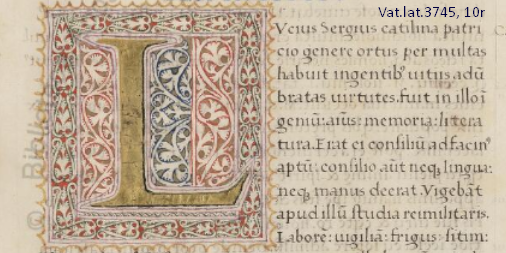
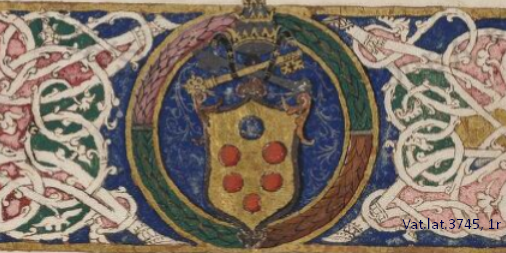
The dedication copy for Pope Leo X, Vat.lat.3745 has just been digitized by the Vatican Library. Of course it is wonderfully illuminated. Felici's career, but not this book, is summarized in the Treccani.

In all, 31 new manuscripts have been digitized over the past week at the library. The full list:
  1. Vat.lat.2295, Consilia by Baldus de Ubaldis the jurist
  2. Vat.lat.2298,
  3. Vat.lat.2304,
  4. Vat.lat.2452,
  5. Vat.lat.2462,
  6. Vat.lat.2578, Ioannis de Turrecremata (Cardinal Juan de Torquemada): Summa de Ecclesia. NOT: Quesivisti fili carissime de incantatione adiuratione... (15c). See eTK
  7. Vat.lat.2725,
  8. Vat.lat.2994,
  9. Vat.lat.3387,
  10. Vat.lat.3475,
  11. Vat.lat.3540,
  12. Vat.lat.3556,
  13. Vat.lat.3596,
  14. Vat.lat.3620,
  15. Vat.lat.3621,
  16. Vat.lat.3627 (Upgraded to HQ),
  17. Vat.lat.3630 (Upgraded to HQ),
  18. Vat.lat.3633,
  19. Vat.lat.3635,
  20. Vat.lat.3636,
  21. Vat.lat.3640,
  22. Vat.lat.3649,
  23. Vat.lat.3676,
  24. Vat.lat.3684, Exhortatio pro calendarii emendatione by Paul of Middelburg, a Dutch-born 15th century bishop eager for calendar reform. Incipit: Mirum tibi fortasse in debitum ... See eTK Anthony Grafton in Rome Reborn says the Hebrew quotes at the start are Paul detailing the arguments used by contemporary Jews to criticize Christians for observing Easter at the wrong time.
  25. Vat.lat.3686,
  26. Vat.lat.3695,
  27. Vat.lat.3696 (Upgraded to HQ),
  28. Vat.lat.3708,
  29. Vat.lat.3745 (Upgraded to HQ), revised Sallust, above
  30. Vat.lat.3789,
  31. Vat.lat.3798.pt.4,
This is Piggin's Unofficial List number 171. Thanks to @gundormr for harvesting. If you have corrections or additions, please use the comments box below. Follow me on Twitter (@JBPiggin) for news of more additions to DigiVatLib.

2018-07-31

Textual Errors in Old Bibles

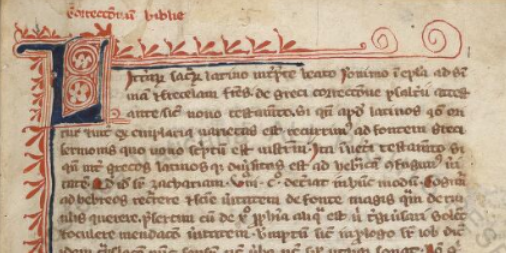
Modern literary scholarship has its roots in the painstaking work of medieval clergy to eliminate mutations in the text of the Bible. The Vatican Library has just digitized one of the great monuments of this rich scholarly past, the Correctorium Vaticanum, Vat.lat.3466.


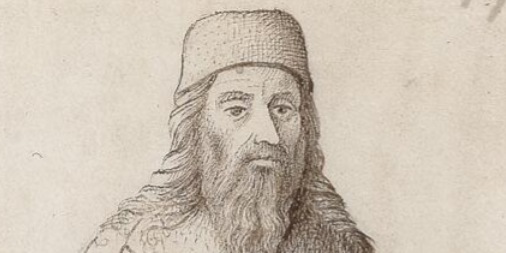
This 13th-century compilation is by a Franciscan, Guillelmus Lamarensis, born about 1230. He is believed to have been an Englishman, so he may well have gone by the name William Delamare (see CERL). His work is introduced in Hasting's Dictionary of the Bible.

The corrector was expert in Greek and Hebrew and devoted himself to the hunt for instances where the 13th century text was did not correctly reproduce the fifth-century Latin Vulgate translation by Jerome of Stridon. Such a project may have consumed much of his lifetime.

Last week 69 new manuscripts became available. Here is the full list:
  1. Barb.gr.411,
  2. Borg.ind.33,
  3. P.I.O.5,
  4. Ross.11,
  5. Ross.15,
  6. Vat.gr.1249,
  7. Vat.lat.901, "Amabile est a melioribus persuaderi ...", author Jacobus de Alexandria. See eTK
  8. Vat.lat.1548 (Upgraded to HQ), "Annus solaris qui magnus sepe vocatur...", (12c); .author Manfred. See eTK
  9. Vat.lat.1912,
  10. Vat.lat.2928,
  11. Vat.lat.2952,
  12. Vat.lat.2955,
  13. Vat.lat.2956,
  14. Vat.lat.2961,
  15. Vat.lat.3040 (Upgraded to HQ),
  16. Vat.lat.3458,
  17. Vat.lat.3466, Correctorim Vaticanum, see above
  18. Vat.lat.3468.pt.1, the other half of Ramon Llull's Arbor Scientiae, see last week's post.
  19. Vat.lat.3478,
  20. Vat.lat.3503,
  21. Vat.lat.3509.pt.2,
  22. Vat.lat.3517,
  23. Vat.lat.3519,
  24. Vat.lat.3522.pt.1,
  25. Vat.lat.3522.pt.2,
  26. Vat.lat.3524.pt.2,
  27. Vat.lat.3525,
  28. Vat.lat.3527,
  29. Vat.lat.3535,
  30. Vat.lat.3538,
  31. Vat.lat.3546,
  32. Vat.lat.3547 (Upgraded to HQ),
  33. Vat.lat.3551 (Upgraded to HQ),
  34. Vat.lat.3562,
  35. Vat.lat.3566,
  36. Vat.lat.3568 (Upgraded to HQ),
  37. Vat.lat.3577,
  38. Vat.lat.3578,
  39. Vat.lat.3579,
  40. Vat.lat.3582,
  41. Vat.lat.3583,
  42. Vat.lat.3593,
  43. Vat.lat.3598,
  44. Vat.lat.3600,
  45. Vat.lat.3606,
  46. Vat.lat.3610,
  47. Vat.lat.3613,
  48. Vat.lat.3615 (Upgraded to HQ),
  49. Vat.lat.3618,
  50. Vat.lat.3626,
  51. Vat.lat.3634, Martirium pariter et gesta, the awful story of Ferdinand the Holy Prince, a Portuguese royal who was sent to Morocco as a hostage and died in captivity after his compatriots refused to pay up as promised.
  52. Vat.lat.3637,
  53. Vat.lat.3641,
  54. Vat.lat.3656,
  55. Vat.lat.3670,
  56. Vat.lat.3673,
  57. Vat.lat.3678,
  58. Vat.lat.3679,
  59. Vat.lat.3680,
  60. Vat.lat.3693,
  61. Vat.lat.3699,
  62. Vat.lat.3700,
  63. Vat.lat.3701,
  64. Vat.lat.3702,
  65. Vat.lat.3704,
  66. Vat.lat.3707,
  67. Vat.lat.3714, "Quem veritas virtus et scientia ubique...", author Barnabas de Riatinis. See eTK
  68. Vat.lat.3728,
  69. Vat.lat.7194 (Upgraded to HQ),
This is Piggin's Unofficial List number 171. Thanks to @gundormr for harvesting. If you have corrections or additions, please use the comments box below. Follow me on Twitter (@JBPiggin) for news of more additions to DigiVatLib.

2018-07-25

Tree of Science

Among the most creative ideas to emerge from the mind of the Catalan philosopher and logician Ramon Llull was the "tree of science". Llull, who was born about 1232, wrote this mature work in Rome between 1295 and 1296. The Tree of Science (Arbre de la ciència, Arbor Scientiae) explores the generality of science, ars magna, for the non-university reader.

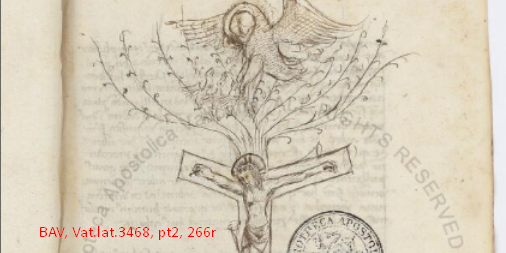
Llull's trees are not true networks but simply rely on a teaching analogy that had become popular in the preceding 13th century: the comparison with an organism, in which each science is represented by a tree with roots, trunk, branches, leaves and fruits. It is perhaps not a surprise that the comparison mixes with the idea of Christ's cross as a tree. Here is a drawing on fol 266r:


The roots represent the basic principles of each science; the trunk is the structure; the branches, the genres; the leaves, the species; and the fruits, the individual, his/her acts and his/her finalities (Wikipedia). The 16 trees in the work have been described as an "encyclopaedic grove".

The Vatican Library's copy dates from 1428 and is bound in two volumes. The first has been online for a while, and the second part came online last week and opens with the incipit, In desolatione et fletibus stans Raymundus sub quadam arbore.  The electronic Thorndike and Kibre (eTK) adds that the title first appeared in print at Barcelona in 1482.

Last week's digitizations also include several items in Beneventan script and a selection of law texts:
  1. Barb.lat.3808,
  2. Chig.R.VIII.62,
  3. Ross.9,
  4. Vat.gr.1298.pt.1 (Upgraded to HQ),
  5. Vat.ind.20,
  6. Vat.ind.43 (Upgraded to HQ),
  7. Vat.ind.44 (Upgraded to HQ),
  8. Vat.ind.46 (Upgraded to HQ),
  9. Vat.lat.2136 (Upgraded to HQ),
  10. Vat.lat.2267,
  11. Vat.lat.2280 (Upgraded to HQ),  Huguccio, Summa Decreti (1ra- 248rb; 256ra-370vb); Johannes de Deo, Continuatio Summae Huguccionis [Cause 23-26] (371ra-388rb)
  12. Vat.lat.2291, Baldus, Lectura in Codicem [I] (1ra-118rb)
  13. Vat.lat.2292, Baldus, Lectura in Codicem [VI] (1ra-335vb)
  14. Vat.lat.2294,
  15. Vat.lat.2317 (Upgraded to HQ),
  16. Vat.lat.2500,
  17. Vat.lat.2556, Panormitanus, Apparatus on the Decretales [X 3]
  18. Vat.lat.2675,
  19. Vat.lat.2720,
  20. Vat.lat.2920 (Upgraded to HQ),
  21. Vat.lat.2927,
  22. Vat.lat.2958,
  23. Vat.lat.2977,
  24. Vat.lat.3183,
  25. Vat.lat.3353 (Upgraded to HQ),
  26. Vat.lat.3380,
  27. Vat.lat.3388 (Upgraded to HQ), Angelo Colocci, see @DigitaVatican tweet above
  28. Vat.lat.3402 (Upgraded to HQ),
  29. Vat.lat.3406,
  30. Vat.lat.3428,
  31. Vat.lat.3444,
  32. Vat.lat.3453 (Upgraded to HQ),
  33. Vat.lat.3457.pt.1,
  34. Vat.lat.3468.pt.2, Llull (above)
  35. Vat.lat.3471,
  36. Vat.lat.3472,
  37. Vat.lat.3480,
  38. Vat.lat.3484,
  39. Vat.lat.3487,
  40. Vat.lat.3489,
  41. Vat.lat.3490,
  42. Vat.lat.3494,
  43. Vat.lat.3495,
  44. Vat.lat.3496,
  45. Vat.lat.3502,
  46. Vat.lat.3505,
  47. Vat.lat.3507,
  48. Vat.lat.3512,
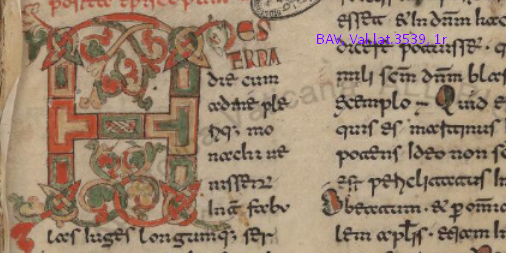
  49. Vat.lat.3539, a late 11th century Beneventan script item noticed by Lowe: Sulpicius Severus, Vita S. Martini; Caesarius, Homiliae; Basilius, Regula, etc.
  50. Vat.lat.3542,
  51. Vat.lat.3544,
  52. Vat.lat.3549, another late 11th century Beneventan script item noticed by Lowe: Cassianus, Collationes.
  53. Vat.lat.3563,
  54. Vat.lat.3567 (Upgraded to HQ),
  55. Vat.lat.3569,
  56. Vat.lat.3585,
  57. Vat.lat.3589,
  58. Vat.lat.3590,
  59. Vat.lat.3605,
  60. Vat.lat.3607,
  61. Vat.lat.3609 (Upgraded to HQ),
  62. Vat.lat.3623,
  63. Vat.lat.3628,
  64. Vat.lat.3629,
  65. Vat.lat.3643,
  66. Vat.lat.3644,
  67. Vat.lat.3650,
  68. Vat.lat.3652,
  69. Vat.lat.3662,
  70. Vat.lat.3691,
This is Piggin's Unofficial List number 170. Thanks to @gundormr for harvesting. If you have corrections or additions, please use the comments box below. Follow me on Twitter (@JBPiggin) for news of more additions to DigiVatLib.

2018-07-16

Diocletian and the Goats

Was the Emperor Diocletian of Rome a former Egyptian goat-herd? That is apparently what many Copts believed. This claim features in a Coptic manuscript just digitized at the Vatican Library, Vat.copt.65, which relates the life of Saint Theodore of Shwtp (or Saint Theodore the General), who was burned alive between 305 and 310 CE in Pontus in modern-day Turkey.

The contents of the 14th-century manuscript are discussed in detail by Dioscorus Boles on his blog. Among the interesting aspects are the story's allegation of Roman racism towards Egyptians and the practice of press-ganging Egyptians for Roman military service. Shwtp, in case you are asking, is town in Egypt.

Last week 26 manuscripts were released online. Here is my full list:
  1. Barb.lat.3996,
  2. Reg.lat.1350,
  3. Vat.ar.52 (Upgraded to HQ),
  4. Vat.copt.65 (Upgraded to HQ),
  5. Vat.copt.66 (Upgraded to HQ),
  6. Vat.copt.67 (Upgraded to HQ),
  7. Vat.gr.1702 (Upgraded to HQ),
  8. Vat.lat.2286, Bartolus de Saxoferrato 1314-1357 wrote this legal commentary: Lectura in primam partem Digesti Infortiati and Lectura super secunda parte Digesti novi. This is a 15th century copy.
  9. Vat.lat.2311,
  10. Vat.lat.3299,
  11. Vat.lat.3404,
  12. Vat.lat.3424, Ermolao Barbaro or Hermolaus Barbarus (1454-1493): letters to Jacopo Antiquario, seemingly attacking a book, Cornucopia, by his fellow humanist Nicolo Perotti. See eTK.
  13. Vat.lat.3433,
  14. Vat.lat.3440,
  15. Vat.lat.3442,
  16. Vat.lat.3457.pt.2,
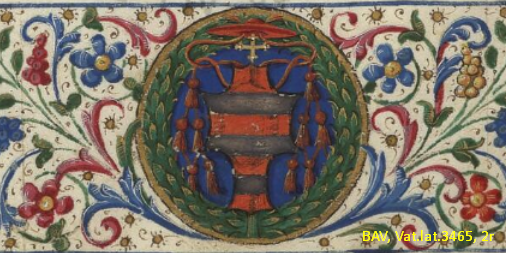
  17. Vat.lat.3465, a panegyric of Thomas Aquinas. This Renaissance codex and others in the range were originally possessions of Antonio Carafa (1538-91), Vatican librarian.
  18. Vat.lat.3477,
  19. Vat.lat.3485,
  20. Vat.lat.3488,
  21. Vat.lat.3491,
  22. Vat.lat.3497,
  23. Vat.lat.3504,
  24. Vat.lat.3509.pt.1,
  25. Vat.lat.3536,
  26. Vat.lat.8866,
This is Piggin's Unofficial List number 169. Thanks to @gundormr for harvesting. If you have corrections or additions, please use the comments box below. Follow me on Twitter (@JBPiggin) for news of more additions to DigiVatLib.

2018-07-08

Precious Scraps

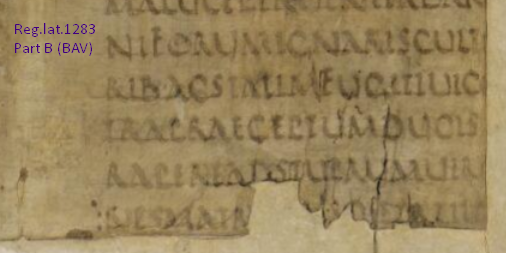
Western manuscripts from the fifth century are so rare that even two torn fragments from a book are objects of excitement. In the past few days, the Vatican Library has digitized and placed online its fragments of the Historiae of Sallust, Reg.lat.1283.pt.B, where the text is written in rustic capitals on both sides of the parchment:

They are thought to be from a codex scribed in Italy. It was torn up to be used as bookbinding material in about 700 CE at a great early medieval center of learning, Fleury Abbey in France. The new codex, itself a great treasure, was acquired centuries later by the wealthy and erudite collector Queen Christina of Sweden and ended up at the Vatican.

Elisabeth Pellegrin says parchment from the same Sallust text was found in Orleans ms 192 and Berlin lat. Q 364. This is the only text of the Historiae from before 1000 CE to survive, according to Richard Matthew Pollard and indeed the work is only known incompletely.

The two fragments, framed on sheets of conservation parchment, are among 42 items released in the past week. The full list:
  1. Ott.lat.1475,
  2. Reg.lat.1283.pt.B, (above). Part A is already online
  3. Urb.lat.1304,
  4. Urb.lat.1641,
  5. Vat.copt.64 (Upgraded to HQ),
  6. Vat.et.75,
  7. Vat.gr.216 (Upgraded to HQ),
  8. Vat.gr.245 (Upgraded to HQ),
  9. Vat.gr.711 (Upgraded to HQ),
  10. Vat.gr.807 (Upgraded to HQ),
  11. Vat.gr.1027,
  12. Vat.gr.1040 (Upgraded to HQ),
  13. Vat.gr.2283,
  14. Vat.gr.2599,
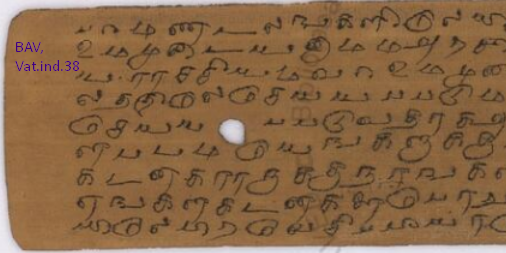
  15. Vat.ind.38, Christian prayers in Tamil, written on palm leaves in southern India in the 16th or 17th century.
    Anthony Grafton writes:
    While inspecting the famous Palatine Library of Heidelberg, confiscated as spoil of war by Maximilian I, Elector of Bavaria, and presented to Pope Gregory XV in 1623, the papal librarian Allacci wrote Cardinal Ludovisi that amongst the notable objects was "a mass of palm leaves" ("uno mazzo di palme") whose language and content he did not know. It was a small collection of Christian prayers in Tamil entitled "Tamil mantiram" (Tamil prayers), which could be either the work of missionaries of the Counter-Reformation or an older composition from the ancient Christian communities in South India. The accompanying note, of unknown date, labels it as "carmina in lingua japanica" (songs in the Japanese language), which shows the difficulty of identifying works in "exotic" scripts before the additional growth of Oriental studies in the nineteenth century.
  16. Vat.lat.369,
  17. Vat.lat.3272,
  18. Vat.lat.3312,
  19. Vat.lat.3347,
  20. Vat.lat.3378 (Upgraded to HQ),
  21. Vat.lat.3384 (Upgraded to HQ),
  22. Vat.lat.3397,
  23. Vat.lat.3399,
  24. Vat.lat.3400,
  25. Vat.lat.3408,
  26. Vat.lat.3413,
  27. Vat.lat.3414,
  28. Vat.lat.3417 (Upgraded to HQ),
  29. Vat.lat.3425,
  30. Vat.lat.3427,
  31. Vat.lat.3434,
  32. Vat.lat.3445,
  33. Vat.lat.3447.pt.1,
  34. Vat.lat.3447.pt.2,
  35. Vat.lat.3448,
  36. Vat.lat.3450,
  37. Vat.lat.3452,
  38. Vat.lat.3469,
  39. Vat.lat.3486,
  40. Vat.lat.3511,
  41. Vat.lat.3555,
  42. Vat.lat.11218, letters of Pope Gregory XV (1612)
This is Piggin's Unofficial List number 168. Thanks to @gundormr for harvesting. If you have corrections or additions, please use the comments box below. Follow me on Twitter (@JBPiggin) for news of more additions to DigiVatLib.