2016-04-05

Touch-Pages

When the first touchscreens came out, a lot of us felt vaguely uncomfortable about touching pages. We had been inoculated by schoolteachers and librarians to feel guilty at putting our fingers on text.

It was not always like this. Much-used old manuscripts were also much touched. Images of the Devil are usually rubbed out by thousands of tappings to abjure him with a prayer. And certain sorts of text had to be touched to be used properly. Which brings me to a great glory among this week's 85 Vatican digitizations, Vat.lat.3806, with some of the oldest Eusebian canon tables of the Gospels.
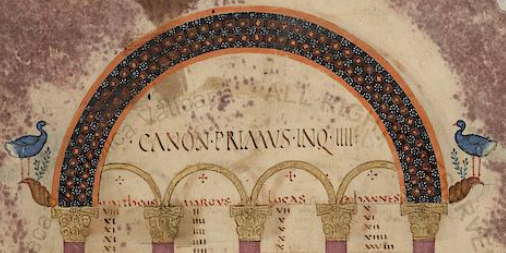
The codex is known as the Rocca Sacramentary, a liturgical book for use in Fulda, Germany. Its early 10th-century scribe was a monk in Regensburg. To stop it getting too worn, it was given a couple of flyleaves at the front ripped from a Gospels (you know how it is, there's always rubbish lying around the place) with some tables painted in or near Rome in the 6th century.

The tables tell the reader where matching scenes and quotes occur in the four gospels. You need your fingers to use them. When searching for a match, you turn back to the front of the book to this index, look up your references in the table, hold your place on the table with a finger of the left hand and leaf through to the different "targets" with your right hand.

Indexes require index fingers. If it gets really complicated, you might need to use four fingers in a pianist's straddle to hold four places in the tables at once. Hand gymnastics.

The invention of tables of concordance was a major advance in the history of information technology, the topic of learned books by Anthony Grafton, Martin Wallraff and others (see below). And now that we have learned again to touch our texts, we understand in hindsight that pages designed to be touched were not a sin, but one of the great inventions to engage our bodies in the work of thinking.

The canons in the Rocca codex are thought to be the oldest western (Latin) examples, going back nearly as far as the oldest eastern examples in the Rabbula Gospels (Plut 01.56) in Florence.

In the following list of the April 4, 2016 digitizations (these bring the posted total to 4,072), I have marked several other gospels with newer canon tables you can compare them.
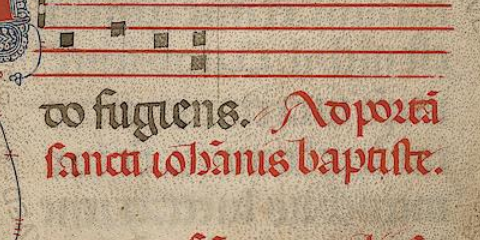
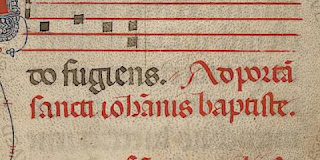
  1. Barb.lat.525, Evangeliary (gospel book) from Florence with prayers for each of its four city quarters during a procession. Here is the page for Porta San Giovanni:
  2. Barb.lat.637, Gospels, 9th century, with capitula lists but no canon tables
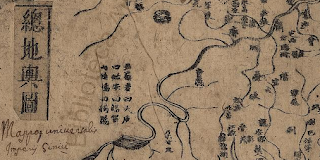
  3. Barb.or.135, printed book notable for this map of China:
  4. Borg.copt.109.cass.VI.fasc.17,
  5. Borg.copt.109.cass.VI.fasc.18,
  6. Borg.copt.109.cass.VI.fasc.20,
  7. Borg.copt.109.cass.XI.fasc.35,
  8. Borg.copt.109.cass.XVI.fasc.56,
  9. Borg.copt.109.cass.XVI.fasc.57,
  10. Borg.copt.109.cass.XVI.fasc.58,
  11. Borg.copt.109.cass.XVI.fasc.60,
  12. Borg.copt.109.cass.XVI.fasc.61,
  13. Borg.copt.136.pt.1,
  14. Borg.copt.136.pt.2,
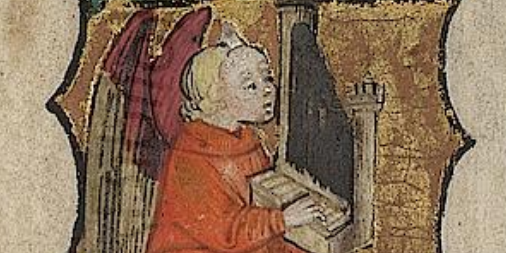
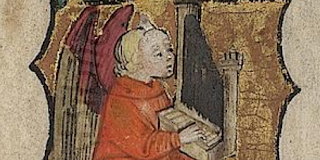
  15. Chig.C.IV.111,  a 15th-century book of hours, an illuminated prayerbook with scenes from the Virgin's life. After asking on Twitter what this peculiar harp-like instrument played with a keyboard is ....
    ... responses came from Valerie Wilhite, and Cristina Alis Raurich in Spain who actually plays one:
  16. Chig.C.VI.161,
  17. Chig.E.IV.126,
  18. Chig.L.V.167,
  19. Chig.L.V.168,
  20. Chig.L.VII.251,
  21. Chig.L.VII.253,
  22. Chig.L.VIII.292,
  23. Chig.L.VIII.302,
  24. Chig.M.VII.143,
  25. Ott.lat.84,
  26. Ott.lat.457,
  27. Ott.lat.1212,
  28. Ott.lat.1523,
  29. Ott.lat.1717,
  30. Ott.lat.2530,
  31. Ott.lat.2546,
  32. Ott.lat.2864, Dante's Divine Comedy (thanks @noah_nonsense for the tip-off)
  33. Ott.lat.2866,
  34. Reg.lat.3,
  35. Reg.lat.10, Gospels, with canon tables
  36. Reg.lat.307, Augustine of Hippo on Gospel of John, 9th century
  37. Ross.314,
  38. Ross.613,
  39. Urb.gr.99,
  40. Vat.gr.2313.pt.A,
  41. Vat.lat.50,
  42. Vat.lat.51,
  43. Vat.lat.80,
  44. Vat.lat.85,
  45. Vat.lat.235,
  46. Vat.lat.238,
  47. Vat.lat.250,
  48. Vat.lat.252,
  49. Vat.lat.255,
  50. Vat.lat.256,
  51. Vat.lat.258,
  52. Vat.lat.311,
  53. Vat.lat.323,
  54. Vat.lat.438,
  55. Vat.lat.498,
  56. Vat.lat.540,
  57. Vat.lat.573,
  58. Vat.lat.602,
  59. Vat.lat.646,
  60. Vat.lat.722,
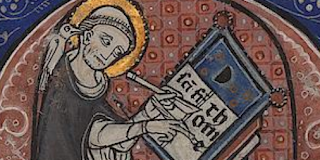
  61. Vat.lat.785.pt.2, Thomas Aquinas: here he is with his parchment scraper and quill, hard at work with a dove (Holy Spirit) on his shoulder whispering what to write in his ear
    This is one of five Thomas codices made for Pope John XXII in the first quarter of the 14th century. Corinne Péneau suggests the iconography of the dove, taken over from past images of saints John, Peter and Gregory the Great, marks the promotion at this time of Aquinas to sainthood.
  62. Vat.lat.1995, Latin translation of Flavius Josephus, Antiquities of the Jews, etc.
  63. Vat.lat.1997, ditto
  64. Vat.lat.2376, John of Alexandria, commentary on Galen
  65. Vat.lat.3741, Gospels
  66. Vat.lat.3806, Rocca Sacramentary, for use in Fulda, scribe a monk in Regensburg, with two recycled flyleaves, fols 1-2, which are in fact 6th-century canon tables in Latin (by Eusebius): see Lowe, CLA Suppl. 1766, where the tables' origin is suggested to be the area of Rome
  67. Vat.lat.4220, Jerome, Letters to Paul etc
  68. Vat.lat.5762, from Bobbio, Letters of Jerome: note the poor, cheap parchment with holes and incomplete pages: the monks used whatever they could lay hands on, and wrote around the gaps.
  69. Vat.lat.5765, another fine old uncial manuscript from Bobbio, Italy, containing Isidore of Seville's De officiis (English translation via Google Books), dated to the beginning of the 8th century: this was made within 100 years of Isidore's lifetime. See Lowe, CLA 143   
  70. Vat.lat.5859, Ovid, Metamorphoses
  71. Vat.lat.5974, Gospels with canon tables
  72. Vat.lat.6083, more Gospels with canon tables
  73. Vat.lat.7224, 9th-century Gospels from Salzburg, Austria
  74. Vat.lat.7567, Bartolomeo da Colle (1421-1484): a manuscript of Dante
  75. Vat.lat.7795, more of the Bible of Aracoeli (see PUL 43)
  76. Vat.lat.7798, ditto
  77. Vat.lat.7801, ditto
  78. Vat.lat.8176, Pietro Bembo, letters
  79. Vat.lat.8208, Baldassar Castiglione, autograph
  80. Vat.lat.8262, scraps of book pages, handwritten notes, 17th century
  81. Vat.lat.8376, a damaged Paradiso of Dante associated with Bartolomeo da Colle (see above)
  82. Vat.lat.8700, illuminated missal, of Pius II
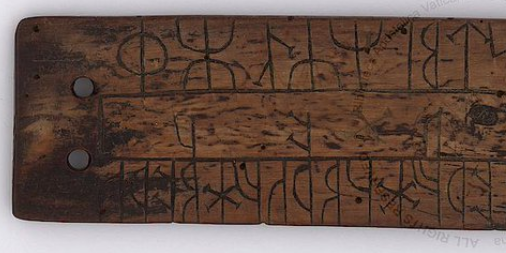
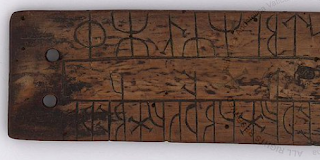
  83. Vat.lat.14613, a set of slats with writing on them:
    I didn't know what they were, but swiftly a tweet explained they were Scandinavian runes: which is the runic "alphabet" in its common order. The letters are mirrored, and some of them also upside down. We still don't know how this little treasure got to Rome.
  84. Vat.sir.51.pt.1,
  85. Vat.sir.51.pt.2,
In Heidelberg, 10 further Vatican manuscripts have arrived online in the past few days, and as usual actually come with descriptions:
  1. Pal. lat. 631, Gregorii IX decretales cum apparatu (Ioannis Andreae) (14.-15. Jh.)
  2. Pal. lat. 632, Gregorii IX decretales cum apparatu (Ioannis Andreae) (14.-15. Jh.)
  3. Pal. lat. 658 Iohannis summa super decretum (Gratiani) (14. Jh.)
  4. Pal. lat. 656 Sammelhandschrift (14. Jh.)
  5. Pal. lat. 640 Bonifatii VIII liber sextus decretalium, cum apparatu Ioannis Andreae (14. Jh.)
  6. Pal. lat. 642 Constitutiones Clementis V, cum apparatu Iohannis Andree (1460)
  7. Pal. lat. 703, Mag. Raymundi (de Pennaforti) summa de poenitentia et de matrimonio (14. Jh.)
  8. Pal. lat. 708, Ioannis (Friburgensis) Lectoris idem opus (14. Jh.)
  9. Pal. lat. 711, Sammelhandschrift (15. Jh.)
  10. Pal. lat. 732, Digestum vetus (14. Jh.)

If you have corrections or additions, please use the comments box below. Follow me on Twitter (@JBPiggin) for news of more additions to Digita Vaticana. [This is Piggin's Unofficial List (PUL) 44.]

Grafton, Anthony, and Megan Hale Williams. Christianity and the Transformation of the Book: Origen, Eusebius, and the Library of Caesarea. Harvard University Press, 2006.

Wallraff, Martin. Kodex und Kanon. Berlin: de Gruyter, 2013.

2016-04-02

Medieval scribes used HTML tags

When a video-rich website fails to load to your mobile because you drove out of cell range or your data plan maxed out, you're a victim of data bloat. To make files more portable, programmers constantly seek new ways to compress them in size. Now, it turns out, the problem was licked 1,000 years ago.

One way to compress a text file is to shorten its commonest words. Medieval scribes knew that. They had a long repertoire of abbreviations, but this only shortens a file by about 5 per cent.

A modern way is to deconstruct the document, and provide a web client with compact instructions about how to rebuild it. That's how a browser reconstitutes a page using bare-bones text in a HTML file, prettied up by the look, sizing and positioning saved in a CSS file. All the objects are instances of classes of some sort, so they don't have to be repetitively described.

The result: tiny files can create big, bright web pages.

This week I discovered evidence that medieval information technologists used the same technique, separating content from form to make a graphics file more portable.

The story starts with the Bible of Ripoll, a Latin bible illuminated in Ripoll, Spain in about 1025 CE and now kept at the Vatican. It contains a handwritten list of only the text of a late antique infographic, the Great Stemma. This huge diagram devised in about 420 CE generally needs up to 18 pages to display, but in the Ripoll Bible, the text-only version fits in a little over five pages.

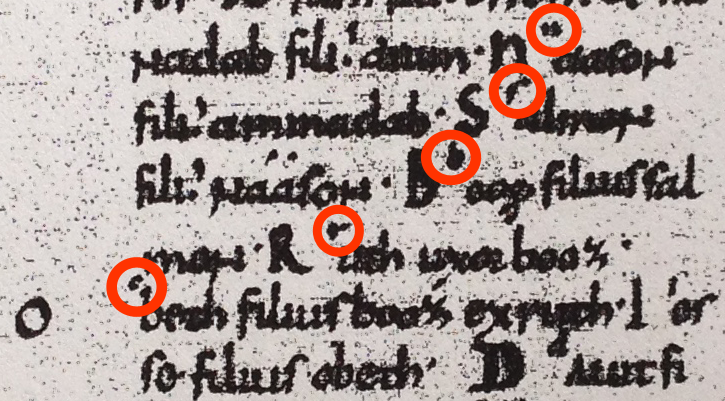
The mystery here is: why was the Ripoll list made? What use is a non-graphic version of  a diagram? No one has ever been able to solve that puzzle about this manuscript. Let's look at a sample of the Ripoll text, where it quotes the Gospel of Matthew 1:4-5 "Nahshon was father of Salmon; Salmon was father of Boaz, ... Boaz was father of Obed, whose mother was Ruth. Obed was father of Jesse."

In the following image, I have circled five puzzling extra letters in the Latin text in red. After the initial capital of each name, the same letter in miniscule has been inserted. The letter with Salmon is the normal "s" in Carolingian script, while the "o" with Obed is damaged but clear enough. To exercise your grey cells, I have not marked the "i" of Jesse and the "d" of David. Try to find them.

For reading purposes only, these added letters would be completely superfluous. I've never seen the like of them. But after some thought, I believe I can explain the insertions.

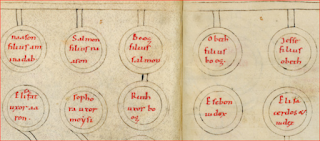
In my view, this text-only file was not originally something that stood alone, but must have been intended for use in conjunction with a positioning document. I would conjecture that the document would have looked something like this in its section with the five generations to Jesse:

The small letters here match with the keys in the text file. The text has thus been divided into snippets, just as a HTML text is marked up with tags in modern web documents. Tagging is a type of metadata to describe a document's presentation. It relies on a set of definitions held elsewhere.

For the Ripoll document, which is not explained in any way, an explanation must have existed elsewhere as to what the reconstituted document was to be: a visualization of a biblical genealogy where the persons (and historical periods) were represented by circles. This would be the equivalent of a modern "document type declaration".

Using an exemplar composed of three compact files, any smart scribe would have been able to reconstitute the original diagram like this:

In this version, dating to about 672 CE and preserved in a later Italian manuscript, Plut 20.54 in Florence, the five names of the men are in the top row. Ruth's is the centre roundel in the lower row.

Why the proper diagram was never reconstructed and inserted in the beautiful Ripoll Bible (Vat. lat. 5729, still not online) is unclear. Perhaps its positioning file was missing or damaged. Perhaps there was a misunderstanding in the scriptorium.

Now I must emphasize I am not claiming Hyper Text Markup Language was devised in medieval times: I am using that term as an approximation for meta-data markup at the phrase level. Nor have I discovered the positioning document itself. I can only guess that it once existed. But I think we now have a cogent explanation of the function of these miniscule letters, and thus of the Ripoll list itself. Other parts of it have large initials in the margins (like the big O of Obeth above) which may have also been keys. I am not aware of any medieval or ancient source that describes this method of conveying a diagram, nor do I know of any modern scholar who has suggested such a bright idea was even possible.

But the idea makes eminent sense if one considers that parchment was expensive and copying the Great Stemma accurately (it contains about 540 names and is fiendishly complicated) would have taken a scribe four or five days. To have a master copy in this very compact form (the whole Great Stemma structure could be reproduced on the equivalent of two A4 sheets) which could be taken from place to place easily and used to make local copies matches what we know about ancient and medieval book production methods: that exemplars or master copies were relied on.

The use of metadata tags to do so is a major surprise and changes what we know about the origins of modern information science. It also suggests a method that might have been used to distribute other charts such as the Late Antique Peutinger Diagram.

2016-03-22

Characteristic Handwriting

The handwriting styles of dozens of people older than me are as familiar as their faces. Of the generation younger than me, I only know the hands of my closest relatives. The world is changing as people key their messages instead of scrawling them, and there are times when I feel like a mobile starting gate at a harness race: behind me a jostling world where we knew one another by our scripts; ahead of me, a blank new era where an individual's handwriting is as private a matter as their belly button.

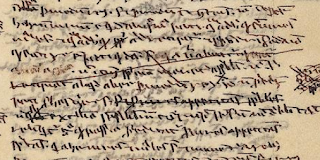
This week's digitizations by Digita Vaticana put me in mind of that change, because one of them is of a book which is generally agreed to be an author's manuscript from 750 years ago: a commentary by the Dominican philosopher-theologian Thomas Aquinas. Vat. lat. 9851 has, as one might expect, lots of crossings out, as on folio 35v:

At the back is various by-play including a letter (typewritten in 1951 - the thin end of the wedge as hand-script began to recede) by the bishop of Salamanca.

Autographs of Aquinas are quite rare. There is a codex in Naples, and this book's shelf neighbour, Vat. lat 9850 containing Super Boethium De Trinitate (fol. 1–104) and Super Isaiam (fol. 105–114).

What is extraordinary is that there were people last century not only skilled enough to decipher this Latin cuneiform, but actually able to recognize one man's own handwriting into the bargain.

Maria Burger (publication), for example, published an article some years ago, arguing that Aquinas was the person who inscribed glosses in  Cologne Cathedral Codex 30. In an age where handwriting is atrophying, for how much longer will people be able to make such an identification at a glance?

The full list of digitizations runs to 29, and brings the posted total before Easter to 3,987. Here's my unofficial list. You won't get it anywhere else: the Biblioteca does not publish any official list.
  1. Reg.lat.1, Vulgate Bible
  2. Reg.lat.4, Gospels with canon tables, Siglum Pr in Fischer tally of 490 Latin gospel manuscripts
  3. Reg.lat.1535, Martianus Capella, De Nuptiis
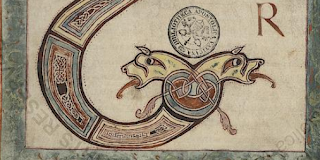
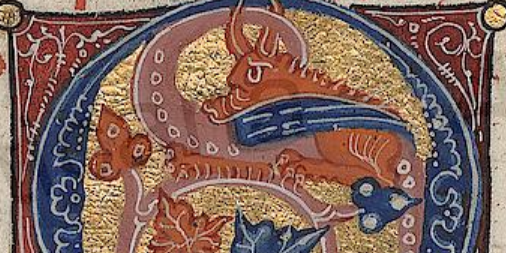
  4. Ott.lat.79, Ottoboni Gospels, northern France, 9th century, with canon tables in arches. This magnificent beast is the bottom of a letter L (for Liber, the first word of the Gospel of Matthew, and later the origin of the currency symbol £ formed in similar fashion):
    @ParvaVox responded:
  5. Ott.lat.296, Gospels
  6. Vat.gr.139, Plutarch
  7. Vat.lat.112, glossed Minor Prophets, Daniel, etc.
  8. Vat.lat.505, Augustine of Hippo, letters, various
  9. Vat.lat.513, Augustine, Against Five Heresies, various
  10. Vat.lat.514, Augustine, various
  11. Vat.lat.557, a Commentary on the Book of Epigrams of Prosper of Aquitaine (2r-27v)
  12. Vat.lat.564, Boethius, Consolation of Philosophy
  13. Vat.lat.569, no clear incipit
  14. Vat.lat.575, Gregory the Great
  15. Vat.lat.580, Gregory the Great
  16. Vat.lat.592, Gregory the Great, Regula Pastoralis
  17. Vat.lat.594, Gregory the Great, Dialogues
  18. Vat.lat.609, Augustine, Letters, etc
  19. Vat.lat.3201, the Ottimo Commento, a commentary on Dante. This was long attributed to Andrea Lancia of Florence, but a 2010 article has apparently disproved that authorship
  20. Vat.lat.4776,
  21. Vat.lat.5764, Isidore, Etymologiae (part). The flyleaves, front and back, are 8th-century uncial pages from Bobbio, Italy with the Lowe designation CLA 1 42 (TM 66138). @ParvaVox notes:
  22. Vat.lat.5776, an 11th-century manuscript of which significant parts are re-used parchment with under-layers reaching back to 7th-century Bobbio, Lowe designations CLA 1 44; 1 45; 1 46; 1 47 (TM). @ParvaVox notes:
  23. Vat.lat.7082, Piccolomini, autograph
  24. Vat.lat.7793, part of Bible of Aracoeli: Leviticus, Numbers, Deuteronomy, glossed
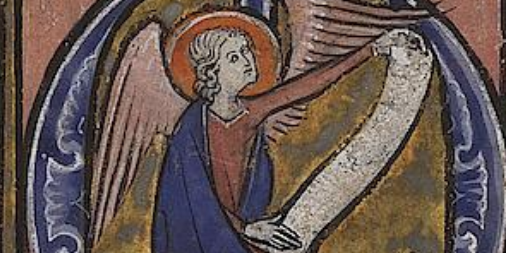
  25. Vat.lat.7797, part of Bible of Aracoeli: Gospels, glossed, with illuminations credited to Master Nicolaus. Here is a winged man holding a very long scroll to represent the Evangelist Matthew:
  26. Vat.lat.7799, part of Bible of Aracoeli: Ezekiel onwards, glossed
  27. Vat.lat.8209, letters?
  28. Vat.lat.8913, Matthias Palmerius, died 1483, see CERL
  29. Vat.lat.9851, Thomas Aquinas, his autograph of Scriptum super Sentiis, dating from about 1255. The topic is the Sentences of Peter Lombard, written 100 years earlier. A note bound inside states the codex was given to a Dominican Oratory of Aversa (see Buratti) by Charles II of Naples (in about 1300).  Auguste Pelzer in a comprehensive article states that he supervised the rebinding of this codex in 1952. The black and white page is a (printed) photograph of a folio at Coria in Spain. See also a review by Landgraf of a main work on Thomist autographs.
If you have corrections or additions, please use the comments box below. Follow me on Twitter (@JBPiggin) for news of more additions to Digita Vaticana. [This is Piggin's Unofficial List 43.]

2016-03-16

Love Letters of Henry VIII

Among the most celebrated possessions of the Vatican Library is a sheaf of 17 love letters written by King Henry VIII of England to his future second wife Anne Boleyn. The package, Vat.lat.3731.pt.A, was digitized and issued online late on March 15.

The BAV library has made no announcement. I am breaking the news here on the world's only portal  that monitors their largely unnoticed digital program.

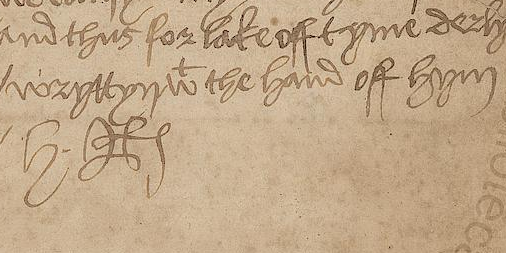
There can be no doubt the documents are genuine and date from 1527-28. Here is Henry's sign-off: "Written with the hand of him [which desireth as much to be yours as you do to have him],  H. AB  R."
How they got to Rome is anyone's guess (perhaps stolen by a Boleyn confidant, probably taken via France, since French notes are attached). For centuries, Vatican librarians have been showing them to impress high-ranking English visitors to Rome. Now at last, the rest of us can be titillated too.

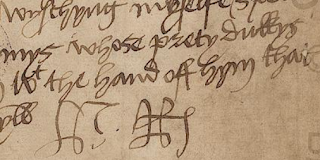
The reference to "pretty dukkys" in the screenshot above from folio 15 employs dug, the conventional 16th-century English word for a woman's breast. The whole sentence has Henry "wishing myself (especially an evening) in my sweetheart’s arms, whose pretty dukkys I trust shortly to kiss."

Devious Henry ends another letter: "No more to you at this present, mine own darling, for lack of time, but that I would you were in mine arms, or I in yours, for I think it long since I kissed you" (From Letter 16 as transcribed on The Anne Boleyn Files, which also has a debate about demanding their return to England.)

The story of Henry's seduction ended, as we know, badly. Henry divorced, wed Anne, but dumped her and had her beheaded at the Tower of London in 1536.

My unofficial list (the only list, since the Biblioteca Apostolica Vaticana issues none) of all  32 digitizations on March 15 follows. I will add more details as I have time: 
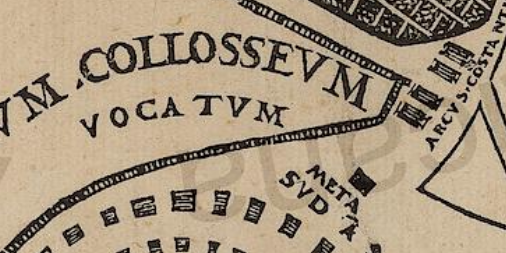
  1. Barb.lat.4432, Leonardo Bufalini's 1551 map of Rome, the first ever printed. None of the first printing survives and only three copies of the second printing (two at Vatican, one at British Library). This one is bound with an 1880 monograph describing it. Here is the Colosseum and Meta Sudans as they then were:
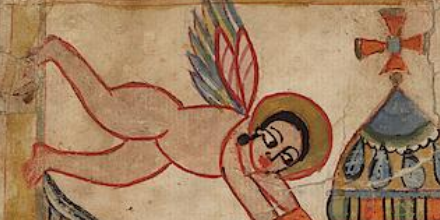
  2. Borg.arm.65, with this wonderful Armenian angel:
  3. Cappon.307, monumental inscriptions, many Greek
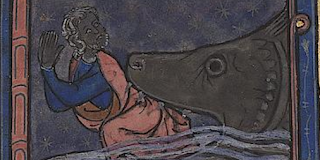
  4. Reg.lat.26, illuminated bible in Old French, 13th or 14th century. Here is Jonah being swallowed by the whale on fol. 178r (the silver has turned black):
  5. Urb.lat.90, Bernard of Clairvaux, Renaissance manuscript
  6. Urb.lat.219, Seneca, Letters, 15th C
  7. Urb.lat.245, Pliny the Younger, Natural History, manuscript dated 1440
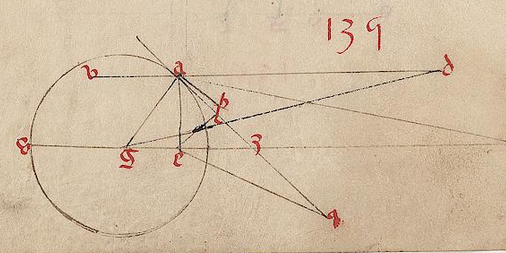
  8. Urb.lat.265, Vitello, Optica, 14th century, with many diagrams like this at fol. 19r
  9. Urb.lat.316, Cicero, Letters, 1453
  10. Urb.lat.322, Cicero, Letters, 15th century
  11. Urb.lat.335, Quintilian, Speeches, 15th century
  12. Urb.lat.385, Rufinus Latin of Eusebius, History of the Church
  13. Urb.lat.405, Piccolomini's history of Frederick III, 15th century
  14. Urb.lat.488, Origen of Alexandria in Rufinus translation
  15. Urb.lat.490, Urban of Urbanus, commentary
  16. Urb.lat.499, Nicolò di Vito Gozzi
  17. Urb.lat.504, On Zeno of Verona, plus section by Basil the Great
  18. Urb.lat.511, Bartholomew of San Concordio, moral treatise with alphabetical list of conscience issues
  19. Urb.lat.534, Antony de Sancto Leone
  20. Urb.lat.543, Canticles, glossed
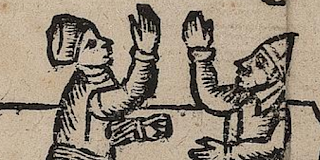
  21. Vat.ebr.530.pt.1, collection of unbound fragments and quires from various manuscripts and books, including what seems to be a 17th-century textbook with a schoolroom picture that depicts two Jewish schoolboys greeting one another with high fives:
  22. Vat.gr.357, Gospels, Pinakes
  23. Vat.gr.2365,
  24. Vat.lat.441, Augustine of Hippo, City of God
  25. Vat.lat.449, Augustine, On Genesis
  26. Vat.lat.481, Augustine, On Gospel of John
  27. Vat.lat.487, Augustine, De consensu evangelistarum
  28. Vat.lat.550, Leo the Great, Sermons
  29. Vat.lat.560, Boethius, De Trinitate, etc
  30. Vat.lat.563, Boethius, Consolations of Philosophy
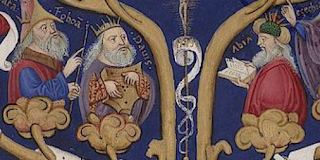
  31. Vat.lat.3467, the Count Paschasio Diaz Garion Psalter, a Latin prayer-book from Spanish Naples with illuminations by Matteo Felice, including a fine Virga Jesse as frontispiece: Here are some Judaean kings perched in the tree:
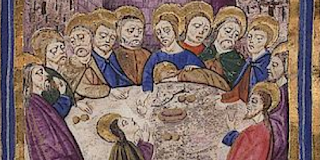
    In a full page composite Passion Week illumination, we see Judas hiding his face when the photo is taken at the Last Supper:
  32. Vat.lat.3731.pt.A, Henry VIII's autograph letters to Anne Boleyn with French translations. See also Rome Reborn from an exhibition in Washington. One letter was briefly lent in 2009 to the British Museum.
If you have corrections or additions, please use the comments box below. Follow me on Twitter (@JBPiggin) for news of more additions to Digita Vaticana. [This is Piggin's Unofficial List 42.]

2016-03-08

On the Beach

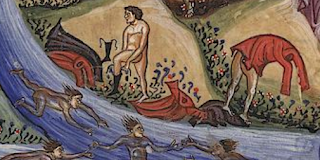
Leafing through a digitized Byzantine manuscript, I chanced on a beach scene. Not what you expect in a fervently religious codex like Vat.gr. 1162 at the Vatican. The Homilies of Jacobus Kokkinobaphos is an extraordinary illuminated cycle, based around six sermons by a late Byzantine monk, dealing with the life of the Virgin Mary.

This oddly 20th-century scene shows people at leisure in the water: What on earth is it about? The author of this book at Digita Vaticana is James Kokkinobaphos, a 12th-century monk of a so-far unidentified monastery.

The unexpected answer, according to Cosimo Stornajolo, the cataloguer of many such Vatican manuscripts, is that the image depicts Jor and Dan, personifications of the river Jordan. According to Stornajolo, the strange scene on folio 11v depicts Jor and Dan changing out of their clothes to bathe in the river Jordan, and the four swimmers below are simply the two men at various stages of their swim.

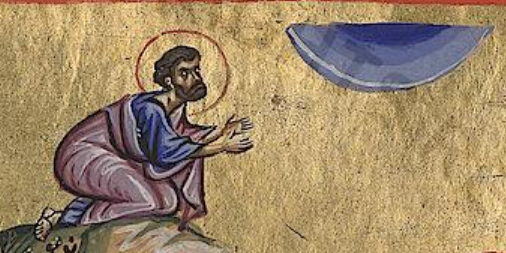
The reason this scene is included is explained by the upper part of the same miniature, which depicts Joachim, father of the Virgin, going up a mountain to pray in loneliness and desperation at his inability to obtain a child. This comes from the first homily, based on the apocryphal Protevangelium of James, on which I have posted in the past. He is not a happy chappie:

The frolicking seems to be an artistic device to create a contrast with his profound grief.  As he descends the mountain, the story takes a decisive turn: an angel announces to him his wife is no longer infertile and he eagerly steps up the pace home to beget the Baby Mary.

There was an ancient tradition, endorsed by Jerome of Stridon, alleging that the river had been named as the union of two tributaries, the Dan and the Jor: "Dan is one of the sources of the Jordan. For the other source is indeed called the Jor, which means rheithron, that is 'a brook'." (Quaestiones, Genesis 14:14) and "from whence the Jordan arises [bursts forth and receives its name. Ior is Hebrew for reithron, i.e., stream. or river (De quo et Jordanis flumen erumpens a loco sortitus est nomen. Jor quippe ῥεῖθρον, id est, fluvium sive rivum Hebraei vocant.)" (Onomast.)

Here is Stornajolo's plate of the bathing miniature with the description, "Prayer of Joachim". Stornajolo describes the swimmers as follows: Alcuni si bagnano nel Giordano, personificato da due mezze figure, che, secondo un'antica opinione, accettata anche da S. Girolamo, rappresentavano le due sorgenti lor e Dan, donde poi, secondo tale falsa opinione, sarebbe stato formato il nome del fiume.

Another manuscript of the Homilies is Paris BNF gr. 1208 (Pinakes) which is only online in black and white.

2016-03-03

Alfonso's History

One of the great figures of the Middle Ages is King Alfonso X of Castile and Leon (1221 – 1284), known as el Sabio, the Wise, who sponsored science, wrote poetry, treated the church with disdain and commissioned a massive history of the world to be written in Spanish, not Latin. This six-part work, the General Estoria, was never finished, stopping at the start of the current era.

Some sections only exist in manuscripts in Spain, some are lost, and the Vatican Library preserves the sole surviving copy from Alfonso's lifetime of Part Four, Urb. lat. 539, which begins at about 600 BCE and covers the great empires of Babylon (Nebuchadnezzar), Carthage, Alexander of Macedon and Rome. It has just arrived online, a gift to Spanish medievalists and linguists. See Dominguez on Google Books.

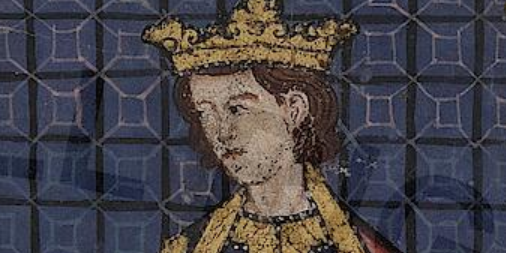
It's to be assumed that the portrait of Alfonso in it is painted from life:

On March 1, Digita Vaticana released 32 manuscripts to establish a new posted total of 3,916 digitized works. A large number are from the old papal library at Avignon, France and deal with the controversies of the papacy of John XXII (who was accused of heresy by his opponents).

Here is my strictly unofficial list (the Vatican Library makes no announcements and issues no lists, so you have to trust me on this):
  1. Chig.L.VIII.305, in Italian
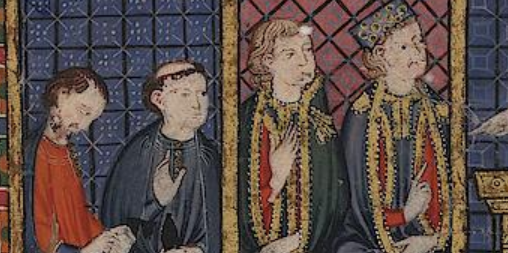
  2. Urb.lat.539, part four of the General Estoria compiled at the direction of King Alfonso X in Castilian Spanish (above). Here is a scribe (left) writing and a clergyman and two courtiers listening as the king speaks:
  3. Vat.lat.133, 12th-century Gospel of Luke, glossed
  4. Vat.lat.269, Ambrose of Milan, Hexaemeron and sermons
  5. Vat.lat.348, Letters of Jerome, also items of Augustine and others
  6. Vat.lat.413, 15th-century John Chrysostom
  7. Vat.lat.418, 15th-century Augustine, mainly De Trinitate
  8. Vat.lat.425, 11th/12th century Augustine, City of God
  9. Vat.lat.444, extracts, City of God
  10. Vat.lat.446, Augustine, miscellaneous
  11. Vat.lat.450, ditto
  12. Vat.lat.452, Augustine, on Psalms 51-88
  13. Vat.lat.461, Augustine, Retractions, etc.
  14. Vat.lat.465, Augustine, On Christian Doctrine
  15. Vat.lat.467, Augustine, misc.
  16. Vat.lat.468, Augustine and Bernard of Clairvaux
  17. Vat.lat.480, Augustine, misc.
  18. Vat.lat.561, Boethius, De Trinitate, Two Natures, etc.
  19. Vat.lat.738, one of at least 16 codices from the so-called "Littera grossa" collection of the works of Thomas Aquinas (Vat. lat. 731; Vat. lat. 732; Vat. lat. 738; Vat. lat. 745; Vat. lat. 747; Vat. lat. 757; Vat. lat. 784; Vat. lat. 785; Vat. lat. 787; Vat. lat. 807); commissioned by Pope John XXII, completed in Avignon in 1323, and later owned by the papal library at Avignon (Bibliotheca Avenionensis) during the time of Urban V, where they are attested in a list dated 1369. Thus noted with the St Louis microfilm.
  20. Vat.lat.745, see above
  21. Vat.lat.747,  see above
  22. Vat.lat.787.pt.1, see above
  23. Vat.lat.787.pt.2, see above
  24. Vat.lat.3359, 14th-century
  25. Vat.lat.3740, about 60 texts on apostolic poverty made to advise Pope John XXII at the time of a controversy with the Franciscans 1322-23 on the issue
  26. Vat.lat.3793, canzoni
  27. Vat.lat.3846,
  28. Vat.lat.3978, handbook for the Inquisition
  29. Vat.lat.4007, Annibal de Ceccano, cardinal bishop of Frascati, 1333
  30. Vat.lat.4857, Francis de Marchia, attack on Pope John XXII
  31. Vat.lat.5760, Ambrose of Milan, contents listed on Mirabile, made at Monastery of Bobbio, Italy. The first two folios are said to be palimpsests with masses for the dead and benedictions underneath (though I can see nothing in the digitizations) from Lowe's reconstructed CLA 1 38, TM 66133.
  32. Vat.lat.7568, Comedy of Dante, copied by one Bartolomeo
Two days later on March 3, Digita Vaticana uploaded another ten manuscripts, which I append here. Numbers 3-6 are part of the Thomas Aquinas Summa series mentioned above:
  1. Borgh.348, collection of opinions written in 1320 for Pope John XXII before 14th-century decision to extend inquisition to practitioners of "black magic" in southern France. Notes
  2. Ross.304, Augustine, To Aurelius of Carthage, etc.
  3. Vat.lat.731.pt.1
  4. Vat.lat.731.pt.2
  5. Vat.lat.732
  6. Vat.lat.785.pt.1
  7. Vat.lat.1130, anonymous (John of Paris?) on papal authority
  8. Vat.lat.2106, Peter of Auvergne (Petrus Alverniensis), see Logic Museum. With this fine initial (the devil's in the detail?) at fol 1v.
  9. Vat.lat.3986, Beltrominus, Bishop of Bologna, statutes for his court
  10. Vat.lat.4008, Chronicle of Nicholas Minorita, relating to the apostolic poverty controversy and the papacy of John XXII. See an edition here
If you have corrections or additions, please use the comments box below. Follow me on Twitter (@JBPiggin) for news of more additions to Digita Vaticana. [This is Piggin's Unofficial List 41.]

2016-02-22

Inflatable Ladder

With the end of antiquity, technological progress slowed to a crawl, and it is hardly surprising that a 10th-century Byzantine compiler charged with researching military technology which might be employed against the Arabs turned to books 800 or 900 years old to obtain ideas. That is the background to the celebrated Handbook of Siegecraft, Vat.gr.1605, which arrived online on February 22.

The great thing about this release is that there is a beautiful online edition by Denis Sullivan in PDF with an English translation, including a list of the images to explain them.

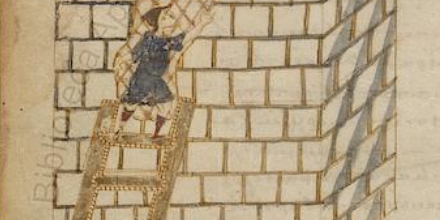
One of the handbook's most remarkable ideas faithfully transcribed from antiquity and perhaps never put into effect, was to use inflatable leather ladders to climb enemy walls. As a veteran battler with children's paddling pools (often frustrated as well by those silly little soft-plastic stoppers), I rather wonder who were the big-lunged persons who were supposed to inflate the ladders. The inflatable leather ladder is shown on fol 9v:
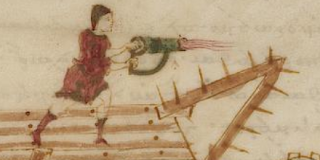
Also of interest is the flame-thrower on fol 36r, which is more of a Byzantine idea. The operator had to balance on top of a high tower and apparently had to be lightly clad because of the heat generated:

This codex, the anonymous author of which is given the sobriquet Heron of Byzantium, is a key source on first-millennium siegecraft, and can be compared to another Byzantine military manual, Vat.gr.1164, which has similar engines of war and was discussed on this blog a year ago.

In all, 32 manuscripts arrived online in the latest batch, most of them Greek. Here is my unofficial list:
  1. Barb.gr.14,
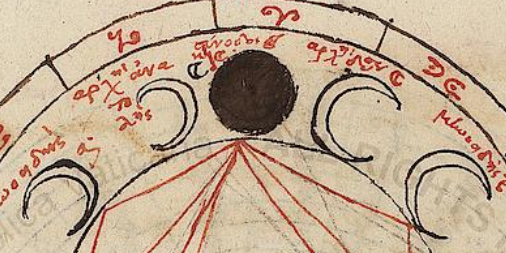
  2. Barb.gr.16, astronomy with moon phases
  3. Barb.gr.17, Emperor Maurice
  4. Barb.gr.22, Aristotle and Polybius
  5. Barb.gr.28, Julius Pollox, Onomasticon
  6. Barb.gr.41, Dorotheus of Gaza, Greek classics
  7. Barb.gr.43, Hesiod and Aratus Soleus. Pinakes
  8. Barb.gr.60,
  9. Barb.gr.64, Georgius Codinus
  10. Barb.gr.66,
  11. Barb.gr.123, Maximum Planudes, Epigrammata
  12. Barb.gr.235,
  13. Barb.gr.237, philosophers, extracts
  14. Borgh.205, Cyril of Alexandria, in Latin translation
  15. Ott.gr.150,
  16. Ott.gr.163,
  17. Ott.gr.185,
  18. Ott.gr.255,
  19. Pal.lat.910,
  20. Urb.gr.105,
  21. Vat.gr.354, A remarkable handbook to the gospels, with list and indices in canon format, discussed by Nordenfalk and Wallraff. Aland S.028  See Pinakes
  22. Vat.gr.462,Gregory Nazianz and others, Pinakes
  23. Vat.gr.749.pt.2, Septuagint Book of Job with catenae, made in the 9th century. Here are Job's three perfect daughters (fol 249v) as named only in the Septuagint, not the Hebrew text: He called the first Day, and the second Cassia and the third Horn of Amaltheia, and there were no more beautiful women under heaven than Job's daughters (LXX Job 42:17e).
  24. Vat.gr.756, Four Gospels
  25. Vat.gr.835, records of second Nicaean Council
  26. Vat.gr.1523, gospel lectionary
  27. Vat.gr.1605, Military Handbook by Heron of Byzantium, 11th-century copy (above)
  28. Vat.gr.1627, a 15th-century text of Homer's Odyssey, not illuminated
  29. Vat.gr.1947, Gregory Nazianz
  30. Vat.gr.2197, 9th century, Proclus Atheniensis etc
  31. Vat.gr.2200, 8th-9th century, theological texts
  32. Vat.lat.124, glossed gospels of Matthew and John
If you have corrections or additions, please use the comments box below. Follow me on Twitter (@JBPiggin) for news of more additions to Digita Vaticana. [This is Piggin's Unofficial List 40.]