2016-03-16

Love Letters of Henry VIII

Among the most celebrated possessions of the Vatican Library is a sheaf of 17 love letters written by King Henry VIII of England to his future second wife Anne Boleyn. The package, Vat.lat.3731.pt.A, was digitized and issued online late on March 15.

The BAV library has made no announcement. I am breaking the news here on the world's only portal  that monitors their largely unnoticed digital program.

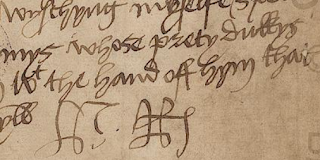
There can be no doubt the documents are genuine and date from 1527-28. Here is Henry's sign-off: "Written with the hand of him [which desireth as much to be yours as you do to have him],  H. AB  R."
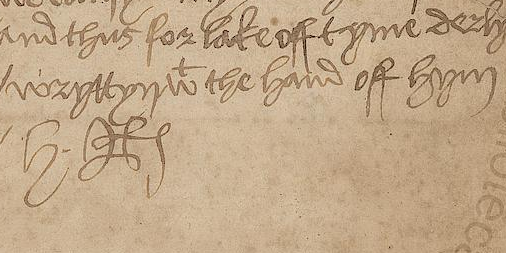
How they got to Rome is anyone's guess (perhaps stolen by a Boleyn confidant, probably taken via France, since French notes are attached). For centuries, Vatican librarians have been showing them to impress high-ranking English visitors to Rome. Now at last, the rest of us can be titillated too.

The reference to "pretty dukkys" in the screenshot above from folio 15 employs dug, the conventional 16th-century English word for a woman's breast. The whole sentence has Henry "wishing myself (especially an evening) in my sweetheart’s arms, whose pretty dukkys I trust shortly to kiss."

Devious Henry ends another letter: "No more to you at this present, mine own darling, for lack of time, but that I would you were in mine arms, or I in yours, for I think it long since I kissed you" (From Letter 16 as transcribed on The Anne Boleyn Files, which also has a debate about demanding their return to England.)

The story of Henry's seduction ended, as we know, badly. Henry divorced, wed Anne, but dumped her and had her beheaded at the Tower of London in 1536.

My unofficial list (the only list, since the Biblioteca Apostolica Vaticana issues none) of all  32 digitizations on March 15 follows. I will add more details as I have time: 
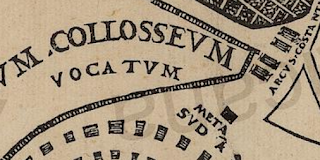
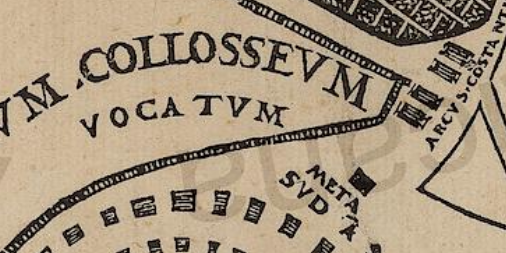
  1. Barb.lat.4432, Leonardo Bufalini's 1551 map of Rome, the first ever printed. None of the first printing survives and only three copies of the second printing (two at Vatican, one at British Library). This one is bound with an 1880 monograph describing it. Here is the Colosseum and Meta Sudans as they then were:
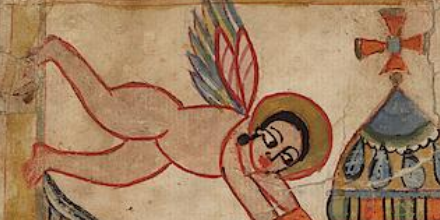
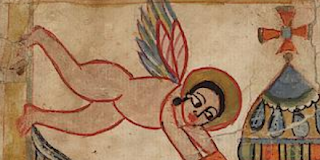
  2. Borg.arm.65, with this wonderful Armenian angel:
  3. Cappon.307, monumental inscriptions, many Greek
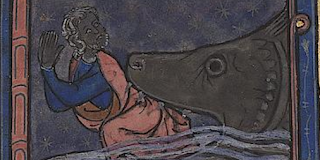
  4. Reg.lat.26, illuminated bible in Old French, 13th or 14th century. Here is Jonah being swallowed by the whale on fol. 178r (the silver has turned black):
  5. Urb.lat.90, Bernard of Clairvaux, Renaissance manuscript
  6. Urb.lat.219, Seneca, Letters, 15th C
  7. Urb.lat.245, Pliny the Younger, Natural History, manuscript dated 1440
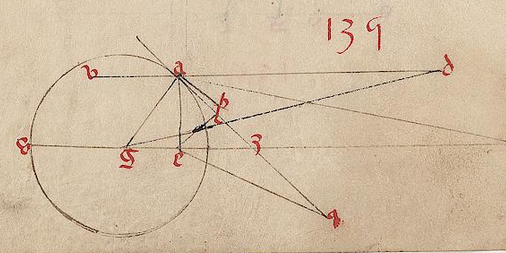
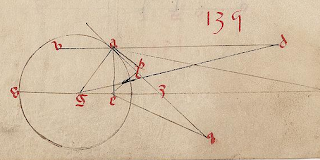
  8. Urb.lat.265, Vitello, Optica, 14th century, with many diagrams like this at fol. 19r
  9. Urb.lat.316, Cicero, Letters, 1453
  10. Urb.lat.322, Cicero, Letters, 15th century
  11. Urb.lat.335, Quintilian, Speeches, 15th century
  12. Urb.lat.385, Rufinus Latin of Eusebius, History of the Church
  13. Urb.lat.405, Piccolomini's history of Frederick III, 15th century
  14. Urb.lat.488, Origen of Alexandria in Rufinus translation
  15. Urb.lat.490, Urban of Urbanus, commentary
  16. Urb.lat.499, Nicolò di Vito Gozzi
  17. Urb.lat.504, On Zeno of Verona, plus section by Basil the Great
  18. Urb.lat.511, Bartholomew of San Concordio, moral treatise with alphabetical list of conscience issues
  19. Urb.lat.534, Antony de Sancto Leone
  20. Urb.lat.543, Canticles, glossed
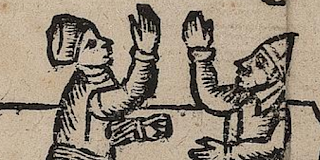
  21. Vat.ebr.530.pt.1, collection of unbound fragments and quires from various manuscripts and books, including what seems to be a 17th-century textbook with a schoolroom picture that depicts two Jewish schoolboys greeting one another with high fives:
  22. Vat.gr.357, Gospels, Pinakes
  23. Vat.gr.2365,
  24. Vat.lat.441, Augustine of Hippo, City of God
  25. Vat.lat.449, Augustine, On Genesis
  26. Vat.lat.481, Augustine, On Gospel of John
  27. Vat.lat.487, Augustine, De consensu evangelistarum
  28. Vat.lat.550, Leo the Great, Sermons
  29. Vat.lat.560, Boethius, De Trinitate, etc
  30. Vat.lat.563, Boethius, Consolations of Philosophy
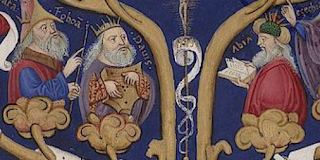
  31. Vat.lat.3467, the Count Paschasio Diaz Garion Psalter, a Latin prayer-book from Spanish Naples with illuminations by Matteo Felice, including a fine Virga Jesse as frontispiece: Here are some Judaean kings perched in the tree:
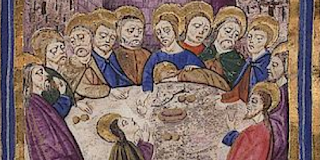
    In a full page composite Passion Week illumination, we see Judas hiding his face when the photo is taken at the Last Supper:
  32. Vat.lat.3731.pt.A, Henry VIII's autograph letters to Anne Boleyn with French translations. See also Rome Reborn from an exhibition in Washington. One letter was briefly lent in 2009 to the British Museum.
If you have corrections or additions, please use the comments box below. Follow me on Twitter (@JBPiggin) for news of more additions to Digita Vaticana. [This is Piggin's Unofficial List 42.]

2016-03-08

On the Beach

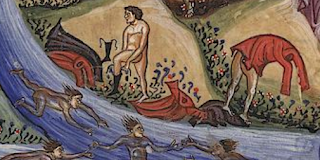
Leafing through a digitized Byzantine manuscript, I chanced on a beach scene. Not what you expect in a fervently religious codex like Vat.gr. 1162 at the Vatican. The Homilies of Jacobus Kokkinobaphos is an extraordinary illuminated cycle, based around six sermons by a late Byzantine monk, dealing with the life of the Virgin Mary.

This oddly 20th-century scene shows people at leisure in the water: What on earth is it about? The author of this book at Digita Vaticana is James Kokkinobaphos, a 12th-century monk of a so-far unidentified monastery.

The unexpected answer, according to Cosimo Stornajolo, the cataloguer of many such Vatican manuscripts, is that the image depicts Jor and Dan, personifications of the river Jordan. According to Stornajolo, the strange scene on folio 11v depicts Jor and Dan changing out of their clothes to bathe in the river Jordan, and the four swimmers below are simply the two men at various stages of their swim.

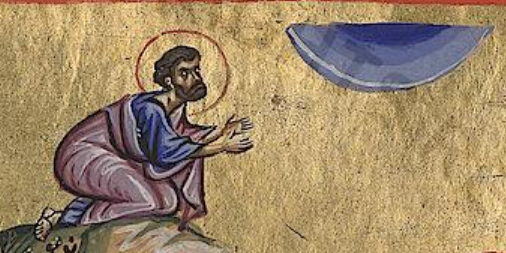
The reason this scene is included is explained by the upper part of the same miniature, which depicts Joachim, father of the Virgin, going up a mountain to pray in loneliness and desperation at his inability to obtain a child. This comes from the first homily, based on the apocryphal Protevangelium of James, on which I have posted in the past. He is not a happy chappie:

The frolicking seems to be an artistic device to create a contrast with his profound grief.  As he descends the mountain, the story takes a decisive turn: an angel announces to him his wife is no longer infertile and he eagerly steps up the pace home to beget the Baby Mary.

There was an ancient tradition, endorsed by Jerome of Stridon, alleging that the river had been named as the union of two tributaries, the Dan and the Jor: "Dan is one of the sources of the Jordan. For the other source is indeed called the Jor, which means rheithron, that is 'a brook'." (Quaestiones, Genesis 14:14) and "from whence the Jordan arises [bursts forth and receives its name. Ior is Hebrew for reithron, i.e., stream. or river (De quo et Jordanis flumen erumpens a loco sortitus est nomen. Jor quippe ῥεῖθρον, id est, fluvium sive rivum Hebraei vocant.)" (Onomast.)

Here is Stornajolo's plate of the bathing miniature with the description, "Prayer of Joachim". Stornajolo describes the swimmers as follows: Alcuni si bagnano nel Giordano, personificato da due mezze figure, che, secondo un'antica opinione, accettata anche da S. Girolamo, rappresentavano le due sorgenti lor e Dan, donde poi, secondo tale falsa opinione, sarebbe stato formato il nome del fiume.

Another manuscript of the Homilies is Paris BNF gr. 1208 (Pinakes) which is only online in black and white.

2016-03-03

Alfonso's History

One of the great figures of the Middle Ages is King Alfonso X of Castile and Leon (1221 – 1284), known as el Sabio, the Wise, who sponsored science, wrote poetry, treated the church with disdain and commissioned a massive history of the world to be written in Spanish, not Latin. This six-part work, the General Estoria, was never finished, stopping at the start of the current era.

Some sections only exist in manuscripts in Spain, some are lost, and the Vatican Library preserves the sole surviving copy from Alfonso's lifetime of Part Four, Urb. lat. 539, which begins at about 600 BCE and covers the great empires of Babylon (Nebuchadnezzar), Carthage, Alexander of Macedon and Rome. It has just arrived online, a gift to Spanish medievalists and linguists. See Dominguez on Google Books.

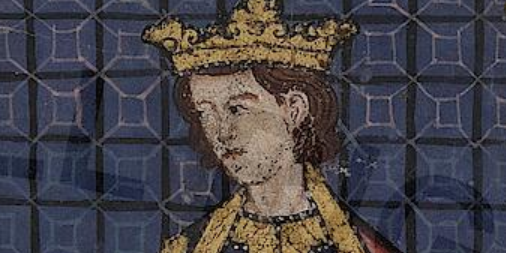
It's to be assumed that the portrait of Alfonso in it is painted from life:

On March 1, Digita Vaticana released 32 manuscripts to establish a new posted total of 3,916 digitized works. A large number are from the old papal library at Avignon, France and deal with the controversies of the papacy of John XXII (who was accused of heresy by his opponents).

Here is my strictly unofficial list (the Vatican Library makes no announcements and issues no lists, so you have to trust me on this):
  1. Chig.L.VIII.305, in Italian
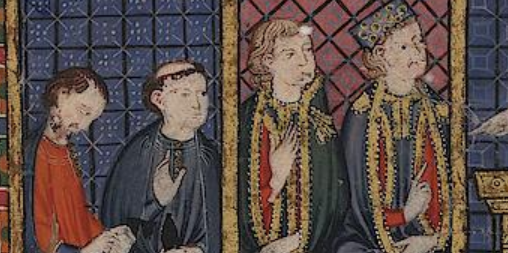
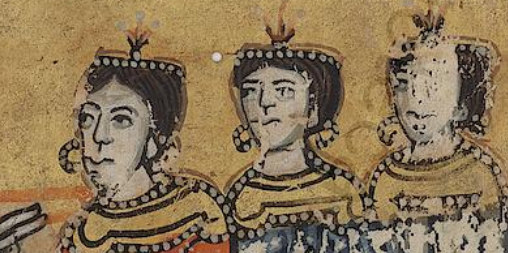
  2. Urb.lat.539, part four of the General Estoria compiled at the direction of King Alfonso X in Castilian Spanish (above). Here is a scribe (left) writing and a clergyman and two courtiers listening as the king speaks:
  3. Vat.lat.133, 12th-century Gospel of Luke, glossed
  4. Vat.lat.269, Ambrose of Milan, Hexaemeron and sermons
  5. Vat.lat.348, Letters of Jerome, also items of Augustine and others
  6. Vat.lat.413, 15th-century John Chrysostom
  7. Vat.lat.418, 15th-century Augustine, mainly De Trinitate
  8. Vat.lat.425, 11th/12th century Augustine, City of God
  9. Vat.lat.444, extracts, City of God
  10. Vat.lat.446, Augustine, miscellaneous
  11. Vat.lat.450, ditto
  12. Vat.lat.452, Augustine, on Psalms 51-88
  13. Vat.lat.461, Augustine, Retractions, etc.
  14. Vat.lat.465, Augustine, On Christian Doctrine
  15. Vat.lat.467, Augustine, misc.
  16. Vat.lat.468, Augustine and Bernard of Clairvaux
  17. Vat.lat.480, Augustine, misc.
  18. Vat.lat.561, Boethius, De Trinitate, Two Natures, etc.
  19. Vat.lat.738, one of at least 16 codices from the so-called "Littera grossa" collection of the works of Thomas Aquinas (Vat. lat. 731; Vat. lat. 732; Vat. lat. 738; Vat. lat. 745; Vat. lat. 747; Vat. lat. 757; Vat. lat. 784; Vat. lat. 785; Vat. lat. 787; Vat. lat. 807); commissioned by Pope John XXII, completed in Avignon in 1323, and later owned by the papal library at Avignon (Bibliotheca Avenionensis) during the time of Urban V, where they are attested in a list dated 1369. Thus noted with the St Louis microfilm.
  20. Vat.lat.745, see above
  21. Vat.lat.747,  see above
  22. Vat.lat.787.pt.1, see above
  23. Vat.lat.787.pt.2, see above
  24. Vat.lat.3359, 14th-century
  25. Vat.lat.3740, about 60 texts on apostolic poverty made to advise Pope John XXII at the time of a controversy with the Franciscans 1322-23 on the issue
  26. Vat.lat.3793, canzoni
  27. Vat.lat.3846,
  28. Vat.lat.3978, handbook for the Inquisition
  29. Vat.lat.4007, Annibal de Ceccano, cardinal bishop of Frascati, 1333
  30. Vat.lat.4857, Francis de Marchia, attack on Pope John XXII
  31. Vat.lat.5760, Ambrose of Milan, contents listed on Mirabile, made at Monastery of Bobbio, Italy. The first two folios are said to be palimpsests with masses for the dead and benedictions underneath (though I can see nothing in the digitizations) from Lowe's reconstructed CLA 1 38, TM 66133.
  32. Vat.lat.7568, Comedy of Dante, copied by one Bartolomeo
Two days later on March 3, Digita Vaticana uploaded another ten manuscripts, which I append here. Numbers 3-6 are part of the Thomas Aquinas Summa series mentioned above:
  1. Borgh.348, collection of opinions written in 1320 for Pope John XXII before 14th-century decision to extend inquisition to practitioners of "black magic" in southern France. Notes
  2. Ross.304, Augustine, To Aurelius of Carthage, etc.
  3. Vat.lat.731.pt.1
  4. Vat.lat.731.pt.2
  5. Vat.lat.732
  6. Vat.lat.785.pt.1
  7. Vat.lat.1130, anonymous (John of Paris?) on papal authority
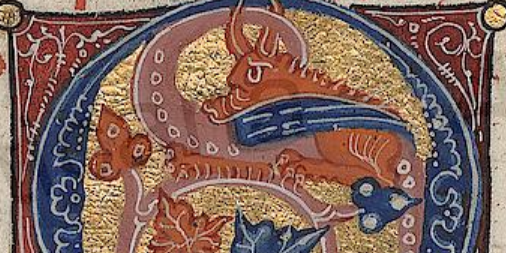
  8. Vat.lat.2106, Peter of Auvergne (Petrus Alverniensis), see Logic Museum. With this fine initial (the devil's in the detail?) at fol 1v.
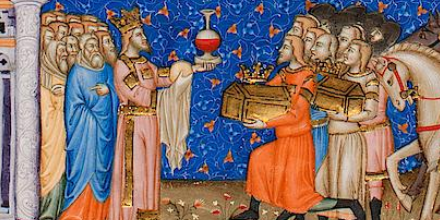
  9. Vat.lat.3986, Beltrominus, Bishop of Bologna, statutes for his court
  10. Vat.lat.4008, Chronicle of Nicholas Minorita, relating to the apostolic poverty controversy and the papacy of John XXII. See an edition here
If you have corrections or additions, please use the comments box below. Follow me on Twitter (@JBPiggin) for news of more additions to Digita Vaticana. [This is Piggin's Unofficial List 41.]

2016-02-22

Inflatable Ladder

With the end of antiquity, technological progress slowed to a crawl, and it is hardly surprising that a 10th-century Byzantine compiler charged with researching military technology which might be employed against the Arabs turned to books 800 or 900 years old to obtain ideas. That is the background to the celebrated Handbook of Siegecraft, Vat.gr.1605, which arrived online on February 22.

The great thing about this release is that there is a beautiful online edition by Denis Sullivan in PDF with an English translation, including a list of the images to explain them.

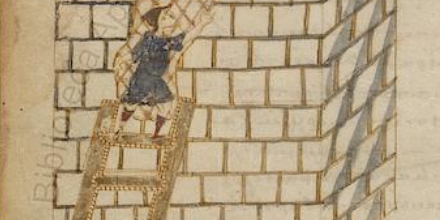
One of the handbook's most remarkable ideas faithfully transcribed from antiquity and perhaps never put into effect, was to use inflatable leather ladders to climb enemy walls. As a veteran battler with children's paddling pools (often frustrated as well by those silly little soft-plastic stoppers), I rather wonder who were the big-lunged persons who were supposed to inflate the ladders. The inflatable leather ladder is shown on fol 9v:
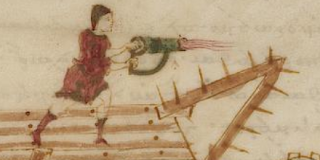
Also of interest is the flame-thrower on fol 36r, which is more of a Byzantine idea. The operator had to balance on top of a high tower and apparently had to be lightly clad because of the heat generated:

This codex, the anonymous author of which is given the sobriquet Heron of Byzantium, is a key source on first-millennium siegecraft, and can be compared to another Byzantine military manual, Vat.gr.1164, which has similar engines of war and was discussed on this blog a year ago.

In all, 32 manuscripts arrived online in the latest batch, most of them Greek. Here is my unofficial list:
  1. Barb.gr.14,
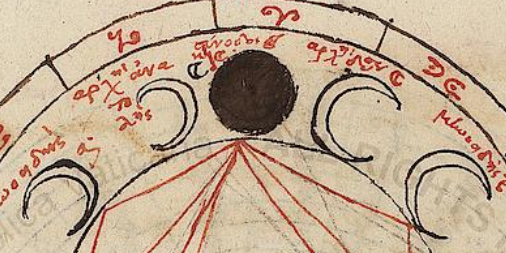
  2. Barb.gr.16, astronomy with moon phases
  3. Barb.gr.17, Emperor Maurice
  4. Barb.gr.22, Aristotle and Polybius
  5. Barb.gr.28, Julius Pollox, Onomasticon
  6. Barb.gr.41, Dorotheus of Gaza, Greek classics
  7. Barb.gr.43, Hesiod and Aratus Soleus. Pinakes
  8. Barb.gr.60,
  9. Barb.gr.64, Georgius Codinus
  10. Barb.gr.66,
  11. Barb.gr.123, Maximum Planudes, Epigrammata
  12. Barb.gr.235,
  13. Barb.gr.237, philosophers, extracts
  14. Borgh.205, Cyril of Alexandria, in Latin translation
  15. Ott.gr.150,
  16. Ott.gr.163,
  17. Ott.gr.185,
  18. Ott.gr.255,
  19. Pal.lat.910,
  20. Urb.gr.105,
  21. Vat.gr.354, A remarkable handbook to the gospels, with list and indices in canon format, discussed by Nordenfalk and Wallraff. Aland S.028  See Pinakes
  22. Vat.gr.462,Gregory Nazianz and others, Pinakes
  23. Vat.gr.749.pt.2, Septuagint Book of Job with catenae, made in the 9th century. Here are Job's three perfect daughters (fol 249v) as named only in the Septuagint, not the Hebrew text: He called the first Day, and the second Cassia and the third Horn of Amaltheia, and there were no more beautiful women under heaven than Job's daughters (LXX Job 42:17e).
  24. Vat.gr.756, Four Gospels
  25. Vat.gr.835, records of second Nicaean Council
  26. Vat.gr.1523, gospel lectionary
  27. Vat.gr.1605, Military Handbook by Heron of Byzantium, 11th-century copy (above)
  28. Vat.gr.1627, a 15th-century text of Homer's Odyssey, not illuminated
  29. Vat.gr.1947, Gregory Nazianz
  30. Vat.gr.2197, 9th century, Proclus Atheniensis etc
  31. Vat.gr.2200, 8th-9th century, theological texts
  32. Vat.lat.124, glossed gospels of Matthew and John
If you have corrections or additions, please use the comments box below. Follow me on Twitter (@JBPiggin) for news of more additions to Digita Vaticana. [This is Piggin's Unofficial List 40.]

2016-02-15

Vatican Euclid Online

Probably the most famous mathematical manuscript in the world, the Vatican Euclid, arrived online on 2016 February 15, marking a major moment in the democratization of culture as well as a key milestone in the donor-funded efforts to digitize the 83,000 manuscripts at the Vatican Library in Rome.

Ivor Bulmer-Thomas argues that Euclid (who lived about 300 BCE) is the most celebrated mathematician of all time on account of the precocity and volume of his work. The 9th-century Vatican manuscript, Vat. gr. 190, is the only codex in the world containing Euclid's work without major adulteration.

Every other surviving manuscript contains alterations by the 4th-century-CE mathematician Theon of Alexandria, who altered Euclid's language, interpolated intermediate steps and supplied alternative proofs, separate cases and corollaries. As the only non-Theonian witness, Vat. gr. 190, now bound in two parts in Rome, is one of the most precious cultural treasures of humankind.

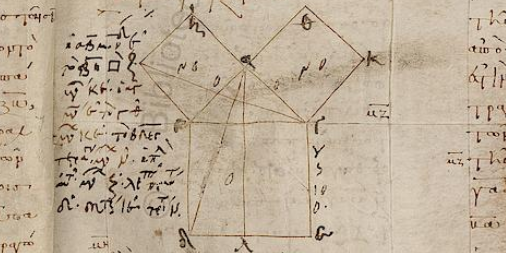
Here is its Pythagorean Theorem, Book I Proposition 47, perhaps the most famous proof in all mathematics, on folio 39r. You could understand it without knowing a word of Greek:

The purity of the Vatican Euclid was discovered by the mathematical historian Francois Peyrard in 1808 and the codex became the basis of Heiberg’s definitive edition of Euclid's Elements.

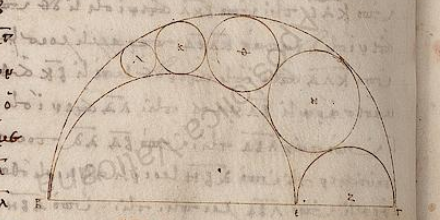
Its arrival online overshadows everything else in the following list, even the unique Vatican Pappus, Mathematical Collections Books 2-8, Vat. gr. 218, by another Greek mathematician of vast stature, the 4th-century-CE writer Pappus. Every other Pappus in the world depends on this incomplete Rome copy, and as you can see, Book 1 is forever lost. Here's a diagram from fol. 38v:

When the Pappus figured in the Rome Reborn exhibition, Anthony Grafton described it as the "last important work in Greek mathematics". As Jeremy Norman comments, it is sometimes the only source of information about Pappus's predecessors. But the thunder of even its release is stolen by the Euclid. Both were apparently sponsored by the Polonsky project.

Here is the full list of new uploads at the Biblioteca Apostolica Vaticana, which brings the posted total on Digita Vaticana to 3,852.
  1. Barb.gr.39, Cyril of Alexandria, Lexicon
  2. Barb.gr.70,
  3. Barb.gr.281,
  4. Ott.gr.85,
  5. Ott.gr.181,
  6. Ott.gr.232,
  7. Ott.gr.233,
  8. Ott.gr.237,
  9. Ott.gr.249.pt.1,
  10. Ott.gr.249.pt.2,
  11. Ott.gr.260,
  12. Ott.gr.335,
  13. Ott.gr.338,
  14. Ott.gr.352,
  15. Ott.gr.365,
  16. Ott.gr.366,
  17. Ott.gr.367,
  18. Ott.gr.373,
  19. Ott.gr.379,
  20. Ott.gr.380,
  21. Ott.gr.385,
  22. Urb.gr.15,
  23. Urb.gr.61, Theophrastus, Historia Plantarum and De Causis Plantarum
  24. Urb.gr.136,
  25. Urb.gr.137,
  26. Urb.lat.143, Bonaventura
  27. Urb.lat.203, Plato's Timaeus in Latin, translation
  28. Urb.lat.243, Medical, Joannis filii Serapionis
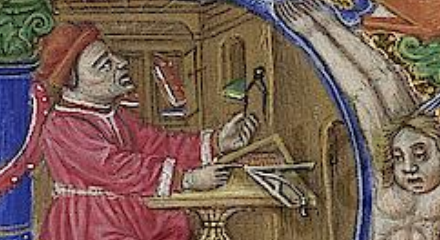
  29. Urb.lat.261, Archimedes, Sphere and Cylinder etc, in Latin, with Archimedes at his desk on folio 102r: Surely that's not an electric reading lamp he is snipping on in ancient Syracuse?
     
    But a smart historian just explained to me that he is holding up a compass, and the green "lampshade" is actually a windowsill.
  30. Urb.lat.305, Valla Laurentius, on Latin style
  31. Urb.lat.310, Attic Nights, Aulius Gellius
  32. Urb.lat.318, Cicero, Letters
  33. Urb.lat.328, Cicero, with commentary by Boethius
  34. Urb.lat.360, Constantius Antonius, commentary on Ovid
  35. Urb.lat.383, Cassiodorus
  36. Urb.lat.387, Giannozzo Manetti, works
  37. Urb.lat.400, Flavius Josephus, Antiquities of the Jews, in Latin translation
  38. Urb.lat.406, Pope Pius II, bulls
  39. Urb.lat.407.pt.2, Pius II, writings
  40. Urb.lat.433, Eutropius, De gestis romanorum
  41. Urb.lat.438, Iustini M. Iuniani
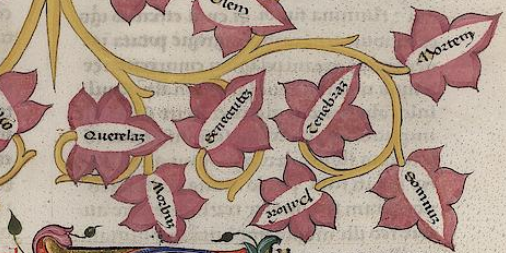
  42. Urb.lat.450, Boccaccio, Genealogia Deorum (1360), a kind of study edition, with a 60-page alphabetical index of gods which Colluccio Salutati commissioned from Domenico Bandini (c.1335-1418) (discussed 1927 by Wilkins, who uses the 1879 Hortis list of Genealogia manuscripts). Compare this to Boccaccio's second autograph of the same work, online at Florence. Urb.lat.450 features Boccaccio's famous leaf-form stemmata:
  43. Urb.lat.452, Boccaccio, etc, descriptions of Italy
  44. Urb.lat.493, Genealogies of noble families of Castille and Navarre, in Spanish, dated 1620; these are textual, not diagrammatic
  45. Urb.lat.495, Cafari de Caschifellone
  46. Urb.lat.496, Bartholomaeus Fatius, De rebus gestis ab Alfonso I neapolitanorum rege
  47. Urb.lat.501,
  48. Urb.lat.510,
  49. Urb.lat.514,
  50. Urb.lat.525,
  51. Urb.lat.556,
  52. Vat.ebr.144,
  53. Vat.gr.190.pt.1, Euclid, Elements, see above
  54. Vat.gr.190.pt.2, Euclid and Theon, see above
  55. Vat.gr.218, the Vatican Pappus, St Louis description.
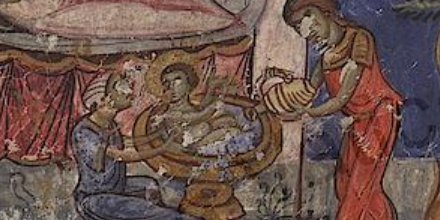
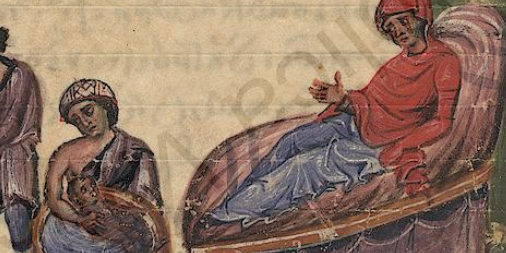
  56. Vat.gr.333, the Vatican Book of Kings, a richly illustrated 11th- or 12th-century manuscript which is often resorted to as a document of Byzantine warfare and customs. Here is the first washing of a newborn child (Solomon) (top), compared with a similar scene (not sure what baby) from Vat.gr.746, fol 59r (below):
  57. Vat.gr.351,
  58. Vat.gr.460,
  59. Vat.gr.666,
  60. Vat.gr.746.pt.2,
  61. Vat.gr.788.pt.A,
  62. Vat.gr.788.pt.B,
  63. Vat.gr.853.pt.1,
  64. Vat.gr.853.pt.2,
  65. Vat.gr.1522,
  66. Vat.gr.1594, this is the most famous and best of all the manuscripts of Ptolemy's Almagest, originally entitled "Μαθηματικὴ Σύνταξις" (Mathēmatikē Syntaxis). The work was written by the great Alexandrian scientist in the 2nd century and this is a 9th-century copy. The work describes the apparent motions of the stars and planets. See a description in the Rome Reborn exhibition.
  67. Vat.gr.1666,
  68. Vat.gr.1851,
  69. Vat.gr.2249,
  70. Vat.lat.34,
  71. Vat.lat.46,
  72. Vat.lat.131,
  73. Vat.lat.141,
  74. Vat.lat.157, Nicholas of Lyra, Postillae with fine coloured maps of temple
  75. Vat.lat.159, Nicholas of Lyra, Postillae
  76. Vat.lat.169, Dionysius Areopagita
  77. Vat.lat.191, Tertullian, Against Marcion and other works
  78. Vat.lat.208, Origen, homilies, and Gregory Nazianz
  79. Vat.lat.214, John Scotus Eriugena and Didymus
  80. Vat.lat.218, Lactantius, Divinarum Institutionum, De Ira Dei and some Augustine of Hippo
  81. Vat.lat.219, Lactantius, Divinarum Institutionum
  82. Vat.lat.231, Eusebius, Praeparatio Evangelica
  83. Vat.lat.247, Eusebius, Chronological Canons
  84. Vat.lat.4817, Angelo Colocci autograph?
It remains to note that one item was withdrawn from the site on Feb 12:
Borg.copt.109.cass.VII.fasc.65.2

At the same time, the ranks of the Palatina library online grew, not on the BAV website, but on the portal in Heidelberg, Germany which has the first right as sponsor to issue these online:
  1. Pal. lat. 712 Manuale collectum de summa confessorum (Raymundi de Pennaforti) (14. Jh.)
  2. Pal. lat. 718 Sammelhandschrift (15.-16. Jh.), important as a source of the Tractatus de usuris of Antoninus of Florence (1389-1459) See note 
  3. Pal. lat. 717 Sammelhandschrift (14.-15. Jh.)
  4. Pal. lat. 713 Fr. Baetholomei de Chaimis de Mediolano ord. minorum, Interrorogatorium siue confessionale (1477)
  5. Pal. lat. 716 Michaelis Gass: Archimusici Principis Ludovici Palatini tercii directorium omnium eorum quae per tocius anni curriculum in sacello illustrissimi Principis Palatini canuntur et aguntur (1533)
  6. Pal. lat. 707 Iohannis (Friburgensis): Lectoris idem opus integrum (14. Jh.)
  7. Pal. lat. 705 Sammelhandschrift (15. Jh.)
  8. Pal. lat. 704 Mag. Raymundi (de Pennaforti), Summa de poenitentia et de matrimonio (14. Jh.)
  9. Pal. lat. 702 Summa de vitiis (13.-14. Jh.) 
  10. Pal. lat. 724 Sammelhandschrift (15. Jh.) 
  11. Pal. lat. 731 Digestum vetus (14. Jh.)
As I noted in my previous post, interest is now growing in the original diagrams which the Greek mathematicians drew and in undoing the editorial vandalism which Heiberg and others did to these figures.

Professor Ken Saito of Osaka, the leading figure in this work of diagrammatic reconstruction, kindly sent me earlier this month an offprint of his very important and difficult-to-find 2006 article in which he launched this returning to the source for Euclid's Elements. His precise plots of the Euclidean diagrams continue to be published on his website, GreekMath.org, and each of his surveys naturally always begins with the Vatican Euclid as its prime source. If you get puzzled, the pagination in his two PDFs is as follows:
  • The Diagrams of Book II and III [and of Book IV and of Book VI] of the Elements in Greek Manuscripts: pages 39-80; 161-196 
  • The Greek Manuscript Diagrams of the Elements: Book VI, Book XI, Book XII, Book XIII: pages 71-179
Of the other five Euclids used by Heiberg (Pinakes has a much longer list), most are already online:
If you have corrections or additions, please use the comments box below. Follow me on Twitter (@JBPiggin) for news of more additions to Digita Vaticana. [This is Piggin's Unofficial List 39.]

Bulmer-Thomas, Ivor. “Euclid: Life and Works.” Dictionary of Scientific Biography, 1971. Online.
Heiberg, Johan Ludvig. Euclidis Elementa. 6 vols. Leipzig: Teubner, 1883. Online.
Murdoch, John E. “Euclid: Transmission of the Elements.” Dictionary of Scientific Biography, 1971. Online.
Saito, Ken. “A Preliminary Study in the Critical Assessment of Diagrams in Greek Mathematical Works.” SCIAMVS 7 (2006): 81-144.

2016-02-13

Heron's Automatic Machines

Among ancient diagrams, none exercise greater fascination for modern people than the sketches of amusing little self-driven machines by the first-century engineer Hero of Alexandria (or Heron to use the Greek form). These diagrams were effectively discarded and redrawn from scratch in the Nix-Schmidt edition of the Automata of 1899 (downloadable as Hero, vol I at WilbourHall.org).

Heron's designs are especially interesting because the motions of the gadgets are semi-programmable, thanks to cords that unroll from rods with reversing windings. With our refound interest in how the antique world visualized, it is naturally desirable to see what the manuscript tradition tells us about Heron's own drawings, rather than what a 19th-century scholar did to "correct" them.

This return to the sources has come a long way, especially in regard to diagrams of ancient geometry. Professor Ken Saito (who is one of the stars of Netz and Noel's The Archimedes Codex) compares plots of Euclidean geometrical diagrams from the different manuscripts in profound detail, both on his website GreekMath.org and in SCIAMVS, the journal where he sits on the editorial board. But on Heron, there seems to be less available. The dean of antiquities bloggers, Roger Pearse, threw out the question some years back about where the manuscripts are and recently returned to the question.

From Francesco Grillo, I learn that 39 manuscripts survive of the Automata or Περὶ αὐτοματοποιητικῆς (‘On the Making of Automata’). Ambrosetti (below) offers a database of them. Schmidt used the following four of them for his 1899 edition:
  • A cod Marcianus 516, 13th century, not online
  • G cod Gudianus 19, 16th century, not online
  • T cod Taurinensis B.V.20, dated 1541, not online
  • M cod Magliabecchianus II. III 36, 16th century, not online

Only one of these, A, was listed as of 2016-02-13 on the page dealing with the Automata at Pinakes, the best online springboard to Greek manuscripts. As far as I can tell, M is an item in the collection of Antonio Magliabechi (1633-1714) at the Biblioteca Nazionale Centrale di Firenze but I cannot find a catalog link to any shelf-mark Magl. III II 36 there. Grillo indicates that T and M are now regarded as the 'worst' branch of the tradition.

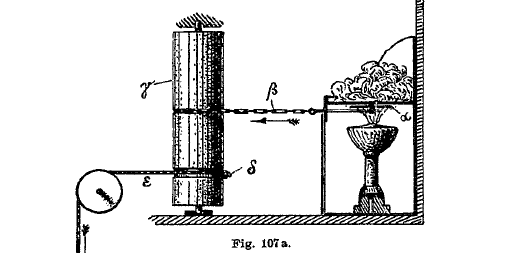
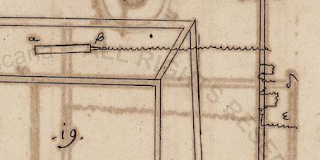
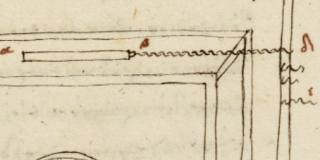
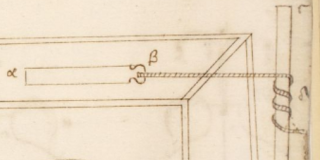
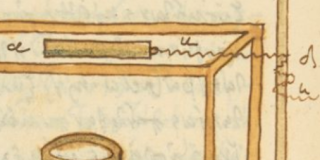
I actually had far more difficulty matching Schmidt's drawings to those in the manuscripts than I was expecting to have. After some fumbling, I have gathered here images of one of Heron's devices, a kind of mechanical dimmer switch which allows a flame to gradually flare up, which turns out to be Schmidt figure 107. Comparing this to the manuscripts, one sees how peremptory he was in simply inventing a whole new figure:

  1. BAV: Barb.gr.261  
  2. BL: Harley 5605  
  3. BL: Harley 5589
  4. BL: Burney 108 
It will be interesting to see if the whole manuscript tradition is uniform in the way these diagrams are formed. Not yet online are:
  1. ÖNB 
  2. BNF
  3. BNE, MSS/4788
  4. BSB graec. 431
  5. BSB graec. 577 
  6. Copenhagen 
Also of interest is the 1589 Venice edition of Heron in Italian by Bernardino Baldi (BSB) printed before some of the above manuscripts were made. It ends before the figure above.

Here is some of the literature I have consulted:

Ambrosetti, Nadia. “Cultural Roots of Technology: An Interdisciplinary Study of Automated Systems from the Antiquity to the Renaissance.” Milano, 2010. PDF.
Asaro, Peter. “Hero (2003).” An attempt to make a Heron device work. Accessed February 21, 2013.
Drachmann, A G. “Hero of Alexandria.” Complete Dictionary of Scientific Biography, 2008. Online.
Grillo, Francesco. “Hero of Alexandria’s Περὶ αὐτοματοποιητικῶν: The Collation of the ‘Worst’ Manuscripts.” Abstract.
McCourt, Finlay. “An Examination of the Mechanisms of Movement in Heron of Alexandria’s On Automaton-Making.” In Explorations in the History of Machines and Mechanisms: Proceedings of HMM2012, edited by Teun Koetsier and Marco Ceccarelli. Springer, 2012. DOI.
McKenzie, Judith. “Heron of Alexandria, Mechanikos.” In The Architecture of Alexandria and Egypt, C. 300 B.C. to A.D. 700, 323–25. Yale University Press, 2007.
Murphy, Susan. “Heron of Alexandria’s ‘On Automaton-Making.’” History of Technology 17 (1995): 1–44.
Sharkey, Noel. “The Programmable Robot of Ancient Greece.” New Scientist 195 (July 7, 2007): 2611.
Tybjerg, Karin. “Hero of Alexandria’s Mechanical Geometry.” Apeiron 37, no. 4 (January 2004). doi:10.1515/APEIRON.2004.37.4.29.
———. “Wonder-Making and Philosophical Wonder in Hero of Alexandria.” Studies in History and Philosophy of Science Part A 34, no. 3 (2003): 443–66.
Vitrac, Bernard. “Faut-il réhabiliter Héron d’Alexandrie?” Les Actes du Congrès de l’Association Guillaume Budé l’homme et la Science à Montpellier, 2008, 01–04.

If you have corrections or additions, please use the comments box below. Follow me on Twitter (@JBPiggin) for news of more posts.

2016-02-02

Galileo's Letters

Having trudged uphill in Florence to see a house in the street Costa de S. Giorgio which once belonged to Galileo Galilei (1564-1642) and reflected on the extraordinary (but non-fatal) conflict of Tuscany's court mathematician with the Inquisition, I was pleased to see a collection of his letters to his clerical friends show up in the February 1, 2016 batch of 85 digitizations at Digita Vaticana.

The house is not so great (no view, no plaza, steep street, here's a tour guide). The letters are written the way we all used to write to save paper: both sides. The ink ended up going all the way through. That's handy to get a sense of the ordinariness of Galileo and push away the mythic, exaggerated, immaculate aura he tends to take on in any account of the history of science.

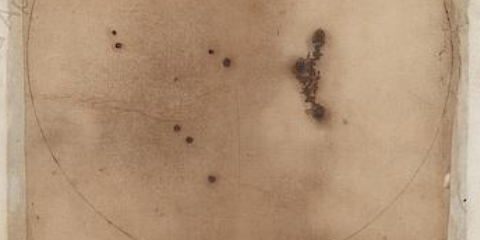
See his drawing of sunspots on paper that is now discoloured. The digitizers provide spectrally adjusted scans of some of the most illegible sheets so you can read them better.

The newest digitizations, which take the posted total to 3,769 are full of beautiful things including five portolans (the resolution is still too low to read the place-names), the Pantheon Bible, the Planisio Bible and the Gospels of Monreale. The Biblioteca Apostolica Vaticana makes no running announcements about this project, so here, strictly unofficially, is the list I have compiled. The links are to catalog pages: when you arrive, click the book symbol to see the digitization.
  1. Barb.gr.197, miscellaneous authors, with a maze at 107r
  2. Barb.lat.6479, eighteen letters by Galileo. See the St Louis catalog. Of especial interest is Galileo's drawing on folio 18r of sunspots which he had observed:
    Anthony Grafton's Rome Reborn catalog notes that the spots' discovery "proved that the sun was not the perfect, unchanging body that traditional Aristotelian cosmology considered it to be. Galileo's work received strong support for a long time from [Maffeo Barberini (1597-1679], the future Pope Urban VIII."
  3. Barb.lat.6480,
  4. Borg.Carte.naut.VIII, portolan of Mediterranean to Baltic, seemingly the subject of Arthur Dürst's Seekarte des Andrea Benincasa (Borgiano VIII), 1508, though it has no Campbell number. See MapHistory.info
  5. Borg.Carte.naut.IX, portolan of Mediterranean (post 1600?)
  6. Borg.Carte.naut.X, portolan of Mediterranean and Black Sea (post 1600?)
  7. Borg.Carte.naut.XI, portolan of Mediterranean, fancy compass roses (post 1600?)
  8. Borg.Carte.naut.XIII, atlas of portolan maps; seemingly this has no Campbell number
  9. Borg.copt.109.cass.XV.fasc.53,
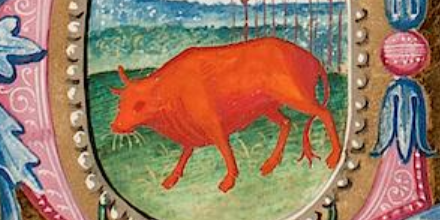
  10. Borg.lat.425, a richly illuminated Christmas missal. But what is this? An ad for the Austrian caffeinated soft drink Red Bull? [We have not checked the missal page yet, but Tuomas Levänen points out on Twitter this is likely to be the red heifer that Yahweh tells Moses and Aaron to slaughter and burn at Numbers 19: 1-10]
  11. Borg.sir.81,
  12. Chig.L.V.176, Boccaccio's Life of Dante, poetry about Dante, etc.
  13. Ott.gr.19,
  14. Ott.gr.179,
  15. Ott.gr.189,
  16. Ott.gr.192.pt.1,
  17. Ott.gr.193,
  18. Ott.gr.194,
  19. Ott.gr.207,
  20. Ott.gr.213,
  21. Pal.lat.471,
  22. Pal.lat.1491,
  23. Pal.lat.1493,
  24. Pal.lat.1494,
  25. Pal.lat.1495,
  26. Pal.lat.1496,
  27. Pal.lat.1518,
  28. Pal.lat.1524,
  29. Pal.lat.1540,
  30. Pal.lat.1553,
  31. Pal.lat.1554,
  32. Pal.lat.1556,
  33. Pal.lat.1557,
  34. Pal.lat.1562,
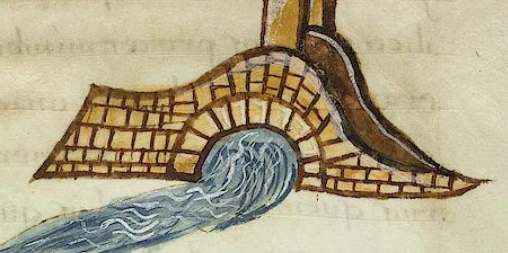
  35. Pal.lat.1564, the Agrimensores Codex, a superb copy made at the 9th century court of Louis he Pious in Aachen, Germany of a classical work. Not new online, and the Heidelberg viewer is better if you want to examine this one in detail. Here's a humpback bridge:
  36. Pal.lat.1572,
  37. Pal.lat.1574,
  38. Pal.lat.1589,
  39. Pal.lat.1594,
  40. Pal.lat.1605,
  41. Pal.lat.1607,
  42. Pal.lat.1615,
  43. Pal.lat.1643,
  44. Pal.lat.1647,
  45. Pal.lat.1652,
  46. Pal.lat.1657,
  47. Patetta.1471, Benedetto Varchi's Florentine History of 1538
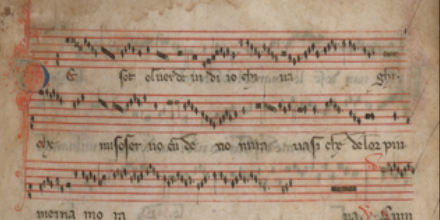
  48. Ross.215, the Rossi Codex, one of the earliest sources of 14th-century secular Italian music.
    Jeremy Norman's HistoryofInformation.com pulls together key facts about this treasure from Italy's far north, probably Verona, which only gained wide musicological attention less than a century ago.
  49. Urb.gr.110,
  50. Vat.gr.126,
  51. Vat.gr.342,
  52. Vat.gr.633,
  53. Vat.gr.1013,
  54. Vat.gr.1553,
  55. Vat.gr.2458,
  56. Vat.lat.37,
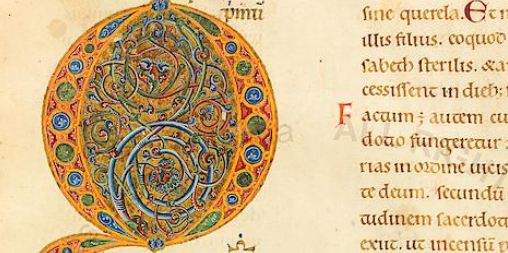
  57. Vat.lat.42, the Gospels of Monreale (Sicily), dated to about 1450, a large-format codex with elaborate initials like this Q. One wonders if there is not some Islamic artistic influence here:
  58. Vat.lat.163,
  59. Vat.lat.174,
  60. Vat.lat.279,
  61. Vat.lat.299,
  62. Vat.lat.300,
  63. Vat.lat.308,
  64. Vat.lat.312,
  65. Vat.lat.325,
  66. Vat.lat.328,
  67. Vat.lat.356,
  68. Vat.lat.381,
  69. Vat.lat.412,
  70. Vat.lat.478,
  71. Vat.lat.479.pt.1, Augustine, Sermons, 15th-century codex
  72. Vat.lat.479.pt.2, ditto
  73. Vat.lat.581, Gregory the Great, De inventione librorum moralium
  74. Vat.lat.1542, Saturnalia of Macrobius, 15th-century Italian
  75. Vat.lat.3196, Petrarch?
  76. Vat.lat.3206, troubador poetry. Commendably, Digita Vaticana provides spectrally manipulated scans of the first and final pages of this, because they are illegible at normal wavelengths
  77. Vat.lat.3273, Tibullus and Propertius, poetry, Renaissance copy
  78. Vat.lat.3366, Cristoforo Landino poetry (with his own? letter at front, ending Vale!)
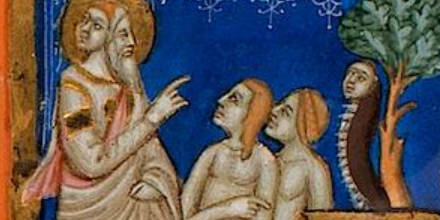
  79. Vat.lat.3550.pt.1, the Matteo di Planisio Bible, made in Naples in about 1362. Here is Satan (right) eavesdropping as God tells Adam and Eve to abstain from certain fruit.
    Then there is this colourful scene from Genesis at fol. 12r (I am guessing it's Melchizedek coming out from Sodom (?) to serve bread and wine to Abraham, Eshkol, Aner and Mamre, Gen. 14:18):
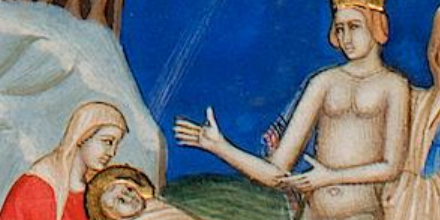
    At fol 19r, Pharaoh's daughter finds Baby Moses while bathing (Exodus 2:1-10). The full frontal nudity is surprising, but this and the pose of her arms and thumbs seems to be an arty reference to Classical Egyptian painting, which might have been familiar to a Naples audience:
  80. Vat.lat.3827, Carolingian codex with records of Frankish and other early church councils
  81. Vat.lat.5007, 9th-century records of the diocese of Naples
  82. Vat.lat.12723, manuscript records of the Inquisition
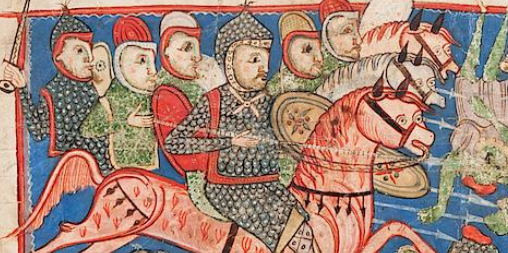
  83. Vat.lat.12958, the Pantheon Bible, a finely illuminated complete bible from the 11th or 12th century, with this battle scene at 277v:
    In Vetus Latina studies, this bible is Beuron Number 363 on account of its Oratio Salomonis and Psalter Romanum.
  84. Vat.lat.13951, an autograph note by Alessandro Manzoni on a printed first-communion service
  85. Vat.lat.14475, certificates connected to 15th-century Vatican librarian Bartolomeo Manfredi
I am also keeping an eye on Heidelberg's releases of Vatican manuscripts, which take place place well in advance of Rome's issue of the same codices. The latest batch, on January 27, comprised six items:
  1. Pal. lat. 264 S. Gregorii; Aurelius Augustinus; B. Augustini: Sammelhandschrift (13-14th century)
  2. Pal. lat. 263 S. Gregorii: Pape urbis Rome dialogorum, libri IV (11-12th century)
  3. Pal. lat. 644 Constitutiones clementine (i.e. Clementis V) cum apparatu domini Iohannis Andree (15th century.)
  4. Pal. lat. 688 Miscellany (15th century)
  5. Pal. lat. 689 Miscellany (14th century)
  6. Pal. lat. 702 Summa de vitiis (13-14th century)
If you have corrections or additions, please use the comments box below. Follow me on Twitter (@JBPiggin) for news of more additions to Digita Vaticana. [This is Piggin's Unofficial List 38.]