2018-08-05

Moerbeke Archimedes is Now Online

My friend Pieter Beullens discovered and made known that the Archimedes Codex of William of Moerbeke at the Vatican Library is online at last. Although this Latin book is one of their most historic digital publications, the coders at Digita Vaticana somehow botched the release, lodging the manuscript in the wrong area of the portal, where no one would ever look for it.
Only three witnesses in the original Greek of the works of Archimedes -- A, B, and C -- are known to have survived the Byzantine period.

C is the privately owned Archimedes Palimpsest (images) which is the famous subject of the book The Archimedes Codex by Reviel Netz and William Noel (2007).

B, not recorded since 1311. 

A was last seen in 1564, but was copied several times, foremost by Poliziano, whose apograph, imitating the writing and mise en page of the antigraph, is in Florence and online (ms. Plut.28.4)

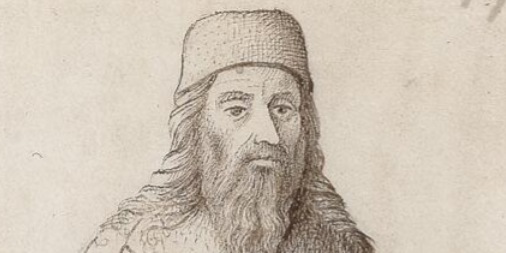
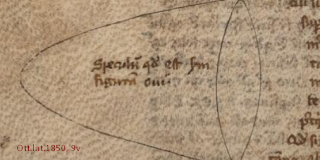
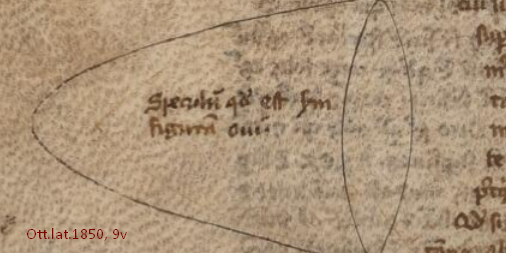
William of Moerbeke, who was a Dominican, generally taken to be Flemish, used A and B to compile a Latin version of Archimedes in or about 1269. William is a giant in the medieval transmission of the classics (see Pieter Beullens' tweets for a feeling). In 1881, it was realized that codex Ott.lat.1850 at the Vatican is the draft/original/autograph of the Archimedes part of his work.

You can now page through Ott.lat.1850. I at first thought this was a 2018 digitization, but @LatinAristotle tells me he first spotted it in 2016.

The Moerbeke pages are bound together with two extraneous parts, one of them printed Latin text.When this posting went up, the URL was https://digi.vatlib.it/view/Ott.lat.1850, which wrongly places it among the incunables and in fact should attach to Cardinal Ottoboni's own copy of the Anthologia Graeca Planudea (ia00765000). I'll message the library on Monday, and if we are right I expect they will fix it.

Why is the Moerbeke codex historic? Firstly, it was the only witness of the text of Floating Bodies until the beginning of the 20th century and the discovery of C above. Secondly it is our only means of accessing B. Thirdly, it can guide us to what copyists of A may have overlooked. And fourthly, with Moerbeke's own marginal notes, it is itself a major artefact in the history of science.
Clagett, M. (1982). William of Moerbeke: Translator of Archimedes. Proceedings of the American Philosophical Society, 126(5), 356-366. Retrieved from http://www.jstor.org/stable/986212

2018-08-04

Fake News in History

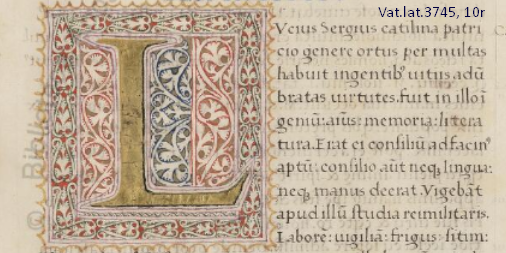
Is Roman history fake news? That idea is not new, it turns out. Back in the 16th century it was already being argued that the classical author Sallust was biased and prone to misreporting. Costanzo Felici (1525-1585), an Italian physician, naturalist and historian, took the charges so seriously that he revised Sallust's Historia de coniuratione Catilinae to "restore" the "neglected role" of Cicero.

Of course he overdid it. Anthony Grafton in the Rome Reborn catalog says "Cicero's role in suppressing Catiline, largely dismissed by Sallust himself, was magnified to superhuman proportions". There's presumably more of the story in a paywalled article, 'Constantius Felicius Durantinus and the Renaissance Origins of Anti-Sallustian Criticism' by Patricia Osmond (de Martino).

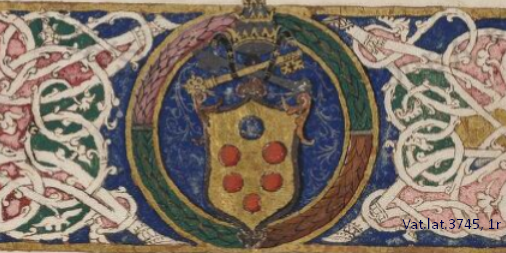
The dedication copy for Pope Leo X, Vat.lat.3745 has just been digitized by the Vatican Library. Of course it is wonderfully illuminated. Felici's career, but not this book, is summarized in the Treccani.

In all, 31 new manuscripts have been digitized over the past week at the library. The full list:
  1. Vat.lat.2295, Consilia by Baldus de Ubaldis the jurist
  2. Vat.lat.2298,
  3. Vat.lat.2304,
  4. Vat.lat.2452,
  5. Vat.lat.2462,
  6. Vat.lat.2578, Ioannis de Turrecremata (Cardinal Juan de Torquemada): Summa de Ecclesia. NOT: Quesivisti fili carissime de incantatione adiuratione... (15c). See eTK
  7. Vat.lat.2725,
  8. Vat.lat.2994,
  9. Vat.lat.3387,
  10. Vat.lat.3475,
  11. Vat.lat.3540,
  12. Vat.lat.3556,
  13. Vat.lat.3596,
  14. Vat.lat.3620,
  15. Vat.lat.3621,
  16. Vat.lat.3627 (Upgraded to HQ),
  17. Vat.lat.3630 (Upgraded to HQ),
  18. Vat.lat.3633,
  19. Vat.lat.3635,
  20. Vat.lat.3636,
  21. Vat.lat.3640,
  22. Vat.lat.3649,
  23. Vat.lat.3676,
  24. Vat.lat.3684, Exhortatio pro calendarii emendatione by Paul of Middelburg, a Dutch-born 15th century bishop eager for calendar reform. Incipit: Mirum tibi fortasse in debitum ... See eTK Anthony Grafton in Rome Reborn says the Hebrew quotes at the start are Paul detailing the arguments used by contemporary Jews to criticize Christians for observing Easter at the wrong time.
  25. Vat.lat.3686,
  26. Vat.lat.3695,
  27. Vat.lat.3696 (Upgraded to HQ),
  28. Vat.lat.3708,
  29. Vat.lat.3745 (Upgraded to HQ), revised Sallust, above
  30. Vat.lat.3789,
  31. Vat.lat.3798.pt.4,
This is Piggin's Unofficial List number 171. Thanks to @gundormr for harvesting. If you have corrections or additions, please use the comments box below. Follow me on Twitter (@JBPiggin) for news of more additions to DigiVatLib.

2018-08-01

New Edition of the Tabula Peutingeriana

The Tabula Peutingeriana is a UNESCO Memory of the World treasure which is the nearest thing to a Roman road-map still in existence.  Today I have relaunched the Tabula Peutingeriana Animated Edition with some major improvements to help both scholars and the general public understand this priceless roll now kept in a Vienna vault.

The biggest improvement to my digital reproduction at piggin.net/ta.svg will be visible when you start hovering a cursor or holding a finger on the yellow boxes which mark the mutations. In many cases, the lines now move incrementally so that you can compare the before and after states.

I hope readers will begin to perceive the Tabula more sympathetically, realizing that is is damaged rather than hopelessly old and wrong. Despite its idiosyncrasies, there is a more rationality to it than meets the eye.

The animations were technically complex to build with SMIL coding, but I decided the effort was worth it, because it can sometimes be quite difficult to spot the differences when simply flipping between two static views. On a slow computer you may find it takes a while for each of the animations to kick off, so it is prudent to hover in and out a couple of times to make sure you have seen all the steps. In Microsoft's Edge and Explorer browsers they do not seem to work at all. Use another browser.

The second big improvement here is the addition of a new database of annotations to the 62 emendations so far. I have launched this in the form of a blog, Restoring the Tabula Peutingeriana, to make it as easy as possible for readers to comment directly on every note. There has never been any central forum for these issues and I would be very glad if scholars would come here if they need, on the fly, to discuss the cases.

Other improvements include an extension of the chart's colored and emended area to Asia Minor as far as Samsat and a new link policy whereby all my charts will have very short, easily noted URLs such as piggin.net/ta.svg to make it easier to cite them. ta stands for Tabula Animated.

2018-07-31

Textual Errors in Old Bibles

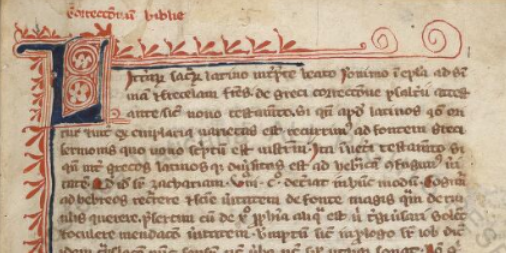
Modern literary scholarship has its roots in the painstaking work of medieval clergy to eliminate mutations in the text of the Bible. The Vatican Library has just digitized one of the great monuments of this rich scholarly past, the Correctorium Vaticanum, Vat.lat.3466.


This 13th-century compilation is by a Franciscan, Guillelmus Lamarensis, born about 1230. He is believed to have been an Englishman, so he may well have gone by the name William Delamare (see CERL). His work is introduced in Hasting's Dictionary of the Bible.

The corrector was expert in Greek and Hebrew and devoted himself to the hunt for instances where the 13th century text was did not correctly reproduce the fifth-century Latin Vulgate translation by Jerome of Stridon. Such a project may have consumed much of his lifetime.

Last week 69 new manuscripts became available. Here is the full list:
  1. Barb.gr.411,
  2. Borg.ind.33,
  3. P.I.O.5,
  4. Ross.11,
  5. Ross.15,
  6. Vat.gr.1249,
  7. Vat.lat.901, "Amabile est a melioribus persuaderi ...", author Jacobus de Alexandria. See eTK
  8. Vat.lat.1548 (Upgraded to HQ), "Annus solaris qui magnus sepe vocatur...", (12c); .author Manfred. See eTK
  9. Vat.lat.1912,
  10. Vat.lat.2928,
  11. Vat.lat.2952,
  12. Vat.lat.2955,
  13. Vat.lat.2956,
  14. Vat.lat.2961,
  15. Vat.lat.3040 (Upgraded to HQ),
  16. Vat.lat.3458,
  17. Vat.lat.3466, Correctorim Vaticanum, see above
  18. Vat.lat.3468.pt.1, the other half of Ramon Llull's Arbor Scientiae, see last week's post.
  19. Vat.lat.3478,
  20. Vat.lat.3503,
  21. Vat.lat.3509.pt.2,
  22. Vat.lat.3517,
  23. Vat.lat.3519,
  24. Vat.lat.3522.pt.1,
  25. Vat.lat.3522.pt.2,
  26. Vat.lat.3524.pt.2,
  27. Vat.lat.3525,
  28. Vat.lat.3527,
  29. Vat.lat.3535,
  30. Vat.lat.3538,
  31. Vat.lat.3546,
  32. Vat.lat.3547 (Upgraded to HQ),
  33. Vat.lat.3551 (Upgraded to HQ),
  34. Vat.lat.3562,
  35. Vat.lat.3566,
  36. Vat.lat.3568 (Upgraded to HQ),
  37. Vat.lat.3577,
  38. Vat.lat.3578,
  39. Vat.lat.3579,
  40. Vat.lat.3582,
  41. Vat.lat.3583,
  42. Vat.lat.3593,
  43. Vat.lat.3598,
  44. Vat.lat.3600,
  45. Vat.lat.3606,
  46. Vat.lat.3610,
  47. Vat.lat.3613,
  48. Vat.lat.3615 (Upgraded to HQ),
  49. Vat.lat.3618,
  50. Vat.lat.3626,
  51. Vat.lat.3634, Martirium pariter et gesta, the awful story of Ferdinand the Holy Prince, a Portuguese royal who was sent to Morocco as a hostage and died in captivity after his compatriots refused to pay up as promised.
  52. Vat.lat.3637,
  53. Vat.lat.3641,
  54. Vat.lat.3656,
  55. Vat.lat.3670,
  56. Vat.lat.3673,
  57. Vat.lat.3678,
  58. Vat.lat.3679,
  59. Vat.lat.3680,
  60. Vat.lat.3693,
  61. Vat.lat.3699,
  62. Vat.lat.3700,
  63. Vat.lat.3701,
  64. Vat.lat.3702,
  65. Vat.lat.3704,
  66. Vat.lat.3707,
  67. Vat.lat.3714, "Quem veritas virtus et scientia ubique...", author Barnabas de Riatinis. See eTK
  68. Vat.lat.3728,
  69. Vat.lat.7194 (Upgraded to HQ),
This is Piggin's Unofficial List number 171. Thanks to @gundormr for harvesting. If you have corrections or additions, please use the comments box below. Follow me on Twitter (@JBPiggin) for news of more additions to DigiVatLib.

2018-07-25

Tree of Science

Among the most creative ideas to emerge from the mind of the Catalan philosopher and logician Ramon Llull was the "tree of science". Llull, who was born about 1232, wrote this mature work in Rome between 1295 and 1296. The Tree of Science (Arbre de la ciència, Arbor Scientiae) explores the generality of science, ars magna, for the non-university reader.

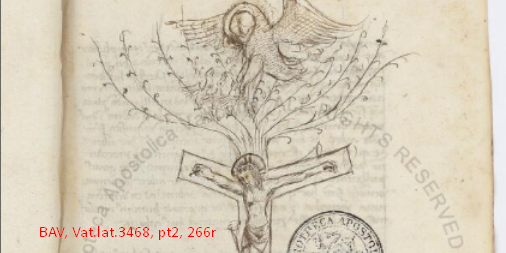
Llull's trees are not true networks but simply rely on a teaching analogy that had become popular in the preceding 13th century: the comparison with an organism, in which each science is represented by a tree with roots, trunk, branches, leaves and fruits. It is perhaps not a surprise that the comparison mixes with the idea of Christ's cross as a tree. Here is a drawing on fol 266r:


The roots represent the basic principles of each science; the trunk is the structure; the branches, the genres; the leaves, the species; and the fruits, the individual, his/her acts and his/her finalities (Wikipedia). The 16 trees in the work have been described as an "encyclopaedic grove".

The Vatican Library's copy dates from 1428 and is bound in two volumes. The first has been online for a while, and the second part came online last week and opens with the incipit, In desolatione et fletibus stans Raymundus sub quadam arbore.  The electronic Thorndike and Kibre (eTK) adds that the title first appeared in print at Barcelona in 1482.

Last week's digitizations also include several items in Beneventan script and a selection of law texts:
  1. Barb.lat.3808,
  2. Chig.R.VIII.62,
  3. Ross.9,
  4. Vat.gr.1298.pt.1 (Upgraded to HQ),
  5. Vat.ind.20,
  6. Vat.ind.43 (Upgraded to HQ),
  7. Vat.ind.44 (Upgraded to HQ),
  8. Vat.ind.46 (Upgraded to HQ),
  9. Vat.lat.2136 (Upgraded to HQ),
  10. Vat.lat.2267,
  11. Vat.lat.2280 (Upgraded to HQ),  Huguccio, Summa Decreti (1ra- 248rb; 256ra-370vb); Johannes de Deo, Continuatio Summae Huguccionis [Cause 23-26] (371ra-388rb)
  12. Vat.lat.2291, Baldus, Lectura in Codicem [I] (1ra-118rb)
  13. Vat.lat.2292, Baldus, Lectura in Codicem [VI] (1ra-335vb)
  14. Vat.lat.2294,
  15. Vat.lat.2317 (Upgraded to HQ),
  16. Vat.lat.2500,
  17. Vat.lat.2556, Panormitanus, Apparatus on the Decretales [X 3]
  18. Vat.lat.2675,
  19. Vat.lat.2720,
  20. Vat.lat.2920 (Upgraded to HQ),
  21. Vat.lat.2927,
  22. Vat.lat.2958,
  23. Vat.lat.2977,
  24. Vat.lat.3183,
  25. Vat.lat.3353 (Upgraded to HQ),
  26. Vat.lat.3380,
  27. Vat.lat.3388 (Upgraded to HQ), Angelo Colocci, see @DigitaVatican tweet above
  28. Vat.lat.3402 (Upgraded to HQ),
  29. Vat.lat.3406,
  30. Vat.lat.3428,
  31. Vat.lat.3444,
  32. Vat.lat.3453 (Upgraded to HQ),
  33. Vat.lat.3457.pt.1,
  34. Vat.lat.3468.pt.2, Llull (above)
  35. Vat.lat.3471,
  36. Vat.lat.3472,
  37. Vat.lat.3480,
  38. Vat.lat.3484,
  39. Vat.lat.3487,
  40. Vat.lat.3489,
  41. Vat.lat.3490,
  42. Vat.lat.3494,
  43. Vat.lat.3495,
  44. Vat.lat.3496,
  45. Vat.lat.3502,
  46. Vat.lat.3505,
  47. Vat.lat.3507,
  48. Vat.lat.3512,
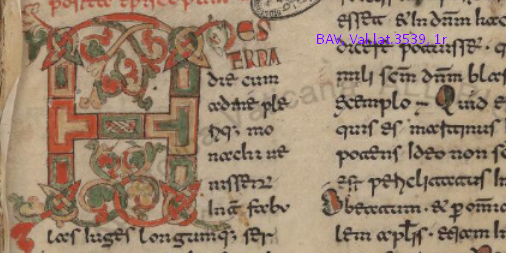
  49. Vat.lat.3539, a late 11th century Beneventan script item noticed by Lowe: Sulpicius Severus, Vita S. Martini; Caesarius, Homiliae; Basilius, Regula, etc.
  50. Vat.lat.3542,
  51. Vat.lat.3544,
  52. Vat.lat.3549, another late 11th century Beneventan script item noticed by Lowe: Cassianus, Collationes.
  53. Vat.lat.3563,
  54. Vat.lat.3567 (Upgraded to HQ),
  55. Vat.lat.3569,
  56. Vat.lat.3585,
  57. Vat.lat.3589,
  58. Vat.lat.3590,
  59. Vat.lat.3605,
  60. Vat.lat.3607,
  61. Vat.lat.3609 (Upgraded to HQ),
  62. Vat.lat.3623,
  63. Vat.lat.3628,
  64. Vat.lat.3629,
  65. Vat.lat.3643,
  66. Vat.lat.3644,
  67. Vat.lat.3650,
  68. Vat.lat.3652,
  69. Vat.lat.3662,
  70. Vat.lat.3691,
This is Piggin's Unofficial List number 170. Thanks to @gundormr for harvesting. If you have corrections or additions, please use the comments box below. Follow me on Twitter (@JBPiggin) for news of more additions to DigiVatLib.

2018-07-16

Diocletian and the Goats

Was the Emperor Diocletian of Rome a former Egyptian goat-herd? That is apparently what many Copts believed. This claim features in a Coptic manuscript just digitized at the Vatican Library, Vat.copt.65, which relates the life of Saint Theodore of Shwtp (or Saint Theodore the General), who was burned alive between 305 and 310 CE in Pontus in modern-day Turkey.

The contents of the 14th-century manuscript are discussed in detail by Dioscorus Boles on his blog. Among the interesting aspects are the story's allegation of Roman racism towards Egyptians and the practice of press-ganging Egyptians for Roman military service. Shwtp, in case you are asking, is town in Egypt.

Last week 26 manuscripts were released online. Here is my full list:
  1. Barb.lat.3996,
  2. Reg.lat.1350,
  3. Vat.ar.52 (Upgraded to HQ),
  4. Vat.copt.65 (Upgraded to HQ),
  5. Vat.copt.66 (Upgraded to HQ),
  6. Vat.copt.67 (Upgraded to HQ),
  7. Vat.gr.1702 (Upgraded to HQ),
  8. Vat.lat.2286, Bartolus de Saxoferrato 1314-1357 wrote this legal commentary: Lectura in primam partem Digesti Infortiati and Lectura super secunda parte Digesti novi. This is a 15th century copy.
  9. Vat.lat.2311,
  10. Vat.lat.3299,
  11. Vat.lat.3404,
  12. Vat.lat.3424, Ermolao Barbaro or Hermolaus Barbarus (1454-1493): letters to Jacopo Antiquario, seemingly attacking a book, Cornucopia, by his fellow humanist Nicolo Perotti. See eTK.
  13. Vat.lat.3433,
  14. Vat.lat.3440,
  15. Vat.lat.3442,
  16. Vat.lat.3457.pt.2,
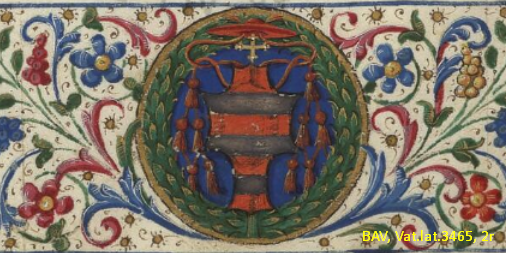
  17. Vat.lat.3465, a panegyric of Thomas Aquinas. This Renaissance codex and others in the range were originally possessions of Antonio Carafa (1538-91), Vatican librarian.
  18. Vat.lat.3477,
  19. Vat.lat.3485,
  20. Vat.lat.3488,
  21. Vat.lat.3491,
  22. Vat.lat.3497,
  23. Vat.lat.3504,
  24. Vat.lat.3509.pt.1,
  25. Vat.lat.3536,
  26. Vat.lat.8866,
This is Piggin's Unofficial List number 169. Thanks to @gundormr for harvesting. If you have corrections or additions, please use the comments box below. Follow me on Twitter (@JBPiggin) for news of more additions to DigiVatLib.

2018-07-08

Precious Scraps

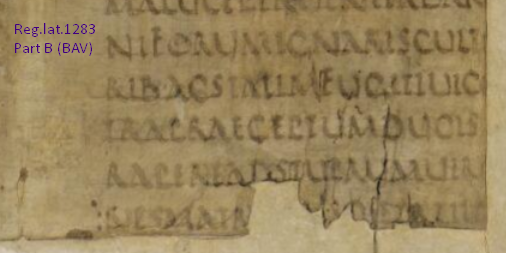
Western manuscripts from the fifth century are so rare that even two torn fragments from a book are objects of excitement. In the past few days, the Vatican Library has digitized and placed online its fragments of the Historiae of Sallust, Reg.lat.1283.pt.B, where the text is written in rustic capitals on both sides of the parchment:

They are thought to be from a codex scribed in Italy. It was torn up to be used as bookbinding material in about 700 CE at a great early medieval center of learning, Fleury Abbey in France. The new codex, itself a great treasure, was acquired centuries later by the wealthy and erudite collector Queen Christina of Sweden and ended up at the Vatican.

Elisabeth Pellegrin says parchment from the same Sallust text was found in Orleans ms 192 and Berlin lat. Q 364. This is the only text of the Historiae from before 1000 CE to survive, according to Richard Matthew Pollard and indeed the work is only known incompletely.

The two fragments, framed on sheets of conservation parchment, are among 42 items released in the past week. The full list:
  1. Ott.lat.1475,
  2. Reg.lat.1283.pt.B, (above). Part A is already online
  3. Urb.lat.1304,
  4. Urb.lat.1641,
  5. Vat.copt.64 (Upgraded to HQ),
  6. Vat.et.75,
  7. Vat.gr.216 (Upgraded to HQ),
  8. Vat.gr.245 (Upgraded to HQ),
  9. Vat.gr.711 (Upgraded to HQ),
  10. Vat.gr.807 (Upgraded to HQ),
  11. Vat.gr.1027,
  12. Vat.gr.1040 (Upgraded to HQ),
  13. Vat.gr.2283,
  14. Vat.gr.2599,
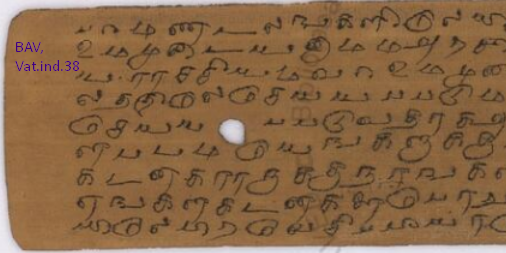
  15. Vat.ind.38, Christian prayers in Tamil, written on palm leaves in southern India in the 16th or 17th century.
    Anthony Grafton writes:
    While inspecting the famous Palatine Library of Heidelberg, confiscated as spoil of war by Maximilian I, Elector of Bavaria, and presented to Pope Gregory XV in 1623, the papal librarian Allacci wrote Cardinal Ludovisi that amongst the notable objects was "a mass of palm leaves" ("uno mazzo di palme") whose language and content he did not know. It was a small collection of Christian prayers in Tamil entitled "Tamil mantiram" (Tamil prayers), which could be either the work of missionaries of the Counter-Reformation or an older composition from the ancient Christian communities in South India. The accompanying note, of unknown date, labels it as "carmina in lingua japanica" (songs in the Japanese language), which shows the difficulty of identifying works in "exotic" scripts before the additional growth of Oriental studies in the nineteenth century.
  16. Vat.lat.369,
  17. Vat.lat.3272,
  18. Vat.lat.3312,
  19. Vat.lat.3347,
  20. Vat.lat.3378 (Upgraded to HQ),
  21. Vat.lat.3384 (Upgraded to HQ),
  22. Vat.lat.3397,
  23. Vat.lat.3399,
  24. Vat.lat.3400,
  25. Vat.lat.3408,
  26. Vat.lat.3413,
  27. Vat.lat.3414,
  28. Vat.lat.3417 (Upgraded to HQ),
  29. Vat.lat.3425,
  30. Vat.lat.3427,
  31. Vat.lat.3434,
  32. Vat.lat.3445,
  33. Vat.lat.3447.pt.1,
  34. Vat.lat.3447.pt.2,
  35. Vat.lat.3448,
  36. Vat.lat.3450,
  37. Vat.lat.3452,
  38. Vat.lat.3469,
  39. Vat.lat.3486,
  40. Vat.lat.3511,
  41. Vat.lat.3555,
  42. Vat.lat.11218, letters of Pope Gregory XV (1612)
This is Piggin's Unofficial List number 168. Thanks to @gundormr for harvesting. If you have corrections or additions, please use the comments box below. Follow me on Twitter (@JBPiggin) for news of more additions to DigiVatLib.