Disgrace
1 hour ago
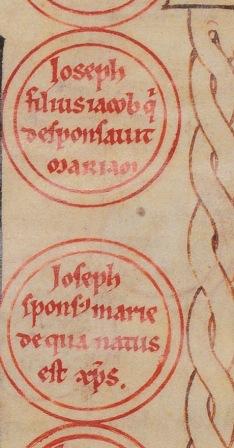
According to my definition, hypothetigraphy defines a rather homogenenous class of drawings, which I call hypothetigraphs ....This is all very useful. The six "features" listed above are all applicable to the Great Stemma:
The first feature, and one that is most easily noted, is the use of simple geometric figures.... The "true" objects and their appearance are not important in this endeavor, for the phenomena under consideration have to do with relationships and with dynamic interactions between elements.... The shape of elements per se is usually an irrelevant piece of information, which is best left out or represented simply by the most abstract of shapes, the circle.
A second and most immediately noticeable feature of hypothetigraphs is the addition of brief written text to the picture.... The inclusion of written text is always necessary in hypothetigraphy which would otherwise lose its communicative function... Verbal and visual information are inextricably and necessarily connected.
Another distinguishing feature of hypothetigraphy is the the almost exclusive use of precise marks, drawn using the ruler ... Precise, clear lines contribute in conveying the impression that the depicted forms are mental constructs, not representations of natural objects.
Typical of hypothetigraphy is ... the use of object lines ... Object lines are not used to mimic some aspect of reality but to illustrate relationships, correspondences or connections.... Relationships and connections and trajectories ... lend themselves naturally to an interpretation in terms of threads, ropes and connecting cables.
A fifth feature of hypothetigraphy is the number of represented dimensions, which tends to be as small as possible within the constraints of the logic of the representation.
Finally, hypothetigraphy tends to place the viewpoint frontally relative to the picture plane, an tends to present figures without a background.... The second of these ... contributes to focus the attention of the viewer, avoiding unwanted contextual effects.
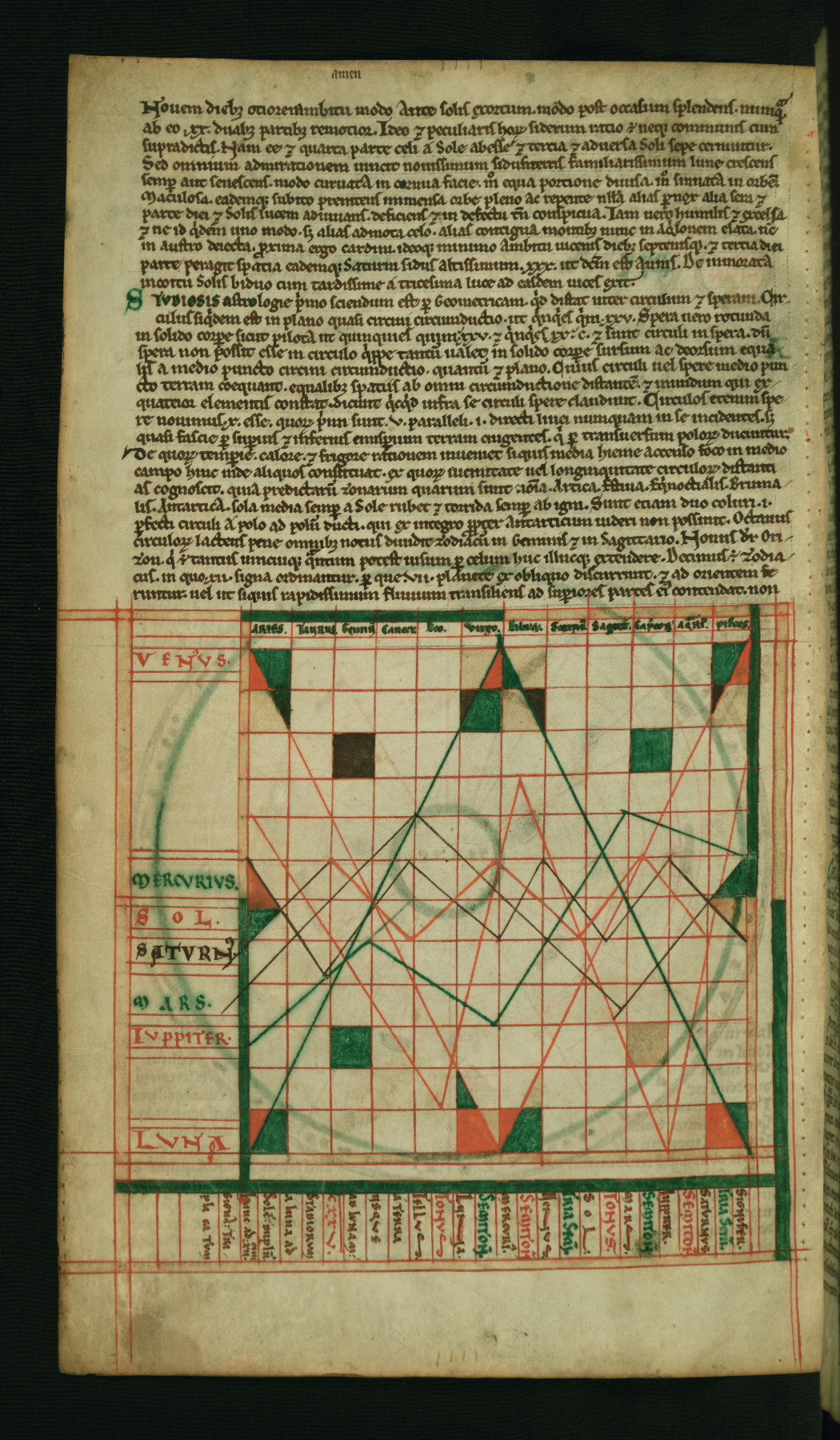
Within a few decades after its creation, the circular latitude diagram was replaced by another, a rectangular diagram, which reduced the amount of theoretical content added to the relevant Plinian text and also offered a more easily produced and more quickly read image.Edward Tufte reproduces the Munich rectangular diagram on page 28 of Visual Display of Quantitative Information, but curiously enough misses its significance for the history of simplification. He only cites an outdated 1936 article by Funkhouser on it. In fact, the diagram turns out to be exemplary of Tufte's principles of subtracting and simplifying to make graphics clearer and more communicative, and his term "reduction of data ink" to describe economy in an infographic:
A few graphics use every drop of their ink to convey measured quantities.
Sacred Bible. Slightly less than one hundred years old, printed on very fine parchment and with illuminations. Glosses have been placed with great diligence in the margins of this bible using a very ancient Gothic bible for the Old Testament and a different bible, of Oviedo, for the New Testament. [...]: On account of the diligence ... and taking account of the parchment and the illumination, valued at thirty ducats. Gilded margins. (1)(1) Memoria de los libros que se deben tomar para El Real Monesterio de San Lorencio, de los que tenía el obpo de Plasencia Don pero Ponce de León (Memorandum of books to be taken to the Royal Monastery of St Lawrence formerly owned by the bishop of Plasencia, Dr Ponce de León). Ms. Esc etc.-II-15, fol. 239v.
"To the reader, from Ferdinandus de Castillo, O.P. Dear friend and reader, this bible has been glossed in reliance on many others, of which the great part were in manuscript form, in the [oldest?] Gothic script. One book, containing only the four Gospels, was written 700 years ago and was kindly loaned to me by the church of Oviedo. Another, of venerable antiquity, containing both the Old and New Testament, came from the reserves of the fathers of the Monastery of St Mary of Valvanera (“Benedictine” added in the margin)."Although this asserts that Hernando de Castillo’s marginal variants were readings obtained from “many” examples, the great majority of the manuscripts consulted consist, if the truth be told, exclusively of the Codex Ovetensis of the Gospels and the Bible of Valvanera, as noted on folio 2r, and this was apparent to Ambrosio de Morales, since for the avoidance of doubt on this point, the same Father Hernando de Castillo states it strictly in the following note from folio 2v, written in his own hand by authority of Philip II:
"I, Hernando de Castillo of the Order of St Dominic, professor of sacred theology, preacher to King Philip II of Spain, made faithful inspection of all the holy Bible, placing variant readings of the New Testament in the margins sixteen years ago from two of the most ancient copies in Gothic script (on the one hand from the fathers of the Monastery of Our Lord of Valvanera, on the other hand from the church of Oviedo) carefully comparing the differences with the authentic Latin. In witness whereof I undersign the above by the authority of his Catholic majesty and this codex is hereby placed in the Royal Library, in the Royal Monastery of St Lawrence, in the month of July 1577. Signed: Hernando de Castillo."Lacking the original manuscripts, it seemed difficult to ascertain to what extent this was a true and accurate collation of these manuscripts by de Castillo. We have, however, quite clear evidence of his fidelity and diligence including the scrupulous preservation of the original spelling. A comparison of his spellings with the marginal notes in the Gothic Codex Legionensis of the College of San Isidoro, whose text, as we shall see, belongs to the same family, passes this test favourably. Even to the extent of his exquisite calligraphy, the illustrious Dominican manifests a rare care and attention. It seems, therefore, that his work of collation guarantees all the fidelity required by modern criticism. Thanks to him we can now add a brief chapter, perhaps not lacking in interest, to the history of the Latin versions of the Bible in Spain.
In the name of the Father and the Son and the Holy Spirit, this book of the Gospels imbued with the sacraments and arguments was assembled by me, a useless and lowly servant of Christ by the name of Justus. I am not worthy of merit and my wrongs cannot be redressed. Through the intercession of the saints, grant unto me to be acquitted and at last be reconciled to my Lord and to be freed from the bonds of all my sins. This has been the reason for my devotion, and I ask that the present book be placed on the holy altar where my body is to be buried and where I swore to fulfill my vows of office. I ask all the priests [who read from this book] to constantly pray to Our Saviour and beseech God through whose hands I came into the world for the salvation of my soul and not to weary in it. For thus it is written: he who prays for others, God commends. But if any man in the church wills harm on others, let him [...] remain in everlasting punishment with Satan and his demons. Thus I go to my judgment before Our Lord.Then follows a note, probably written shortly after the death of the notary Justus:
Justus, the servant of God, died in 810 of the Era on January 12.So according to these documents, the Oviedo codex was written around the middle of the eighth century by a scribe named Justus, whose death occurred in 810 of the Hispanic Era or 772 CE and it was bequeathed to a church where he was to be buried so that priests would remember him in their prayers and offer prayers for the repose of his soul during holy mass. Use of the Hispanic Era also makes it clear that the codex is Spanish in origin, for which we will later see additional evidence. However we do not know for certain what region this was in, though perhaps it was Asturias, of which Oviedo is the capital, since it was preserved there until the sixteenth century, as evidenced by several of the documents cited and confirmed by Ambrosio de Morales. He writes thus:
"In the Library of the Church of Oviedo is ... a New Testament, which from its parchment and lettering seems notably older than the other Gothic manuscripts. In plain script at the beginning it states: “The Book of Justus.” And at the end it says: “Justus, the notary, died in DCCCL of the Hispanic Era on January 12."(1).(1) Viage de Ambrosio de Morales, por orden del Rey D. Phelipe II, a los Reynos de León y Galicia y Principado de Asturias... Madrid, 1765, pages 93-95. Facsimile
Sicut Lucas evangelista per Nathan ad Mariam originem ducit, ita et Matheus ev(an)glista per Salomonem ad Ioseph originem demonstrat. Id est de tribu Iuda, ut appareat eos de una tribu exire, et sic ad Christum secundum carnem pervenire. Ut compleatur quod scriptum est: "Ecce vicit leo de tribu Iuda radix David," leo ex Salomone, radix ex Nathan.But in a radical reversal of meaning, the Lesser Stemma bolts on to this a core statement from Julius Africanus. The following is my transcription of this from the Burgos Bible (the layout of the pages is tabulated on my website):
Ut clarius fiat, quod dicitur: ipsarum generationum consequentias enarravimus.
A David generatio per Salomonem, quam dinumerat Matheus, tercium a fine facit Mathan, qui dicitur genuisse Iacob patrem Ioseph. Per Nathan vero Lucas generationum ordinem texens, tercium nichilominus eiusdem loci facit Melchi. Nobis imminet ostendere, quomodo Ioseph dicitur secundum Matheum quidem patrem habuisse Iacob, qui inducitur per Salomone: secundum Lucham vero Heli qui ducitur per Nathan, atque ipsi, id est Heli et Iacob, qui erant duo fratres, habentes alius quidem Mathan, alius quidem Melchi patres ex diverso genere venientes, etiam ipsi Ioseph avi esse videantur.
Est ergo modus Mathan et Melchi de una eadem que uxore Hesta nomine diversis temporibus singulos filios procrearunt, quia Mathan, qui per Salomonem descendit, uxorem eam primus acceperat et relicto uno filio Iacob nomine defunctus est. Post cuius obitum, Me[l]chi qui Nathan genus ducit. cum esset ex eadem tribu, ex eadem tribu[sic], relictam Mathan accepit uxorem ex qua et ipse suscepit filium nomine Heli per quod ex diverso patrum genere efficiuntur Iacob et Heli iterini fratres quorum alter, id est Iacob, fratris Heli sine liberis defuncti uxorem ex mandato legis accipiens genuit Ioseph natura quidem germinis suum filium, propter quod scribitur Iacob autem genuit Ioseph: secundum legis vero praeceptum Heli efficitur filius, cuius lacob qui erat filius Mathan uxorem ad suscitandum fratris semen acceperat et per hoc rata invenitur atque integra generatio et tan, quam Matheus enumerat, et tan, quam Lucas competenti [?]ione designat.
But in order that what I have said may be made evident, I shall explain the interchange of the generations. If we reckon the generations from David through Solomon, Matthan is found to be the third from the end, who begat Jacob the father of Joseph. But if, with Luke, we reckon them from Nathan the son of David, in like manner the third from the end is Melchi, whose son was Heli the father of Joseph. For Joseph was the son of Heli, the son of Melchi. As Joseph, therefore, is the object proposed to us, we have to show how it is that each is represented as his father, both Jacob as descending from Solomon, and Heli as descending from Nathan: first, how these two, Jacob and Heli, were brothers; and then also how the fathers of these, Matthan and Melchi, being of different families, are shown to be the grandfathers of Joseph. Well, then, Matthan and Melchi, having taken the same woman to wife in succession, begat children who were uterine brothers, as the law did not prevent a widow, whether such by divorce or by the death of her husband, from marrying another. By Estha, then—for such is her name according to tradition—Matthan first, the descendant of Solomon, begets Jacob; and on Matthan’s death, Melchi, who traces his descent back to Nathan, being of the same tribe but of another family, having married her, as has been already said, had a son Heli. Thus, then, we shall find Jacob and Heli uterine brothers, though of different families. And of these, the one Jacob having taken the wife of his brother Heli, who died childless, begat by her the third, Joseph—his son by nature and by account. Whence also it is written, “And Jacob begat Joseph.” But according to law he was the son of Heli, for Jacob his brother raised up seed to him. Wherefore also the genealogy deduced through him will not be made void, which the Evangelist Matthew in his enumeration gives thus: “And Jacob begat Joseph.” But Luke, on the other hand, says, “Who was the son, as was supposed (for this, too, he adds), of Joseph ..."The Letter to Aristides was transported to the West as part of Rufinus's Latin translation of the Ecclesiastical History of Eusebius of Caesarea. Plainly this explanation of the gospel contradiction was popular and formerly in wide circulation. Mommsen discovered 90 extant manuscripts of this work of Rufinus in the late 19th century, according to Dr Guignard.
Jerome once ran across a Greek word in a text, and wrote to a friend that he remember seeing that word only twice elsewhere, once in scripture, once in an apocryphal religious work. As it happens, he was correct: the three passages he knew are the only places (still) where we know that word to have been used in the written legacy of Greek literature. Hearing that story, I marvel at the powers of Jerome's memory, knowing that as a modern scholar with some similar interests in scripture and translation, I would never dare to say such a thing (p. 4).With the advantage of hindsight, I find O'Donnell's book stimulating, but somewhat off-beam, though in a contrarian kind of way. O'Donnell did not recoil from the digital database, but under-estimated its impact by arguing that the database which could compete with Jerome's memory is not really all that new, and that libraries in recent centuries have always been on the verge of doing the same thing:
If the essential feature of the idea of the virtual library is the combination of total inclusiveness and near-instantaneous access, then the fantasy is almost coterminous with the history of the book itself (p. 32).Now of course the database is far more than just a library, because it lowers the barriers to entry: it is accessible to those who have not learned the professional codes, to those who have not paid to participate. There is at least a tangential awareness of this in Avatars, O'Donnell has some engaging thoughts about the uncredentialed (the move to do more and more teaching not only with teaching assistants (the invisibly uncredentialled whom we take for granted but with impermanent, nontenured, non-tenure-trace faculty, p. 180) and the shy (Th[e] classroom is a potentially frightening place because much of our traditional pedagogy depends on the managed infliction of humiliation ... Here is where electronic media can help innovation ... The student who now is unable to perform adequately in the face of perceived threat of embarrassment in class is the one who can be given a place to rehearse out of sight of classmates and teacher ... p. 185-6).
The scholars who edited mathematical texts in the nineteenth century were so interested in the words that they ignored the images. If you open an edition from that era, the diagrams you find are not based upon what is actually drawn in the original manuscripts. The diagrams represent, instead, the editor's own drawing. I was shocked to realize that and began to consider: should I produce, for the first time, an edition of the diagrams? (p. 30).2. Illustrations of texts have been re-assessed in many new ways, with the works of Kurt Weitzmann a half-century ago, Late antique and early Christian book illumination and Illustrations in roll and codex marking a starting point. I recently browsed through John Williams' Imaging the early medieval Bible (1999), which revises some of Weitzmann's ideas, and of course there are the more recent books of Jocelyn Penny Small, The Parallel Worlds of Classical Art and Text (2003), and of Michael Squire, Image and Text in Graeco-Roman Antiquity (2011), which debate whether book illustration was ever meant to depict what was in the text at all. But all of these books deal with the interplay between stories and pictures of people doing things.
Whereas ekphrasis always purports to be a meditative description of a painting, sculpture or the facade of a building, the initiating compositional pictura can also describe a schematized landscape in the form of a world map, or a figure like Lady Philosophy, or just about any of the formae mentis in common monastic use: a ladder, a tree, rotae, a rose-diagram. The rhetorical figures called ekphrasis and Bildeinsatz, in other words, are types of the cognitive, dispositive topos called pictura, which is the more general term. The most general terms of all for this cognitive instrument would include words like ratio and schema. (p. 200)