2015-10-10

Rome and Qing Fuse in a 1704 Diagram

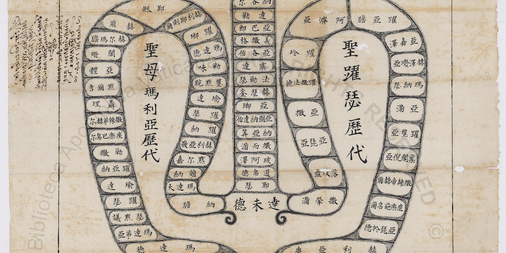
Just after 1700 CE, Chinese experts accepted an extraordinary commission: to devise a poster-sized infographic to depict the ancestry of Jesus Christ. Their help had been sought by Carlo Orazio da Castorano (1673-1755), a Franciscan missionary in Shandong, a city 400 kilometres south of Beijing.

The only known copy of the poster that the unknown Shandong designer/engraver and printer (perhaps assisted by an editor) produced is now in the Biblioteca Apostolica Vaticana in Rome.

This fusion of Latin late antique ideas and creative Qing-period design has a special place in world cognitive history. The poster is about 125 centimetres high. Several weeks ago, the Digita Vaticana, the digitization programme at the BAV in Rome, brought Vat.estr.or.55 online, as I noted at the time.

The poster published in 1704 shows a dual genealogy of Jesus, beginning as a single stream at Adam at top, dividing at David into the line of Nathan at left and the line of Solomon at right. The left loops comprise a genealogy according to the Gospel of Luke, and the right loops that in the Gospel of Matthew. The overall shape ends up looking something like a guitar. Jesus occupies the gap at the base. Here is a schematic summary of it. The white arrows show the direction of descent:
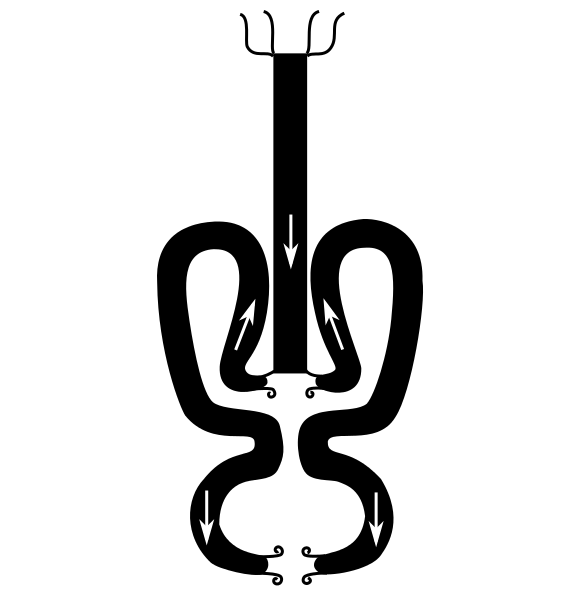
What the diagram achieves in cognitive terms is this: It visualizes the genealogy of Jesus as a combination of flow-chart and network. What began as mythic stories and oral history among Jews is here translated from the linguistic sphere of knowledge into the visual-spatial sphere, where the reader is invited to comprehend it with a different cognitive system of the mind. In addition, the chart re-imagines all this in a Chinese cultural mode.

Orazio, whose Italian surname is also spelled as Orazi and whose Chinese name was 康和子 (Kāng Hézi), was just 31 and had barely been four years in China when the Qing artists or craftsmen accepted his briefing to make this extraordinary graphic. (I rely on Michela Catto's account of him in the Dictionary of Italian National Biography, and also notes by Michael Mungello.)

Although only Kāng Hézi and none of the other creative contributors is named on the poster, a modicum of post-colonial common sense suggests that while the basic idea was the young Orazio's, the execution, probably by directly engraving a metal plate, required much Chinese artistic and technical talent. Where Orazio would have requested European-style roundels and connectors like this ...

... the designer/engraver must  have persuaded him to instead accept cells, oval in shape, fitted together in a broad band:

The cells make eminent sense in a Chinese context. Their shape makes them recognizable as analogues of ancestral tablets. Their organization into paths might have seemed a little strange to a Chinese readership. The paths make the chart akin to a map. The diagram is termed a "tú" (圖) or chart, with the full title Wúzhǔ Yēsū jí tiānxià wànmín lìdài zōngpài tú (吾主耶穌及天下萬民歷代宗派圖) (Dudink).

The advantage for Orazio and his partners in setting the cells flush was that this ensured enough space for the names to be legible, while not making the poster any bigger than the largest commercially available paper sheets for printing in China. The compression of the main lines of ancestry into such a circuitous shape assists the illusion of equality between the lines of Luke (left) and Matthew (right). These aspects too may have been the engraver/designer's own idea, not Orazio's. Considerable effort has also been applied to softening the lines by composing them of tiny brushwork and by feathering all the line ends.

It is interesting to compare this diagram with an ancestral scroll of uncertain date collected in Shandong only 200 years after the Orazio diagram was made (quoted by Cohen from Johnston). This visualizes family as tablets arranged in a top-down stemmatic fashion, suggesting the Orazio diagram would have been readily cognizable for a northern Chinese audience as a genealogy:
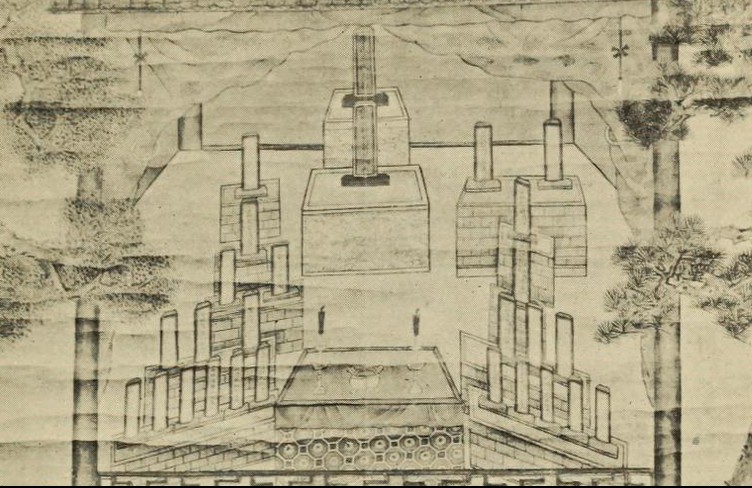
Both China and the West had long histories of experiments with visualizing abstract information of hierarchical form for genealogy. A type of stemmatic chart known as a sū shì zōng tú pǔ (蘇氏宗圖譜) was invented in the Northern Song (960-1279) state while another style known as a bǎo tǎ shì tú pǔ (寶塔式圖譜) was popular in the Southern Song state (Chao).

Europe's experiments with similar graphic layouts go back somewhat further. My own research has established the date of the oldest extant graphic genealogy as before 427 CE. Like the Tú, the Great Stemma also sets out a genealogy of Christ. You see a reconstruction of it on my website along with a link to the main publication about it.

The Orazio chart is likely to have been the first occasion when these separate traditions fused into a single creative work at the highest level of expertise.

Orazio may or may not have learned during his Franciscan formation in Teramo, Italy of the late antique Great Stemma. The Franciscans were a conservative order theologically, less intellectually adventurous than the Jesuits, but with a long-standing interest in graphics as a means to evangelize, so Orazio may well have remembered and kept an abiding impression in his mind of old posters and charts, even one based on work from 1,300 years earlier.

The central idea around which the Great Stemma is based is to show the Luke and Matthew genealogies as streams separating after David and then rejoining at Jesus, as follows:
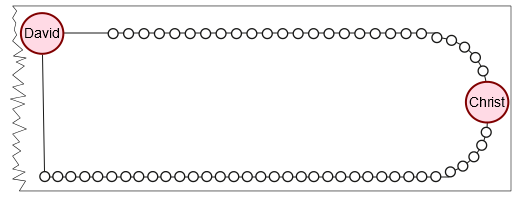
The idea of presenting the two genealogies as streams or fila that part and then reunite at Christ is something so distinct, so inspired, and even so idiosyncratic that it is hard to avoid the impression that there is some kind of hidden chain of influence leading from the Great Stemma to the Tú.

I have no knowledge of Chinese, so with the help of an excellent student of medicine and Chinese, Lennard Piggin, I transliterated the confluence section of the chart to pinyin so I could read it. I have not entered all the tone marks, as they are difficult to type, but you will get the idea:
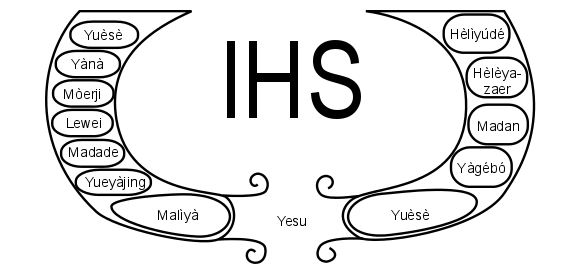
This yielded something else that surprised me. The majority Catholic view of the two gospels holds that both Matthew and Luke set out an ancestry of Joseph (phoneticized Yuèsè in Chinese).

But here, both genealogies terminate at Yēsū (Jesus) and the name to the left of Jesus is Malíyá (Maria) and to the left of that is Yueyàjing (Joachim). Neither of the latter names is given in Luke 3:23.

The insertion of both names as a bridge can be traced back to an apocryphal second-century work, the Protevangelion of James. Along with the two gospels, the Protevangelion is the hidden, third documentary source on which the chart ultimately relies for its information. To find out more about the apocryphal figure of Joachim, read my Joachim article.

In this case too, the similarity of conception leading from the Great Stemma to the Tú is startling. The anonymous Great Stemma's main motivation appears to have been to propound the Joachimite theory. It was modified in later use to bring the chart into line with the orthodox Christian position.

But in the Tú, the Joachimite theory is revived. Dudink argues that there is an intermediate influence at work here:  the writings of the forger Gianni Nanni (1432-1502), better known as Annius of Viterbo. Orazio altered the Lucan names "Eli" and "Joseph", changing them to "Joachim" and "Maria" respectively, relying on a bogus claim by Annius to have "discovered" an ancient error in Luke.

There is a third similarity between the Great Stemma and the Tú. In the text section of the Tú, Orazio set out an age-of-the-world chronology drawn from the Chronological Canons of Eusebius of Caesarea, and thus from the Septuagint and Vetus Latina version of the Old Testament, not from the Masoretic and Vulgate version which was authoritative for Catholics in 1704.

The Great Stemma is similarly based on a Vetus Latina chronology. There is however a key difference between it and the Tú: the Great Stemma omits a patriarch known as the Second Cainan or Kenan, whereas the Tú includes Cainan II (嘉宜南). You can find a full list of the names used in the Great Stemma on my Luke page. The names in the Tú have been published in full by Dudink.

The three resemblances are very striking, but I think on reflection that it is unlikely that Orazio ever actually saw the Great Stemma, let alone consciously reproduced it in a Chinese version.

What Orazio took to China is more likely to have been an undefined mental "picture" of the Jesus genealogy picked up during his formation with the help of some kind of visual teaching materials.

He must have explained to his partners in Shandong what he had seen in Italy and how he envisaged recreating this in China. During their collaboration, almost everything for the chart had to be created again from scratch. Not even a phoneticization of the biblical names into Mandarin forms existed yet. All the conversions had to be devised by Orazio and his Chinese scholarly partners. In many cases they are unique, and were not adopted by later translations of the Christian Bible to Chinese.

The chart, when finally published was therefore a vast and complex creative effort mingling advanced epistemological and communications ideas from east and west. I have very little knowledge of stemmatic graphics in China and will leave it to others to draw conclusions about that, but this story of fusion does reveal something interesting about the western side of the interaction.

There is only one copy of the Great Stemma in unadulterated form left in Italy, Florence plut. 20.54. Two others seem to have existed, but have vanished. I do not know of any post-Renaissance graphics directly based on the Great Stemma. It does however seem that despite the paucity of graphic evidence, elements of the tradition of the Great Stemma remained alive among the 17th-century Franciscan teachers who formed Orazio in the Papal States.

The idea of teaching the ancestry of Jesus by visualizing it rather than just talking about it does seem to have persisted, even though the tradition of copying the Great Stemma had by then ceased and most of the extant copies of this late antique masterwork had vanished. That China, not the West, put to paper the last trace of the tradition is one of the more remarkable paradoxes of history.

Cams, Mario. ‘Not Just a Jesuit Atlas of China: Qing Imperial Cartography and Its European Connections’. Imago Mundi 69, no. 2 (3 July 2017): 188–201. https://doi.org/10.1080/03085694.2017.1312114.
Chao, Sheau-yueh J. “Researching Your Asian Roots for Chinese-Americans.” Journal of East Asian Libraries 129, no. 1 (2003): 23–40.

Cohen, Myron L. “Lineage Organization in North China.” The Journal of Asian Studies 49, no. 03 (1990): 509–34.

Dudink, Ad. “Biblical Chronology and the Transmission of the Theory of Six ‘World Ages’ to China: Gezhi aolüe...(Outline of the Mystery [revealed Through] Natural Science; before 1723).” East Asian Science, Technology & Medicine 35 (2012): 89–138 (Online: paywall).

Johnston, Reginald F. Lion and Dragon in Northern China. New York: Dutton, 1910. Archive.org.

2015-10-06

Vanity Shelfmark

The pope's personal vehicle has the number plate SCV 1 (the letters stand for Status Civitatis Vaticanae). It's one of the world's grandest vanity plates. By analogy, the "first" book in the Vatican Library, Vat.lat.1, ought to be a very special book. It belongs to the Vatican's own collection (not the ones which the pope purchased or captured in war or otherwise took over). It's in the Vatican's own  language (not Greek or Hebrew). And the Vat.lat series is for manuscript codices, not printed books.

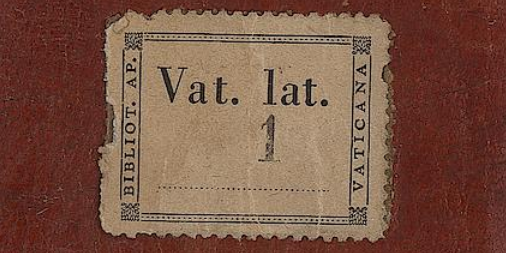
Vat.lat.1 arrived online in digital form on October 2. Red leather binding, somewhat scuffed, and on the spine just about the poshest of all labels a library book could ever carry. These labels were printed postage-stamp style and torn off a sheet, so this label may even carry a bit of nineteenth-century DNA in the form of a holy lick on its back:
 

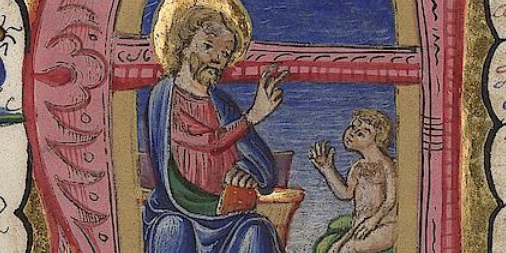
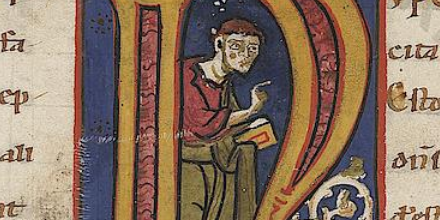
It's a Vulgate Bible, gloriously illuminated in some year between 1426 and 1475. Reader @TuomasLevanen points out this fine initial in Chronicles folio) showing teacher and student:

It would be nice to suppose this was the first book purchased from a bookseller when Pope Nicholas V set up a public library at the Vatican in 1451.

But that is not so. The early papal librarians sought order in the chaos by shelving like with like, and then attaching numbers serially to the codices, since they lacked anything sensible like the Dewey Decimal System which I assiduously learned in my youth. The bibles came first, so many of the books in the range 1-100 are study bibles.

This was not the personal bible used by popes, as far as I know. Nor is it the authoritative text of the bible, like the one-metre bar kept in Paris as the source of all measurement on the planet. The approved text of Jerome of Stridon's Latin, the Nova Vulgata (online), is a composite compiled from many far older manuscripts than this one.

But if you ever get elected pope and decide to read all the books in your library starting from number one, this is the volume to begin with. You'll need to be patient. As far as I know, there are more than 15,000 codices in the Vat.lat series alone.

2015-10-05

Manuscripts Go Missing

Manuscripts have been going missing at the Digita Vaticana, the digitized manuscripts portal at the Biblioteca Apostolica Vaticana in Rome. It's all very mysterious.

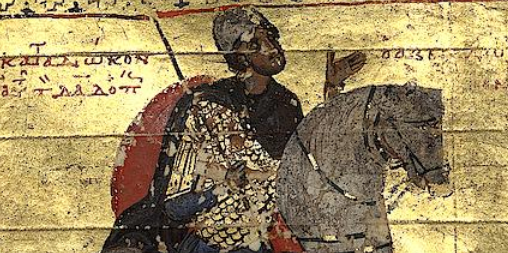
Look at the index pages and there is no sign, for example, of this glorious gold-leaf codex, a Catenae of the Psalms, shelfmark Vat.gr.752.pt.1, more details at Pinakes. Here is an illumination from folio 22r of a horseman:

It was previously listed on the Vat.gr page, but it has now vanished. It is not listed on the rollcall of the Polonsky Foundation Digitizations Project either. But if you are very ingenious, you can still hand-compose the correct URL, http://digi.vatlib.it/view/MSS_Vat.gr.752.pt.1, and see the codex.

What this means is that there are now phantom manuscripts at Digita Vaticana that are neither indexed nor counted in the site total. Digita Vaticana had an index page as of October 4, 2015 that announced a total of 2,883 manuscripts were online. That was a rise of 139 from the previous release, but since the index had unaccountably delisted eight manuscripts on the same day, the true scale of new releases turned out to be 147 items.

I don't know how many phantoms are hiding in there, but I was able to trace six of the ghosts using comparison software:
Can you find any more?

.@DigitaVaticana Some of your manuscripts are missing incl. this gold horseman. Full story http://t.co/wpDyhajHAW pic.twitter.com/WdJMPdKSl8
— Jean-Baptiste Piggin(@JBPiggin) October 5, 2015

Digita Vaticana duly responded:

2015-10-04

French Picture Bible

One of the greatest graphic-arts innovations of medieval Europe is the Bible Moralisée, a thirteenth-century reconception of the Christian Bible as thousands of short "comic strips" that each compare one topic from the Old and the New Testament with an explanation in ordinary French.

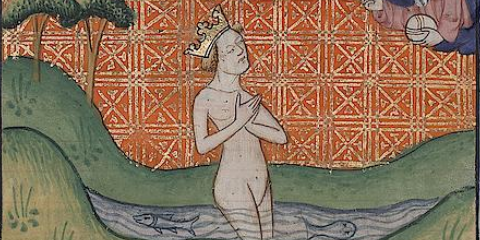
The Biblioteca Apostolica Vaticana in Rome possesses just one Bible Moralisée (BM), which was made in Paris in about 1410 and is a later evolution of this work with just 76 images (vastly fewer than the 5,112 of the greatest of them all, BNF fr. 167). The appearance online of the Vatican BM, Reg.lat.25, on October 2, 2015 is major news. It has many fine illuminations including this scene of  David in a running stream listening to the word of God:


A BM is not to be confused with a Biblia Pauperum (which I discussed a couple of years ago on this blog), nor is it the same as an Angevin Legendary (BAV released one online this year), although both those latter types are also bibles in pictures. The great expert on BMs, John Lowden, published an article in 2005 that explores the place of Reg.lat.25 in the BM tradition: "The Bible Moralisée in the Fifteenth Century and the Challenge of the Bible Historiale," Journal of the Warburg and Courtauld Institutes, 68 (2005) pp. 73-136 (click the link or go to Jstor to read it).

There were 147 new releases on October 2. Here is the full list:
  1. Arch.Cap.S.Pietro.D.179,
  2. Arch.Cap.S.Pietro.D.188,
  3. Arch.Cap.S.Pietro.D.191,
  4. Arch.Cap.S.Pietro.D.195,
  5. Arch.Cap.S.Pietro.D.196,
  6. Barb.lat.4030,
  7. Barb.lat.4037,
  8. Barb.lat.4092,
  9. Barb.lat.4113,
  10. Barb.lat.5695 ,
  11. Borg.copt.109.cass.VII.fasc.23,
  12. Borg.copt.109.cass.VII.fasc.65.2,
  13. Borg.copt.109.cass.VIII.fasc.26,
  14. Borg.copt.109.cass.VIII.fasc.27,
  15. Borg.copt.109.cass.VIII.fasc.28,
  16. Borg.copt.109.cass.X.fasc.31,
  17. Borg.copt.109.cass.X.fasc.32,
  18. Borg.copt.109.cass.XI.fasc.33,
  19. Borg.copt.109.cass.XI.fasc.34,
  20. Borg.copt.109.cass.XI.fasc.36,
  21. Borg.copt.109.cass.XI.fasc.37, Gospel of Matthew, chapters 10-12 (thanks @TuomasLevanen)
  22. Borg.lat.384, Antonio Pucci, various works
  23. Borgh.236, Aristotle, Metaphysics and Physics
  24. Borgh.248, Rottfried: civil law, canon law
  25. Borgh.321, Bonaventure
  26. Borgh.347, Henry of Ghent, Quaestiones
  27. Cappon.86,
  28. Cappon.106,
  29. Cappon.194,
  30. Cappon.252.pt.A,
  31. Cappon.252.pt.C,
  32. Cappon.288,
  33. Cappon.309,
  34. Chig.G.VIII.222,
  35. Chig.L.VIII.294,
  36. Ferr.698,
  37. Ott.gr.472,
  38. Ott.lat.2229,
  39. Ott.lat.2373,
  40. Ott.lat.2865, Dante, Divine Comedy
  41. Patetta.1769,
  42. Reg.lat.25, 15th-century Bible Moralisée, a French-language commentary on the bible (discussed above)
  43. Reg.lat.352, a collection of miscellaneous orations, notes on historical antiquities of Rome and medical prescriptions
  44. Reg.lat.1945, Livy, Ab Urbe Condita
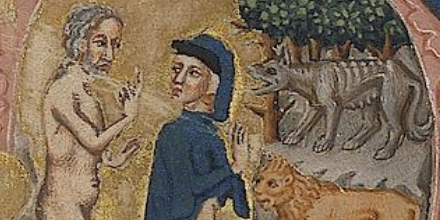
  45. Ross.487, Dante, with this fine opening illumination:
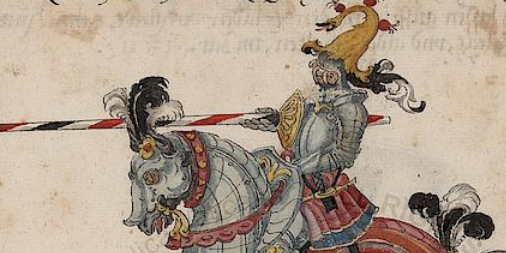
  46. Ross.711, many fine pageantry/heraldry images in the German-language Stamm- und Turnierbuch aus der Kraichgauer Ritterschaft um 1615:
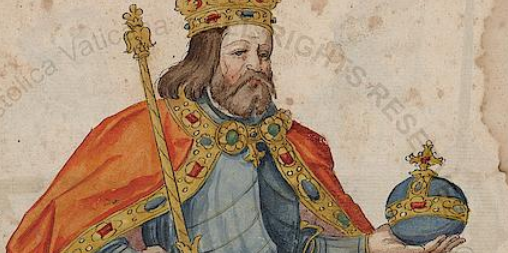
    This is Heinrich of Saxony:
  47. Sbath.723,
  48. Urb.lat.3, Four Gospels, 10th century (catalog)
  49. Urb.lat.9, Psalter (Vulgate)
  50. Urb.lat.12, Job, Catholic Epistles, etc, glossed by Walafried Strabo and Anselm of Laon
  51. Urb.lat.23, Thomas Aquinas, On Job
  52. Urb.lat.25, Thomas Aquinas, On Isaiah and On Matthew
  53. Urb.lat.28, Thomas Aquinas, On Luke
  54. Urb.lat.30, Origen of Alexandria, various in Rufinus's Latin
  55. Urb.lat.32, John Chrysostom, some Basil the Great (catalog)
  56. Urb.lat.36, John Chrysostom, Damasus
  57. Urb.lat.37, Hilary of Poitiers
  58. Urb.lat.38, ditto
  59. Urb.lat.40, Ambrose of Milan, letters, other works
  60. Urb.lat.49, Martyrdom of Jerome and of Adonis (catalog)
  61. Urb.lat.54, Pseudo-Jerome, Breviarium in Psalmos
  62. Urb.lat.58, Lactantius and Pseudo-Lactantius, 15th century
  63. Urb.lat.60, Gregory of Nazianz, John Chrysostom
  64. Urb.lat.62, Pseudo-Dionysius and John of Damascus
  65. Urb.lat.63, Cyprian, Letters, and Pontius (catalog)
  66. Urb.lat.64, Tertullian
  67. Urb.lat.66, Augustine, Vigilius
  68. Urb.lat.68, Augustine on Gospel of John
  69. Urb.lat.70, Augustine, Vigilius
  70. Urb.lat.71, Augustine
  71. Urb.lat.72, Augustine
  72. Urb.lat.74, Augustine on Psalms
  73. Urb.lat.75, ditto
  74. Urb.lat.79, Augustine, De Trinitate, etc
  75. Urb.lat.80, Augustine, Letters, Pelagius
  76. Urb.lat.83, Augustine, Contra Faustum Manichaem
  77. Urb.lat.84, Augustine, Cyprian, Alcuin, Pope Innocent I
  78. Urb.lat.88, Haymo of Halberstadt, Bede, Hugh of Folieto, etc. (catalog)
  79. Urb.lat.91, Bernard of Clairvaux, various
  80. Urb.lat.95, Peter Damian, Peter Chrysologus
  81. Urb.lat.98, Gregory the Great, Ambrose
  82. Urb.lat.100, Bede, Leo the Great
  83. Urb.lat.104, Birgitta, Revelations (catalog)
  84. Urb.lat.106, Hugh on heresy, Isidore
  85. Urb.lat.107, Hugh of St Victor, Anselm, John of Damascus
  86. Urb.lat.108, Hugh of St Victor and others, sermons, etc
  87. Urb.lat.111, Franciscan Breviarium Romanum
  88. Urb.lat.113, William Durant, Rationale of the Divine Offices (Rationale divinorum officiorum) (1286), an exhaustive interpretation of the symbolism of ecclesiastical liturgy and architecture
  89. Urb.lat.117, Duns Scotus and Peter Lombard (catalog)
  90. Urb.lat.121, Francis of Mayron
  91. Urb.lat.127, Thomas Aquinas
  92. Urb.lat.130, ditto
  93. Urb.lat.132, ditto, from Summa
  94. Urb.lat.134, ditto, De Veritate
  95. Urb.lat.137, Thomas Aquinas
  96. Urb.lat.139, ditto
  97. Urb.lat.152, Alvarius Pelagius
  98. Urb.lat.154, Giannozzo Manetti (1396-1459), Italian hebraist who collected many of the Hebrew manuscripts now at the Vatican, Against the Jews. See the Jewish Encyclopaedia.
  99. Urb.lat.179, letters etc of Pseudo-Isidore (and the real Isidore?)
  100. Urb.lat.188, philosophical commentaries of Boethius, a 14th-15th century manuscript. Sadly, the Commentary on the Isagogue of Porphyry seems to lack the famous arbor porphyriana diagram. I had this manuscript listed on my arbor page as a potential source of the diagram, but will now have to scratch it from the list.
  101. Urb.lat.199, Apuleius, fine Renaissance manuscript with floral illuminated initials
  102. Vat.ebr.110, three tracts of Talmud B (thanks @TuomasLevanen)
  103. Vat.ebr.122,
  104. Vat.et.260,
  105. Vat.gr.316, with Septuagint text, Rahlfs 667, 10th century, reportedly containing material from prophets and Ezekiel (thanks to Rick Brannan (his blog) for these notes)
  106. Vat.gr.2066,
  107. Vat.gr.2442,
  108. Vat.lat.1, a 15th-century Vulgate Latin bible
  109. Vat.lat.20, the Bologna Bible, one of the major illuminated bibles. Here is a detail from the Letter to the Colossians:
  110. Vat.lat.31, a 16th-century Latin bible
  111. Vat.lat.71, Glosses on Paralipomenon (Chronicles)
  112. Vat.lat.73, Glosses on Tobias, Esther, Judith, Ruth
  113. Vat.lat.81, a 12th-century graeco-latin Psalter Gallicanum with Canticles, Beuron number 264 on account of this text containing many Vetus Latina elements. In Septuagint studies, this is Rahlfs 1297, notes Rick Brannan (his blog)  
  114. Vat.lat.89, commentary on psalms Gilbert of Poitiers, palimpsest layer Pliny the Younger
  115. Vat.lat.98, Augustine of Hippo on psalms
  116. Vat.lat.109, Anselm of Laon, commentary on Jeremiah and Daniel. Particularly interesting is the appended biblical chronicle manuscript, from fol. 218v onwards
  117. Vat.lat.161, Nicholas of Lyra on Job, Proverbs, etc.
  118. Vat.lat.170, Dionysius Areopagita, Epistulae etc, 15th-century manuscript
  119. Vat.lat.209, Origen of Alexandria, homilies on Leviticus, Rufinus translation, 12th century, fine figural initials including this:
  120. Vat.lat.229, Eusebius of Caesarea, Praeparatio Evangelica
  121. Vat.lat.264, Ambrose of Milan, c.340-397, on Luke, plus sermons
  122. Vat.lat.271, Ambrose of Milan, On Hexaemeron (creation)
  123. Vat.lat.272, ditto
  124. Vat.lat.280, Ambrose of Milan, 83 letters
  125. Vat.lat.282, Ambrose of Milan, various essays
  126. Vat.lat.283, Ambrosiaster commentary, plus Augustine letters
  127. Vat.lat.285, Ambrose of Milan, letters
  128. Vat.lat.289, Ambrose of Milan, letters, essays, homilies
  129. Vat.lat.290, Ambrose of Milan, various
  130. Vat.lat.294, Ambrose of Milan, De officiis ministrorum libri I-III
  131. Vat.lat.297, Ambrose of Milan, De excessu fratris sui Satyri
  132. Vat.lat.301, Basil the Great, On Hexaemeron
  133. Vat.lat.302, ditto
  134. Vat.lat.304, Basil the Great, various
  135. Vat.lat.306, John Chrysostom
  136. Vat.lat.307, Gregory of Nazianz, in Rufinus translation
  137. Vat.lat.313, John of Damascus, On Orthodox Faith
  138. Vat.lat.314, Ambrose of Milan, diverse
  139. Vat.lat.319, Jerome of Stridon, letter to Eustochium on Isaiah
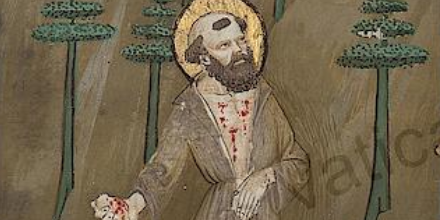
  140. Vat.lat.320, Jerome, Commentationum in Isaiam, libri I-XVIII, with fine opening illumination of Jerome with stigmata (spoiled by the watermark: will that go away some day?)
  141. Vat.lat.321, Jerome, exposition on Isaiah
  142. Vat.lat.336, Rabanus Maurus (and Jerome?) on epistles
  143. Vat.lat.2835, poetry by Antonius Thebaldeus 1463-1537
  144. Vat.lat.3205, troubador songs, from Provence
  145. Vat.lat.3214, Dante
  146. Vat.lat.3389, autograph, poetry by Antonius Thebaldeus 1463-1537
  147. Vat.slav.8, psalms, canticles, Marian hymns
As always, if you can add or correct details, use the comments box below. Follow me on Twitter (@JBPiggin) for more news on digitizations. [This is Piggin's Unofficial List 26.]

2015-09-22

Wonders in China

Some time between 1620 and 1640, a Chinese book publisher issued an extraordinary illustrated compendium about the exotic creatures and travel opportunities of the far western world. The project was overseen by Giulio Aleni, the Italian leader of the Jesuit community in China. The wood-block printing was entitled K`un-yü t`u-shuo (An Illustrated Explanation of Geography).

Its especial charm resides in the unknown artist's conceptions of sea monsters and the Wonders of the Ancient World. To the fanciful western pictures of the wonders which he would have used as his model, he added his own perspective. Neither he nor we know what most of these monuments really looked like, so it is interesting to see how an Asian sensibility envisaged these fabled places.

Digita Vaticana has just digitized the book, which it stocks as Borg. cin. 350, fasc. 30. I have no idea how rare this printing was. The wood-block engraving is not of a very high quality, suggesting the book was priced for the mass market in China. Here are the seven wonders, to which an eighth was of course added in the time-honoured fashion at the discretion of the compiler.

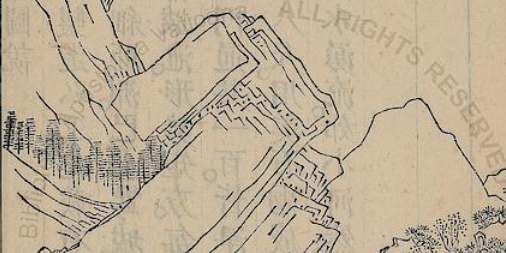
The Hanging Gardens of Babylon are depicted as great blocks of inclined stone leaning alarmingly off a pine-clad mountainside over an architectural garden with a bridge as a walkway. Full page.

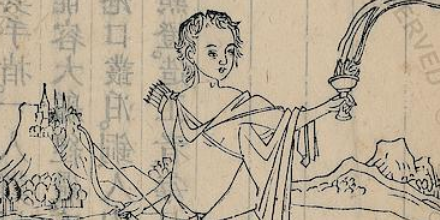
The Colossus of Rhodes, with a contemporary European merchant ship sailing between its knees, guards the entrance to its Mediterranean harbour and is shown with boylike, notably Asian facial features. Full page.

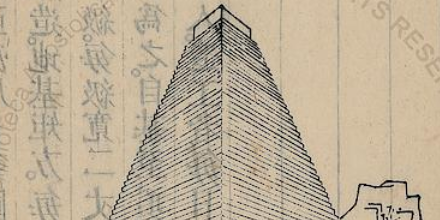
The Great Pyramid of Giza, which was the only one of the wonders to still exist in 1620, is greatly heightened and shown amid mountains. Full page.


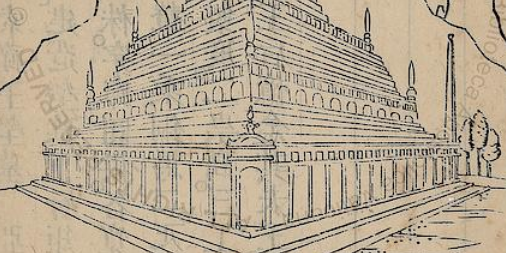
The Mausoleum at Halicarnassus is visualized as a ziggurat. Full page.


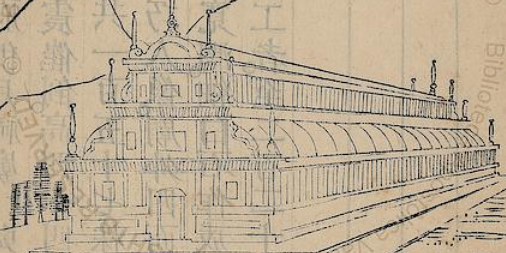
The Temple of Artemis at Ephesus is depicted as a long hall in a style that is more Renaissance than classical. Full page.


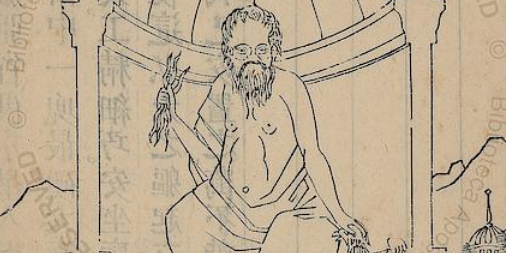
The Statue of Zeus at Olympia is a round-shouldered senior clutching some rather limp looking thunderbolts. The artist may have puzzled over what on earth these were meant to be. With his left hand, Zeus pats his eagle. Full page.


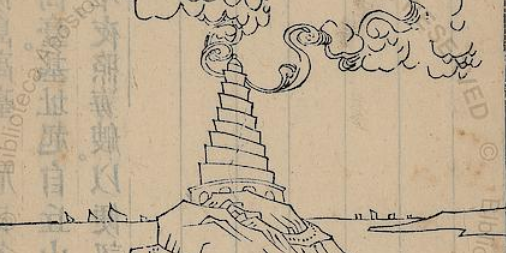
The Lighthouse of Alexandria has a very smoky fire going on top. Full page.

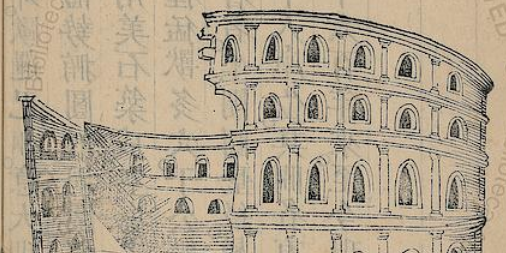
The eighth wonder is the Roman Colosseum, for which the artist clearly had a fairly accurate model to draw from. Full page.

There are more details about this book in the catalog to the Rome Reborn exhibition held 20 years ago in the United States.

This is one of 19 items brought online on September 21, bringing the published Digita Vaticana tally to 2,744. Here is the full list:
  1. Barb.gr.350, 12th/13th century. Aristotle? Pinakes
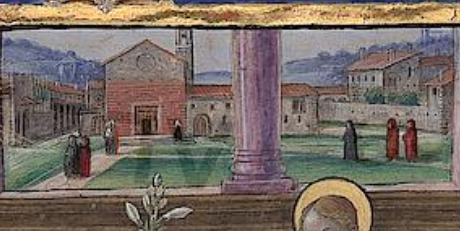
  2. Barb.lat.610, missal of the Baptistery in Florence, an ornately decorated Renaissance prayerbook, illuminated by Monte in 1507. Here's a detail showing a Florentine garden:
  3. Barb.lat.671, in 8th-century uncial, a wide variety of patristic writings, comprehensively listed by Hill
  4. Barb.lat.3695, Anonymous, L'alta divina maiestate eterna
  5. Barb.lat.3974, Dante
  6. Barb.lat.4096, with a commentary on Dante's Divine Comedy
  7. Barb.lat.4112, illuminated Divine Comedy, detail below from 141r
  8. Borg.cin.350, multiple Chinese printed books, some by Aleni, bound into a single codex
  9. Borg.copt.109.cass.XIII.fasc.42, Gospel of Matthew, ch. 16-20
  10. Borg.copt.109.cass.XIII.fasc.43, Gospels of Matthew 18-19, 25-26 and Mark 2-9
  11. Cappon.269
  12. Cappon.281.pt.1,
  13. Cappon.283.pt.2,
  14. Urb.lat.26, Thomas Aquinas, catena aurea, Gospels of Mark and John, 15th century, ornate initials
  15. Urb.lat.35, John Chrysostom, Catalog
  16. Urb.lat.47, Athanasius and John Climacus, Catalog
  17. Urb.lat.50, Jerome on Jeremias, Catalog
  18. Urb.lat.53, Jerome on Isaiah, Catalog
  19. Urb.lat.65, Leo the Great, sermons and letters, Catalog
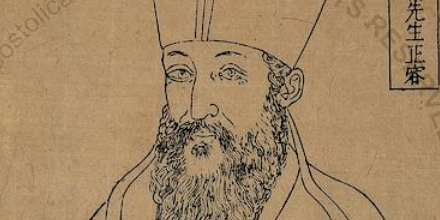
There is also a remarkable Chinese line drawing of Matteo Ricci here in another book (fasc. 3) bound into Borg.cin.350, Ta-hsi Hsi-t'ai Li hsien-sheng hsing-chi. This is a 1616 biography of Ricci (1552 – 1610), the greatest of all the Jesuit scholars studying Chinese culture, by Aleni, a successor. The Rome Reborn exhibition catalog describes the drawing as follows:
This rare and beautifully executed portrait of Matteo Ricci reveals how European and Chinese pictorial methods contrast. Chinese portraits developed out of centuries of brushed calligraphy and the subdued treatment of human figures, on one hand, and Buddhist and Taoist depictions of humans and divinities on the other.
I wonder do wonder if the line drawing it is not drawn directly from the 1610 painting of Ricci by Yu Wen-hui (later Emmanuel Pereira) that has been in Rome since 1616.

Follow me on Twitter (@JBPiggin) for more news. Write comments in the box below if you can add details, or correct my notes. Thanks to @TuomasLevanen for filling in Coptic collection details! [This is Piggin's Unofficial List 25.]

2015-09-17

Luke in Arabic

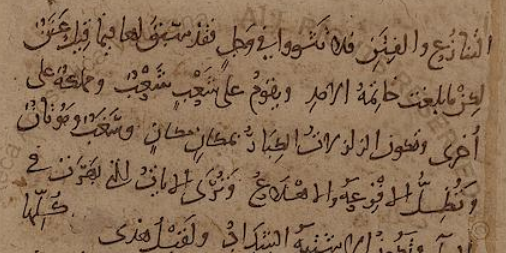
Among the old treasures just digitized is a 96-folio Gospel of Luke in Arabic translation. This little codex in a more-or-less square format can be precisely dated to the year 993. Here is a detail of Luke 20 from folio 79r:

At the Rome Reborn exhibition 20 years ago, the display note said, "This 10th-century Egyptian codex was donated to Pope Eugene IV by the Egyptian delegates at the Council of Florence. Translated from a Coptic original, it is one of the earliest Arabic versions of any part of the New Testament, none of which can be dated before the late eighth or ninth centuries."

Here is the full list of 54 items brought online on September 17, 2015. The stated total on the index page is now 2,725.
  1. Urb.lat.5, Giannozzo Manetti, Latin of Psalms
  2. Urb.lat.6, Giannozzo Manetti, Latin translation of NT
  3. Urb.lat.20, Acts, Catholic Epistles, Revelations, with commentary
  4. Urb.lat.22,
  5. Urb.lat.33, John Chrystostom, homilies
  6. Urb.lat.42, Ambrose of Milan, homilies
  7. Urb.lat.43, Eusebius of Caesarea, Praeparatio Evangelica
  8. Urb.lat.44, Rufinus
  9. Urb.lat.46, Athanasius and Isidorus Mercator
  10. Urb.lat.48, Athanasius, plus anti-pope Anastasius
  11. Urb.lat.51, Damasus, Augustine of Hippo, Ambrose, letters
  12. Urb.lat.61, Basil the Great and Ennodius, various writings
  13. Urb.lat.67, Augustine of Hippo, De Doctrina Christiana, 12th-century manuscript
  14. Vat.ar.18, Gospel of Luke, featured in exhibition Rome Reborn
  15. Vat.ar.1784,
  16. Vat.ar.1785,
  17. Vat.ebr.127, Babylonian Talmud, Ashkenazic script
  18. Vat.ebr.141,Sefer Mordecai, including riddle by Judah ha-Levi, 14th century Italian
  19. Vat.ebr.142.pt.1, Halakhot Gedolot attributed to Simeon Kayyara
  20. Vat.ebr.156, Babylonian Talmud
  21. Vat.ebr.487, Fragments from 12 Hebrew manuscripts
  22. Vat.estr.or.31, Hô-laò-pê: portrait of Giovanni Mezzafalle, head of Catholic mission in China, seated with red hat
  23. Vat.et.28,
  24. Vat.gr.308.pt.1,
  25. Vat.gr.308.pt.2,
  26. Vat.lat.115, Minor prophets, with commentary
  27. Vat.lat.134, Gospel of John, with commentary
  28. Vat.lat.136, ditto
  29. Vat.lat.137, Acts of the Apostles, with commentary
  30. Vat.lat.148, Pauline epistles, annotated
  31. Vat.lat.149, Pauline epistles, annotated
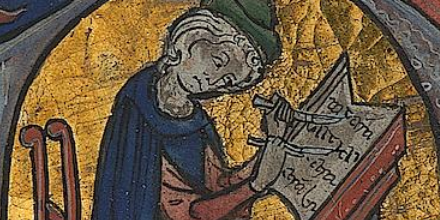
  32. Vat.lat.151, Peter Lombard on the Pauline epistles, with this interesting illumination of an ambidextrous Peter, seemingly working with two pens on the opening page:
  33. Vat.lat.160, Nicholas of Lyra on the Old Testament
  34. Vat.lat.164, ditto
  35. Vat.lat.165, Nicholas of Lyra on the Prophets
  36. Vat.lat.173, Dionysius Areopagita
  37. Vat.lat.182, Lilius Tifernas on Philo
  38. Vat.lat.183, ditto
  39. Vat.lat.185, ditto
  40. Vat.lat.186, Basil the Great, homilies, plus Polycarp and John Chyrsostom
  41. Vat.lat.201, Cyprian of Carthage, 15th-century manuscript
  42. Vat.lat.202, Cyprian of Carthage
  43. Vat.lat.203, Cyprian of Carthage and Augustine of Hippo, minor works, 12th century
  44. Vat.lat.204, Origen, in Rufinus Latin translation, 11th and 15th century
  45. Vat.lat.206, Origen, in Rufinus Latin translation
  46. Vat.lat.212, Origen, in Rufinus and Jerome Latin translations
  47. Vat.lat.215, Lactantius
  48. Vat.lat.216, Lactantius
  49. Vat.lat.221, Lactantius
  50. Vat.lat.222, Lactantius
  51. Vat.lat.223, Lactantius
  52. Vat.lat.228, Eusebius of Caesarea, Praeparatio evangelica
  53. Vat.lat.245, Jerome's Latin version of the Chronological Canons of Eusebius of Caesarea: this is not one of the principal sources, for which one can consult Roger Pearse's list
  54. Vat.lat.286, Ambrose of Milan, letters; this copy made in the 9th century at Vercelli, according to Zelzer, page 10
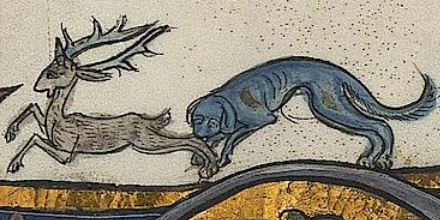
Here's a fine hunt detail from Vat.lat.151, to be found just over the portrait above of Peter Lombard:

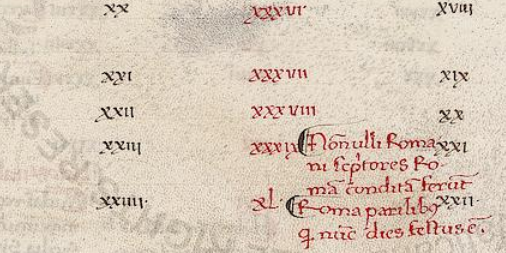
Here's the foundation of Rome noted for Olympiad 6, as set out in the canons in Vat.lat. 245 (60r):

Follow me on Twitter for more news (@JBPiggin). If you can add details about any of these, please use the comments box below. [This is Piggin's Unofficial List 24.]