2015-10-05

Manuscripts Go Missing

Manuscripts have been going missing at the Digita Vaticana, the digitized manuscripts portal at the Biblioteca Apostolica Vaticana in Rome. It's all very mysterious.

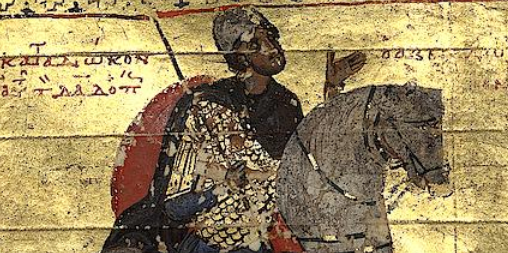
Look at the index pages and there is no sign, for example, of this glorious gold-leaf codex, a Catenae of the Psalms, shelfmark Vat.gr.752.pt.1, more details at Pinakes. Here is an illumination from folio 22r of a horseman:

It was previously listed on the Vat.gr page, but it has now vanished. It is not listed on the rollcall of the Polonsky Foundation Digitizations Project either. But if you are very ingenious, you can still hand-compose the correct URL, http://digi.vatlib.it/view/MSS_Vat.gr.752.pt.1, and see the codex.

What this means is that there are now phantom manuscripts at Digita Vaticana that are neither indexed nor counted in the site total. Digita Vaticana had an index page as of October 4, 2015 that announced a total of 2,883 manuscripts were online. That was a rise of 139 from the previous release, but since the index had unaccountably delisted eight manuscripts on the same day, the true scale of new releases turned out to be 147 items.

I don't know how many phantoms are hiding in there, but I was able to trace six of the ghosts using comparison software:
Can you find any more?

.@DigitaVaticana Some of your manuscripts are missing incl. this gold horseman. Full story http://t.co/wpDyhajHAW pic.twitter.com/WdJMPdKSl8
— Jean-Baptiste Piggin(@JBPiggin) October 5, 2015

Digita Vaticana duly responded:

2015-10-04

French Picture Bible

One of the greatest graphic-arts innovations of medieval Europe is the Bible Moralisée, a thirteenth-century reconception of the Christian Bible as thousands of short "comic strips" that each compare one topic from the Old and the New Testament with an explanation in ordinary French.

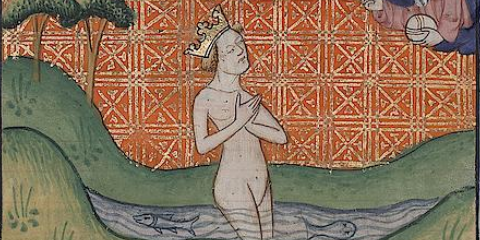
The Biblioteca Apostolica Vaticana in Rome possesses just one Bible Moralisée (BM), which was made in Paris in about 1410 and is a later evolution of this work with just 76 images (vastly fewer than the 5,112 of the greatest of them all, BNF fr. 167). The appearance online of the Vatican BM, Reg.lat.25, on October 2, 2015 is major news. It has many fine illuminations including this scene of  David in a running stream listening to the word of God:


A BM is not to be confused with a Biblia Pauperum (which I discussed a couple of years ago on this blog), nor is it the same as an Angevin Legendary (BAV released one online this year), although both those latter types are also bibles in pictures. The great expert on BMs, John Lowden, published an article in 2005 that explores the place of Reg.lat.25 in the BM tradition: "The Bible Moralisée in the Fifteenth Century and the Challenge of the Bible Historiale," Journal of the Warburg and Courtauld Institutes, 68 (2005) pp. 73-136 (click the link or go to Jstor to read it).

There were 147 new releases on October 2. Here is the full list:
  1. Arch.Cap.S.Pietro.D.179,
  2. Arch.Cap.S.Pietro.D.188,
  3. Arch.Cap.S.Pietro.D.191,
  4. Arch.Cap.S.Pietro.D.195,
  5. Arch.Cap.S.Pietro.D.196,
  6. Barb.lat.4030,
  7. Barb.lat.4037,
  8. Barb.lat.4092,
  9. Barb.lat.4113,
  10. Barb.lat.5695 ,
  11. Borg.copt.109.cass.VII.fasc.23,
  12. Borg.copt.109.cass.VII.fasc.65.2,
  13. Borg.copt.109.cass.VIII.fasc.26,
  14. Borg.copt.109.cass.VIII.fasc.27,
  15. Borg.copt.109.cass.VIII.fasc.28,
  16. Borg.copt.109.cass.X.fasc.31,
  17. Borg.copt.109.cass.X.fasc.32,
  18. Borg.copt.109.cass.XI.fasc.33,
  19. Borg.copt.109.cass.XI.fasc.34,
  20. Borg.copt.109.cass.XI.fasc.36,
  21. Borg.copt.109.cass.XI.fasc.37, Gospel of Matthew, chapters 10-12 (thanks @TuomasLevanen)
  22. Borg.lat.384, Antonio Pucci, various works
  23. Borgh.236, Aristotle, Metaphysics and Physics
  24. Borgh.248, Rottfried: civil law, canon law
  25. Borgh.321, Bonaventure
  26. Borgh.347, Henry of Ghent, Quaestiones
  27. Cappon.86,
  28. Cappon.106,
  29. Cappon.194,
  30. Cappon.252.pt.A,
  31. Cappon.252.pt.C,
  32. Cappon.288,
  33. Cappon.309,
  34. Chig.G.VIII.222,
  35. Chig.L.VIII.294,
  36. Ferr.698,
  37. Ott.gr.472,
  38. Ott.lat.2229,
  39. Ott.lat.2373,
  40. Ott.lat.2865, Dante, Divine Comedy
  41. Patetta.1769,
  42. Reg.lat.25, 15th-century Bible Moralisée, a French-language commentary on the bible (discussed above)
  43. Reg.lat.352, a collection of miscellaneous orations, notes on historical antiquities of Rome and medical prescriptions
  44. Reg.lat.1945, Livy, Ab Urbe Condita
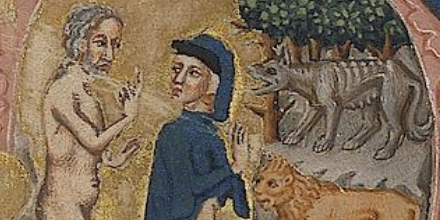
  45. Ross.487, Dante, with this fine opening illumination:
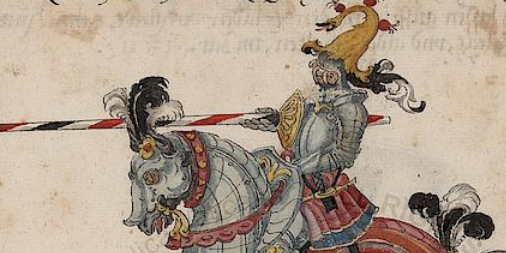
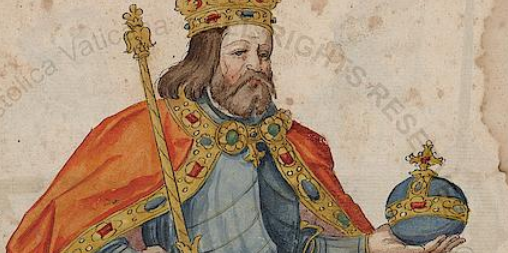
  46. Ross.711, many fine pageantry/heraldry images in the German-language Stamm- und Turnierbuch aus der Kraichgauer Ritterschaft um 1615:
    This is Heinrich of Saxony:
  47. Sbath.723,
  48. Urb.lat.3, Four Gospels, 10th century (catalog)
  49. Urb.lat.9, Psalter (Vulgate)
  50. Urb.lat.12, Job, Catholic Epistles, etc, glossed by Walafried Strabo and Anselm of Laon
  51. Urb.lat.23, Thomas Aquinas, On Job
  52. Urb.lat.25, Thomas Aquinas, On Isaiah and On Matthew
  53. Urb.lat.28, Thomas Aquinas, On Luke
  54. Urb.lat.30, Origen of Alexandria, various in Rufinus's Latin
  55. Urb.lat.32, John Chrysostom, some Basil the Great (catalog)
  56. Urb.lat.36, John Chrysostom, Damasus
  57. Urb.lat.37, Hilary of Poitiers
  58. Urb.lat.38, ditto
  59. Urb.lat.40, Ambrose of Milan, letters, other works
  60. Urb.lat.49, Martyrdom of Jerome and of Adonis (catalog)
  61. Urb.lat.54, Pseudo-Jerome, Breviarium in Psalmos
  62. Urb.lat.58, Lactantius and Pseudo-Lactantius, 15th century
  63. Urb.lat.60, Gregory of Nazianz, John Chrysostom
  64. Urb.lat.62, Pseudo-Dionysius and John of Damascus
  65. Urb.lat.63, Cyprian, Letters, and Pontius (catalog)
  66. Urb.lat.64, Tertullian
  67. Urb.lat.66, Augustine, Vigilius
  68. Urb.lat.68, Augustine on Gospel of John
  69. Urb.lat.70, Augustine, Vigilius
  70. Urb.lat.71, Augustine
  71. Urb.lat.72, Augustine
  72. Urb.lat.74, Augustine on Psalms
  73. Urb.lat.75, ditto
  74. Urb.lat.79, Augustine, De Trinitate, etc
  75. Urb.lat.80, Augustine, Letters, Pelagius
  76. Urb.lat.83, Augustine, Contra Faustum Manichaem
  77. Urb.lat.84, Augustine, Cyprian, Alcuin, Pope Innocent I
  78. Urb.lat.88, Haymo of Halberstadt, Bede, Hugh of Folieto, etc. (catalog)
  79. Urb.lat.91, Bernard of Clairvaux, various
  80. Urb.lat.95, Peter Damian, Peter Chrysologus
  81. Urb.lat.98, Gregory the Great, Ambrose
  82. Urb.lat.100, Bede, Leo the Great
  83. Urb.lat.104, Birgitta, Revelations (catalog)
  84. Urb.lat.106, Hugh on heresy, Isidore
  85. Urb.lat.107, Hugh of St Victor, Anselm, John of Damascus
  86. Urb.lat.108, Hugh of St Victor and others, sermons, etc
  87. Urb.lat.111, Franciscan Breviarium Romanum
  88. Urb.lat.113, William Durant, Rationale of the Divine Offices (Rationale divinorum officiorum) (1286), an exhaustive interpretation of the symbolism of ecclesiastical liturgy and architecture
  89. Urb.lat.117, Duns Scotus and Peter Lombard (catalog)
  90. Urb.lat.121, Francis of Mayron
  91. Urb.lat.127, Thomas Aquinas
  92. Urb.lat.130, ditto
  93. Urb.lat.132, ditto, from Summa
  94. Urb.lat.134, ditto, De Veritate
  95. Urb.lat.137, Thomas Aquinas
  96. Urb.lat.139, ditto
  97. Urb.lat.152, Alvarius Pelagius
  98. Urb.lat.154, Giannozzo Manetti (1396-1459), Italian hebraist who collected many of the Hebrew manuscripts now at the Vatican, Against the Jews. See the Jewish Encyclopaedia.
  99. Urb.lat.179, letters etc of Pseudo-Isidore (and the real Isidore?)
  100. Urb.lat.188, philosophical commentaries of Boethius, a 14th-15th century manuscript. Sadly, the Commentary on the Isagogue of Porphyry seems to lack the famous arbor porphyriana diagram. I had this manuscript listed on my arbor page as a potential source of the diagram, but will now have to scratch it from the list.
  101. Urb.lat.199, Apuleius, fine Renaissance manuscript with floral illuminated initials
  102. Vat.ebr.110, three tracts of Talmud B (thanks @TuomasLevanen)
  103. Vat.ebr.122,
  104. Vat.et.260,
  105. Vat.gr.316, with Septuagint text, Rahlfs 667, 10th century, reportedly containing material from prophets and Ezekiel (thanks to Rick Brannan (his blog) for these notes)
  106. Vat.gr.2066,
  107. Vat.gr.2442,
  108. Vat.lat.1, a 15th-century Vulgate Latin bible
  109. Vat.lat.20, the Bologna Bible, one of the major illuminated bibles. Here is a detail from the Letter to the Colossians:
  110. Vat.lat.31, a 16th-century Latin bible
  111. Vat.lat.71, Glosses on Paralipomenon (Chronicles)
  112. Vat.lat.73, Glosses on Tobias, Esther, Judith, Ruth
  113. Vat.lat.81, a 12th-century graeco-latin Psalter Gallicanum with Canticles, Beuron number 264 on account of this text containing many Vetus Latina elements. In Septuagint studies, this is Rahlfs 1297, notes Rick Brannan (his blog)  
  114. Vat.lat.89, commentary on psalms Gilbert of Poitiers, palimpsest layer Pliny the Younger
  115. Vat.lat.98, Augustine of Hippo on psalms
  116. Vat.lat.109, Anselm of Laon, commentary on Jeremiah and Daniel. Particularly interesting is the appended biblical chronicle manuscript, from fol. 218v onwards
  117. Vat.lat.161, Nicholas of Lyra on Job, Proverbs, etc.
  118. Vat.lat.170, Dionysius Areopagita, Epistulae etc, 15th-century manuscript
  119. Vat.lat.209, Origen of Alexandria, homilies on Leviticus, Rufinus translation, 12th century, fine figural initials including this:
  120. Vat.lat.229, Eusebius of Caesarea, Praeparatio Evangelica
  121. Vat.lat.264, Ambrose of Milan, c.340-397, on Luke, plus sermons
  122. Vat.lat.271, Ambrose of Milan, On Hexaemeron (creation)
  123. Vat.lat.272, ditto
  124. Vat.lat.280, Ambrose of Milan, 83 letters
  125. Vat.lat.282, Ambrose of Milan, various essays
  126. Vat.lat.283, Ambrosiaster commentary, plus Augustine letters
  127. Vat.lat.285, Ambrose of Milan, letters
  128. Vat.lat.289, Ambrose of Milan, letters, essays, homilies
  129. Vat.lat.290, Ambrose of Milan, various
  130. Vat.lat.294, Ambrose of Milan, De officiis ministrorum libri I-III
  131. Vat.lat.297, Ambrose of Milan, De excessu fratris sui Satyri
  132. Vat.lat.301, Basil the Great, On Hexaemeron
  133. Vat.lat.302, ditto
  134. Vat.lat.304, Basil the Great, various
  135. Vat.lat.306, John Chrysostom
  136. Vat.lat.307, Gregory of Nazianz, in Rufinus translation
  137. Vat.lat.313, John of Damascus, On Orthodox Faith
  138. Vat.lat.314, Ambrose of Milan, diverse
  139. Vat.lat.319, Jerome of Stridon, letter to Eustochium on Isaiah
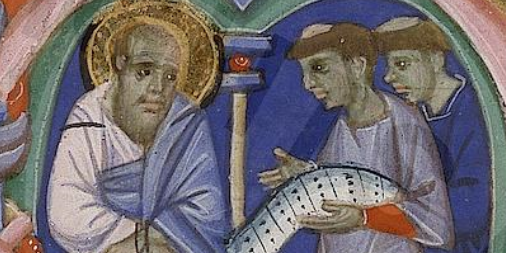
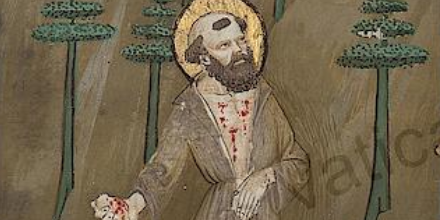
  140. Vat.lat.320, Jerome, Commentationum in Isaiam, libri I-XVIII, with fine opening illumination of Jerome with stigmata (spoiled by the watermark: will that go away some day?)
  141. Vat.lat.321, Jerome, exposition on Isaiah
  142. Vat.lat.336, Rabanus Maurus (and Jerome?) on epistles
  143. Vat.lat.2835, poetry by Antonius Thebaldeus 1463-1537
  144. Vat.lat.3205, troubador songs, from Provence
  145. Vat.lat.3214, Dante
  146. Vat.lat.3389, autograph, poetry by Antonius Thebaldeus 1463-1537
  147. Vat.slav.8, psalms, canticles, Marian hymns
As always, if you can add or correct details, use the comments box below. Follow me on Twitter (@JBPiggin) for more news on digitizations. [This is Piggin's Unofficial List 26.]

2015-09-22

Wonders in China

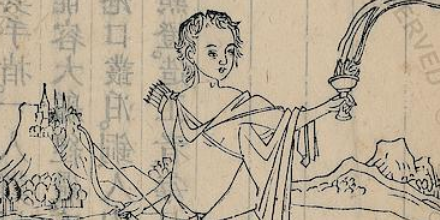
Some time between 1620 and 1640, a Chinese book publisher issued an extraordinary illustrated compendium about the exotic creatures and travel opportunities of the far western world. The project was overseen by Giulio Aleni, the Italian leader of the Jesuit community in China. The wood-block printing was entitled K`un-yü t`u-shuo (An Illustrated Explanation of Geography).

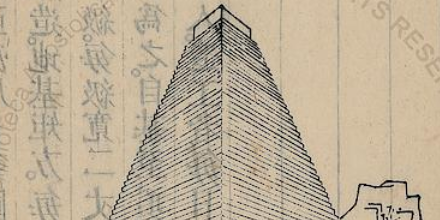
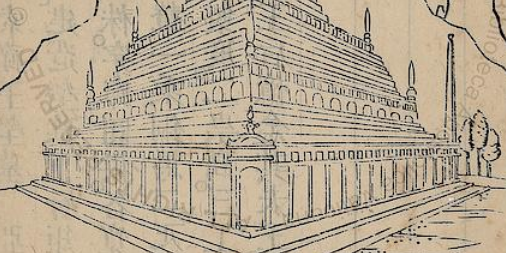
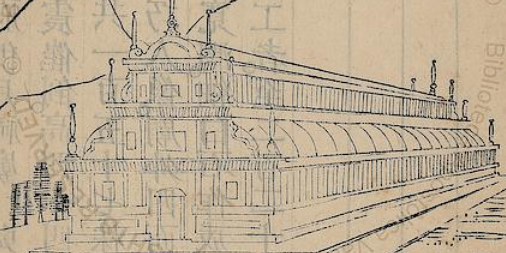
Its especial charm resides in the unknown artist's conceptions of sea monsters and the Wonders of the Ancient World. To the fanciful western pictures of the wonders which he would have used as his model, he added his own perspective. Neither he nor we know what most of these monuments really looked like, so it is interesting to see how an Asian sensibility envisaged these fabled places.

Digita Vaticana has just digitized the book, which it stocks as Borg. cin. 350, fasc. 30. I have no idea how rare this printing was. The wood-block engraving is not of a very high quality, suggesting the book was priced for the mass market in China. Here are the seven wonders, to which an eighth was of course added in the time-honoured fashion at the discretion of the compiler.

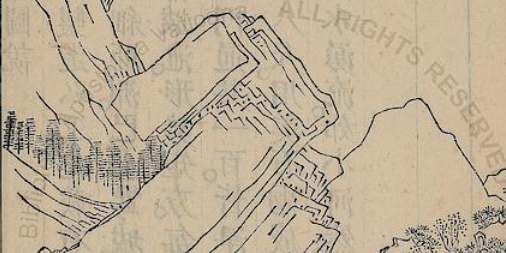
The Hanging Gardens of Babylon are depicted as great blocks of inclined stone leaning alarmingly off a pine-clad mountainside over an architectural garden with a bridge as a walkway. Full page.

The Colossus of Rhodes, with a contemporary European merchant ship sailing between its knees, guards the entrance to its Mediterranean harbour and is shown with boylike, notably Asian facial features. Full page.

The Great Pyramid of Giza, which was the only one of the wonders to still exist in 1620, is greatly heightened and shown amid mountains. Full page.


The Mausoleum at Halicarnassus is visualized as a ziggurat. Full page.


The Temple of Artemis at Ephesus is depicted as a long hall in a style that is more Renaissance than classical. Full page.


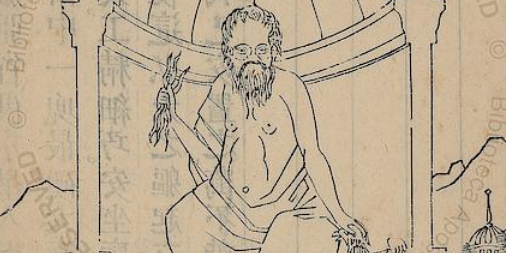
The Statue of Zeus at Olympia is a round-shouldered senior clutching some rather limp looking thunderbolts. The artist may have puzzled over what on earth these were meant to be. With his left hand, Zeus pats his eagle. Full page.


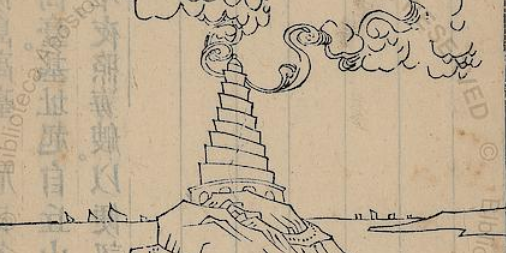
The Lighthouse of Alexandria has a very smoky fire going on top. Full page.

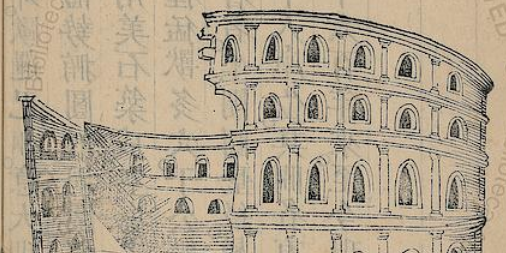
The eighth wonder is the Roman Colosseum, for which the artist clearly had a fairly accurate model to draw from. Full page.

There are more details about this book in the catalog to the Rome Reborn exhibition held 20 years ago in the United States.

This is one of 19 items brought online on September 21, bringing the published Digita Vaticana tally to 2,744. Here is the full list:
  1. Barb.gr.350, 12th/13th century. Aristotle? Pinakes
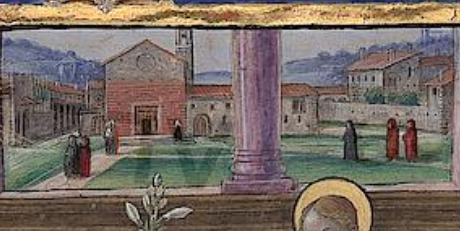
  2. Barb.lat.610, missal of the Baptistery in Florence, an ornately decorated Renaissance prayerbook, illuminated by Monte in 1507. Here's a detail showing a Florentine garden:
  3. Barb.lat.671, in 8th-century uncial, a wide variety of patristic writings, comprehensively listed by Hill
  4. Barb.lat.3695, Anonymous, L'alta divina maiestate eterna
  5. Barb.lat.3974, Dante
  6. Barb.lat.4096, with a commentary on Dante's Divine Comedy
  7. Barb.lat.4112, illuminated Divine Comedy, detail below from 141r
  8. Borg.cin.350, multiple Chinese printed books, some by Aleni, bound into a single codex
  9. Borg.copt.109.cass.XIII.fasc.42, Gospel of Matthew, ch. 16-20
  10. Borg.copt.109.cass.XIII.fasc.43, Gospels of Matthew 18-19, 25-26 and Mark 2-9
  11. Cappon.269
  12. Cappon.281.pt.1,
  13. Cappon.283.pt.2,
  14. Urb.lat.26, Thomas Aquinas, catena aurea, Gospels of Mark and John, 15th century, ornate initials
  15. Urb.lat.35, John Chrysostom, Catalog
  16. Urb.lat.47, Athanasius and John Climacus, Catalog
  17. Urb.lat.50, Jerome on Jeremias, Catalog
  18. Urb.lat.53, Jerome on Isaiah, Catalog
  19. Urb.lat.65, Leo the Great, sermons and letters, Catalog
There is also a remarkable Chinese line drawing of Matteo Ricci here in another book (fasc. 3) bound into Borg.cin.350, Ta-hsi Hsi-t'ai Li hsien-sheng hsing-chi. This is a 1616 biography of Ricci (1552 – 1610), the greatest of all the Jesuit scholars studying Chinese culture, by Aleni, a successor. The Rome Reborn exhibition catalog describes the drawing as follows:
This rare and beautifully executed portrait of Matteo Ricci reveals how European and Chinese pictorial methods contrast. Chinese portraits developed out of centuries of brushed calligraphy and the subdued treatment of human figures, on one hand, and Buddhist and Taoist depictions of humans and divinities on the other.
I wonder do wonder if the line drawing it is not drawn directly from the 1610 painting of Ricci by Yu Wen-hui (later Emmanuel Pereira) that has been in Rome since 1616.

Follow me on Twitter (@JBPiggin) for more news. Write comments in the box below if you can add details, or correct my notes. Thanks to @TuomasLevanen for filling in Coptic collection details! [This is Piggin's Unofficial List 25.]
2015-09-17

Luke in Arabic

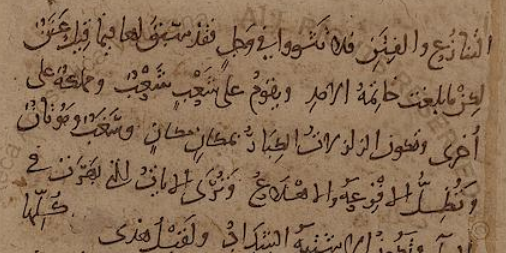
Among the old treasures just digitized is a 96-folio Gospel of Luke in Arabic translation. This little codex in a more-or-less square format can be precisely dated to the year 993. Here is a detail of Luke 20 from folio 79r:

At the Rome Reborn exhibition 20 years ago, the display note said, "This 10th-century Egyptian codex was donated to Pope Eugene IV by the Egyptian delegates at the Council of Florence. Translated from a Coptic original, it is one of the earliest Arabic versions of any part of the New Testament, none of which can be dated before the late eighth or ninth centuries."

Here is the full list of 54 items brought online on September 17, 2015. The stated total on the index page is now 2,725.
  1. Urb.lat.5, Giannozzo Manetti, Latin of Psalms
  2. Urb.lat.6, Giannozzo Manetti, Latin translation of NT
  3. Urb.lat.20, Acts, Catholic Epistles, Revelations, with commentary
  4. Urb.lat.22,
  5. Urb.lat.33, John Chrystostom, homilies
  6. Urb.lat.42, Ambrose of Milan, homilies
  7. Urb.lat.43, Eusebius of Caesarea, Praeparatio Evangelica
  8. Urb.lat.44, Rufinus
  9. Urb.lat.46, Athanasius and Isidorus Mercator
  10. Urb.lat.48, Athanasius, plus anti-pope Anastasius
  11. Urb.lat.51, Damasus, Augustine of Hippo, Ambrose, letters
  12. Urb.lat.61, Basil the Great and Ennodius, various writings
  13. Urb.lat.67, Augustine of Hippo, De Doctrina Christiana, 12th-century manuscript
  14. Vat.ar.18, Gospel of Luke, featured in exhibition Rome Reborn
  15. Vat.ar.1784,
  16. Vat.ar.1785,
  17. Vat.ebr.127, Babylonian Talmud, Ashkenazic script
  18. Vat.ebr.141,Sefer Mordecai, including riddle by Judah ha-Levi, 14th century Italian
  19. Vat.ebr.142.pt.1, Halakhot Gedolot attributed to Simeon Kayyara
  20. Vat.ebr.156, Babylonian Talmud
  21. Vat.ebr.487, Fragments from 12 Hebrew manuscripts
  22. Vat.estr.or.31, Hô-laò-pê: portrait of Giovanni Mezzafalle, head of Catholic mission in China, seated with red hat
  23. Vat.et.28,
  24. Vat.gr.308.pt.1,
  25. Vat.gr.308.pt.2,
  26. Vat.lat.115, Minor prophets, with commentary
  27. Vat.lat.134, Gospel of John, with commentary
  28. Vat.lat.136, ditto
  29. Vat.lat.137, Acts of the Apostles, with commentary
  30. Vat.lat.148, Pauline epistles, annotated
  31. Vat.lat.149, Pauline epistles, annotated
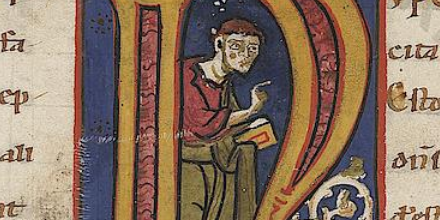
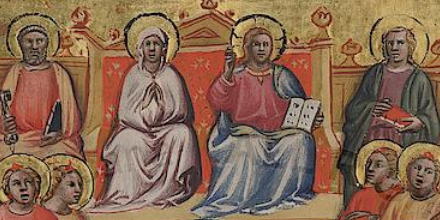
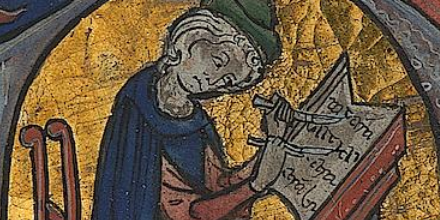
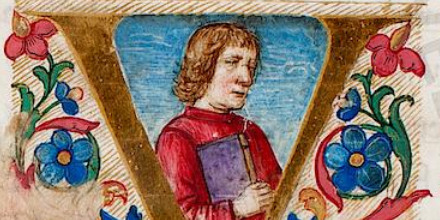
  32. Vat.lat.151, Peter Lombard on the Pauline epistles, with this interesting illumination of an ambidextrous Peter, seemingly working with two pens on the opening page:
  33. Vat.lat.160, Nicholas of Lyra on the Old Testament
  34. Vat.lat.164, ditto
  35. Vat.lat.165, Nicholas of Lyra on the Prophets
  36. Vat.lat.173, Dionysius Areopagita
  37. Vat.lat.182, Lilius Tifernas on Philo
  38. Vat.lat.183, ditto
  39. Vat.lat.185, ditto
  40. Vat.lat.186, Basil the Great, homilies, plus Polycarp and John Chyrsostom
  41. Vat.lat.201, Cyprian of Carthage, 15th-century manuscript
  42. Vat.lat.202, Cyprian of Carthage
  43. Vat.lat.203, Cyprian of Carthage and Augustine of Hippo, minor works, 12th century
  44. Vat.lat.204, Origen, in Rufinus Latin translation, 11th and 15th century
  45. Vat.lat.206, Origen, in Rufinus Latin translation
  46. Vat.lat.212, Origen, in Rufinus and Jerome Latin translations
  47. Vat.lat.215, Lactantius
  48. Vat.lat.216, Lactantius
  49. Vat.lat.221, Lactantius
  50. Vat.lat.222, Lactantius
  51. Vat.lat.223, Lactantius
  52. Vat.lat.228, Eusebius of Caesarea, Praeparatio evangelica
  53. Vat.lat.245, Jerome's Latin version of the Chronological Canons of Eusebius of Caesarea: this is not one of the principal sources, for which one can consult Roger Pearse's list
  54. Vat.lat.286, Ambrose of Milan, letters; this copy made in the 9th century at Vercelli, according to Zelzer, page 10
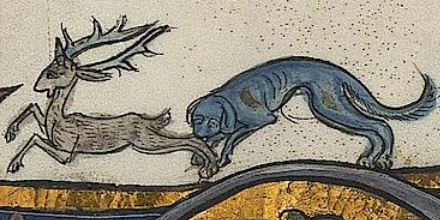
Here's a fine hunt detail from Vat.lat.151, to be found just over the portrait above of Peter Lombard:

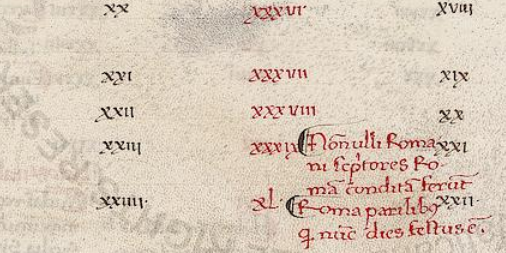
Here's the foundation of Rome noted for Olympiad 6, as set out in the canons in Vat.lat. 245 (60r):

Follow me on Twitter for more news (@JBPiggin). If you can add details about any of these, please use the comments box below. [This is Piggin's Unofficial List 24.]

2015-09-15

Glory of Asia

Digitizations have clearly slowed in the Roman summer, but Digita Vaticana is still making occasional releases.  The Vatican Euripides showed up September 1, and 37 more manuscripts came online September 15.

The Euripides, Vat.gr.909,  is from just after 1250 and not the the oldest by any means, but is one of the sources of nine plays by the great Greek dramatist with scholia. There is a page-by-page listing of the contents at Pinakes. For a sound text of the plays along with English translations, consult Perseus. The scholia (that is to say the glosses and stage directions and other notes) are recorded by Donald Mastronarde on his remarkable electronic scholia site.

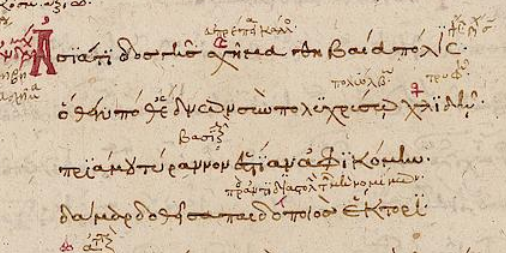
Here is the first line of Andromache, "Glory of Asia, city of Thebe!"

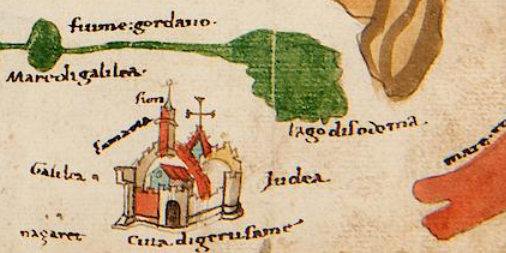
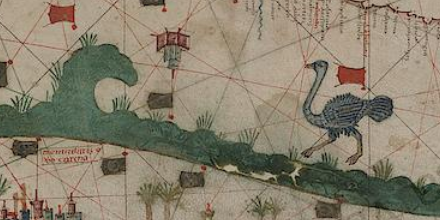
As for the rest, there are several maps. The portolan charts are scanned at too low a resolution to be of any use for scholarship, since the place-names remain illegible. The map of the lagoons at Comacchio, Barb.lat.4242.pt.A, is of some interest, and I always like those figurative maps of the Mediterranean which show the River Jordan in green and the Red Sea in red. I picked out one from Cappon.56 a few weeks ago where it illustrates a poem by the humanist Lorenzo Bonincontri (1486-1488). This new example is from Chig.M.VII.146
Here is the full list. The digitizations bring the total posted so far to 2,671.
  1. Arch.Cap.S.Pietro.D.189,
  2. Arch.Cap.S.Pietro.D.190, letters of Pope Alexander to Bernard of Clairvaux
  3. Barb.gr.596, single sheet
  4. Barb.lat.1766, charter
  5. Barb.lat.4242.pt.A, fine map of the wetlands at Comacchio on the Adriatic coast, drawn by Domenico Castelli (the 17th century architect?)
  6. Barb.or.144, multiple printed books in one binding, the first of which is 治曆緣起, Chinese Missionary Books brought by Philippe Couplet from China
  7. Borg.Carte.naut.IV, portolan chart, scanned illegibly!
  8. Borg.Carte.naut.VI, ditto
  9. Borg.Carte.naut.VII, ditto, Campbell number 154, dated to 1497, Alexandria
  10. Borgh.221, Aldobrandinus de Toscanella, Scala fidei sive tractatus de symbolo apostolico
  11. Borgh.289, Opera aliqua de re iuridica et sermones
  12. Borgh.290, Bottoni, Bernardo, Summa super titulis decretalium
  13. Cappon.120,
  14. Cappon.247,
  15. Cappon.270,
  16. Cappon.282.pt.1,
  17. Cappon.282.pt.2,
  18. Cappon.283.pt.1,
  19. Cappon.285,
  20. Cappon.286,
  21. Cappon.289,
  22. Cappon.290,
  23. Cappon.308,
  24. Chig.G.IV.114, book of crests
  25. Chig.L.VI.196,
  26. Chig.M.VII.146, mixed codex with astronomy, Italian maps of Mediterranean coast, Hippocratic medical writings
  27. Ott.lat.234, Joannis Langiaci, Panegyricus
  28. Ott.lat.585, Summa de sufficienna sacramentorum
  29. Ott.lat.1676, Ovid, Epistula XV
  30. Reg.lat.1621, thin Renaissance manuscript of Pseudo-Ovid. This was once thought to be an important source of the poem Consolatio ad Liviam until Oldecop discovered that it was a copy on parchment (perhaps as a luxury present) taken from a printed Venetian edition of 1492. See Reeve's article in Revue d'Histoire des Textes. Here is "Ovid":
  31. Reg.lat.1756, contains works by Constantine the African including Liber chirurgiae, the Liber graduum, and De genitalibus membris which describes female reproductive organs. Also the De quattuor humoribus of Constantine's mentor, Alfanus, bishop of Salerno. See discussion by Monica Green
  32. Vat.gr.909, Euripides
  33. Vat.lat.2791, Ovid, Epistula XV
  34. Vat.lat.5005, Albertus Magnus, c.1193-1280 De Mineralibus libri quinque - 15th century ms
  35. Vat.lat.5644, music, Antifona solenne per i Vespri, a book from Coluccio Salutati's former library in Florence. Article by Bannister describes how its date can be established as 1160.
  36. Vat.lat.9134, Roman monumental epigraphs transcribed and decoded
  37. Vat.sir.495, Nicene creed, letter of Constantine the Great convening Council of Nicaea and other council documents in Syriac translation (Smelov)
  38. Vat.slav.7, eight sheets only
Here is an ostrich running in Borg.Carte.naut.VII:

As always, if you can provide more details on these, use the comments box below. [This is Piggin's Unofficial List 23.]

2015-08-25

Armenian Treasures

We owe much to Armenian monks for the preservation of the early Christian past. Many ancient works that are now lost in their original Greek, such as key books by the great Jewish philosopher Philo of Alexandria, survive only in Armenian translation.

That's why we should be so pleased that a new crop of digitizations and uploadings at Digita Vaticana includes Vat.arm.3, a finely illuminated 13th-century codex that is believed to have been the first Armenian manuscript to enter the Vatican book collections in the 15th century. This was exhibited in the Rome Reborn exhibition 20 years ago in Washington and St Louis and the catalog stated that it was thought to have been donated to the papacy by the Armenian delegates at the Council of Florence.

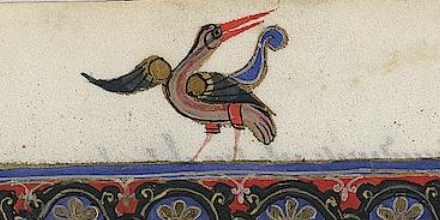
Its texts are mainly liturgical but there are also texts on chronology, geography, astronomy, mensuration, philosophy and history. I'm not aware if any of these are unique, but it's great to just browse this thick codex and admire the care with which it was made. From the illuminations, here is a fine red-beaked bird from folio 213r:
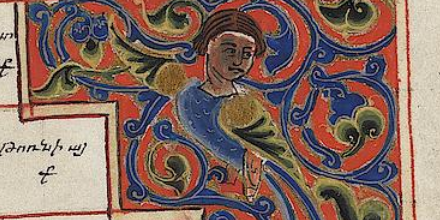
There's also a fine bird lady on folio 317r as part of what seems to be a matrix of consanguines or arbor consanguinatis
The digitizations are evidently advancing despite the summer heat in Rome. The latest 51 bring the tally of items on the index page to 2,633. Here is my list:
  1. Borg.copt.109.cass.I.fasc.1,
  2. Borgh.262, Decretales of Pope Gregory IX, glossed by Bernardus Parmensis (also known as Bernard of Parma, Bernard Botone, Bernard Bottoni), seems similar to Ms. 1 at Syracuse University
  3. Borgh.366, Augustine of Hippo, City of God, 15th-century manuscript
  4. Cappon.132, handwritten copy from about 1730 of an earlier treatise on perspective drawing by the mannerist painter Giulio Romano (see below). Consult the catalog at Archive.org for more information about this and other Capponi items below.
  5. Cappon.179,
  6. Cappon.182,
  7. Cappon.198,
  8. Cappon.203,
  9. Cappon.223,
  10. Cappon.226,
  11. Cappon.227,
  12. Cappon.230,
  13. Cappon.236,
  14. Cappon.256,
  15. Cappon.257,
  16. Cappon.262,
  17. Cappon.263,
  18. Cappon.265,
  19. Cappon.266,
  20. Cappon.267,
  21. Cappon.268,
  22. Cappon.274,
  23. Cappon.280.pt.1,
  24. Cappon.280.pt.2,
  25. Cappon.291.pt.1,
  26. Cappon.294,
  27. Cappon.299,
  28. Cappon.304,
  29. Cappon.305,
  30. Cappon.310,
  31. Cappon.311,
  32. Cappon.314,
  33. Cappon.315,
  34. Cappon.316,
  35. Cappon.317,
  36. Reg.lat.1360, a manuscript of the 12th-century Chanson d'Aspremont, a French narrative poem of heroic deeds (Wikipedia)
  37. Sbath.723, one of the Arabic manuscripts collected by Paul Sbath of Aleppo, Syria
  38. Urb.lat.4, concordance of the Bible, 15th century
  39. Urb.lat.8, Joachim of Fiore, Thomas Aquinas, Lawrence of Pratis, 15th-century ms
  40. Vat.arm.3, Eusebius' Epistle to Carpianus, and other texts, featured in Rome Reborn (see above)
  41. Vat.ebr.116, Talmud Bavli, Tract Bava Kamma
  42. Vat.ebr.140, part of the Babylonian Talmud (thanks to @TuomasLevanen for these 2 notes)
  43. Vat.lat.65, Numbers, Deuteronomy, Judges, glossed
  44. Vat.lat.110, commentary on Ecclesiasticus, palimpsest layer apparently includes some 7th-century (?) material from Pliny the Elder
  45. Vat.lat.143, Lanfranc of Canterbury, commentary on Pauline Epistles
  46. Vat.lat.146, Peter Lombard on Pauline Epistles, 14th century
  47. Vat.lat.172, Dionysius Areopagita
  48. Vat.lat.1895, Diogenes Laertius
  49. Vat.lat.2878, 15th-century, humanist copy of Cicero's Epistulae ad Atticum (discussed by Peter Lebrecht Schmidt). The front of this codex was abused for a bit of papal bookkeeping, being used to record a mule-leasing agreement: Astolfo, superintendent of mules of the palace, must deliver on 1 January 1570 to Bernardino Cirillo, preceptor of the Hospital of the Holy Spirit and the pope's majordomo, and take back into custody on the 31st of the same month, all those mules on the attached inventory in the stable of the palace (the actual inventory of the mules is not there, which would have been too much of an insult to Cicero and Atticus).
  50. Vat.lat.6549, Henry of Bourbon (apparently Henry IV of France who issued the Edict of Nantes), paper manuscript
  51. Vat.lat.14153, Italian literary autographs
As ever, tell me via the comments box below if you know more about any of these codices. [This is Piggin's Unofficial List 22.]

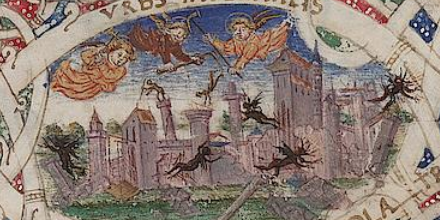
Here is a drawing of devils flying around evil idolatrous Rome from Borgh.366, folio 1r
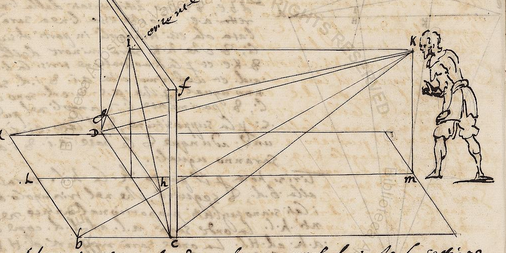
Angles of view in treatise on perspective drawing, Cappon 132, folio 14v:
By the way, a knowledge of medieval Armenian is something that certain scholars brag about, much as a scratch golfer would brag of his zero handicap. A few weeks back, a reviewer for the Bryn Mawr Classical Review was publicly berating any of his inferiors having the temerity to write about Philo without learning Armenian first: The language barrier is not unsurmountable and does not justify studying this part of Philo from the translations of the (Armenian) translation only. That sounds a bit like those ads that claim that anyone can learn to play golf like Tiger Woods if they buy this or that set of clubs. Sigh. If only life were that easy.